
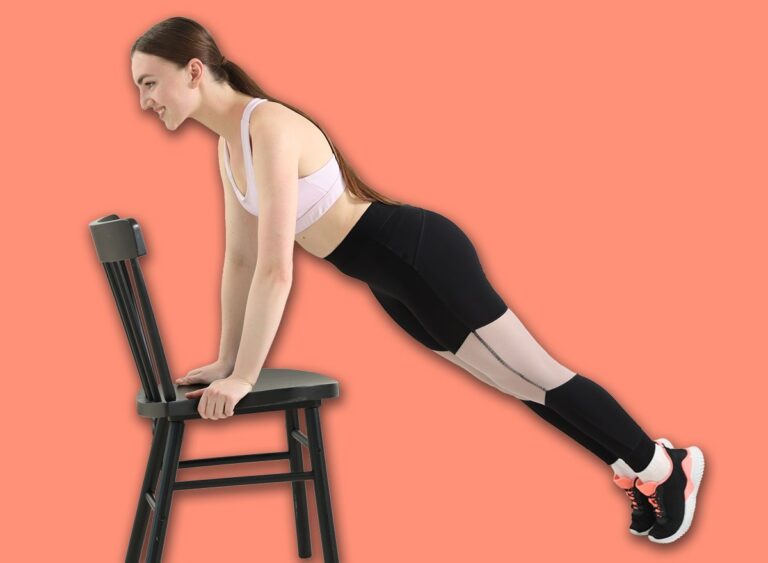
Key takeaways
- This 12-minute chair routine rebuilds leg strength through six targeted exercises that require no equipment or gym membership.
- Slow, controlled repetitions with full range of motion create muscular tension that strengthens quadriceps, hamstrings, glutes, and hip muscles.
- Each movement targets functional abilities like climbing stairs, standing from chairs, and walking while also improving balance.
Your lower body handles the mechanical demands of everyday living. Whether you’re walking to the mailbox, negotiating a flight of stairs, pushing yourself up from a seated position, hauling a bag of groceries, or steadying yourself when the floor feels uneven, your legs are working. The quadriceps, hamstrings, glutes, and hip muscles all share responsibility for these movements, and when they weaken, simple tasks become effortful.
Many adults over 60 embark on lengthy gym sessions to recover lost leg muscle, yet this path is neither necessary nor often effective. A more straightforward and practical entry point exists: a well-constructed routine performed in a chair. This approach sidesteps the need for intimidating equipment, complex machines, or the noise and scrutiny of a fitness facility.
The encouraging truth about muscle loss is that it’s reversible. Rebuilding doesn’t demand intense or painful training. Your muscles respond to consistent challenge delivered through controlled resistance, rhythmic repetition, and methodical increases in difficulty.
The Power of Chair-Based Training
Chair exercises excel because they separate muscle engagement from equipment complexity. You concentrate purely on the work being done by your muscles rather than managing stability, balance, or learning how to operate machines.
The chair provides the foundation you need. It eliminates distraction and doubt, allowing you to channel your energy directly into creating tension within the muscles. The secret lies in executing each repetition deliberately, using the full range of motion available to you comfortably, and sustaining enough muscular work that your legs feel the effort.
This specific routine compresses meaningful lower-body training into 12 minutes. Six distinct movements are performed for two minutes each, creating a session that fits naturally into a morning schedule. No membership, no setup, no excuses.
Starting the Sequence: Seated Leg Extensions
Begin by targeting the quadriceps, the large muscle group on the front of your thigh. Seated leg extensions accomplish this without forcing your full body weight through the knee joint, a significant advantage for older adults.
Why the quadriceps matter becomes clear when you think about your daily activities. Strong quads help you rise from a sitting position, ascend stairs smoothly, and maintain control of your body as you walk downhill. These are exactly the movements that feel harder as the quad muscles fade.
During seated leg extensions, your chair is your anchor. Sit back, fully supported, and perform the movement. Rather than simply extending your leg out and pulling it back, introduce a pause once your leg reaches full extension. This brief hold—even just one second—intensifies the muscular tension and transforms a two-minute window into genuine strength work.
Building Whole-Body Power Through Sit-to-Stands
After warming the quads, shift to an exercise that engages your entire lower body at once. The sit-to-stand movement recruits your quads, glutes, hamstrings, and deep abdominal muscles simultaneously. More importantly, it’s a movement you actually perform every single day, making it one of the most practical exercises available.
This movement is so valuable that fitness professionals use it as an assessment tool. How well someone can execute sit-to-stands reveals much about their leg strength and functional capability. The execution matters more than the repetition count. Descend deliberately, resisting gravity rather than plopping into the chair. Once seated, drive forcefully through your feet to stand, creating momentum from your legs rather than using your arms as a crutch. Each rep counts when performed with intention.
Balancing Strength: Posterior Chain Development
Your body achieves optimal performance when opposite muscle groups develop equally. The previous minutes focused on the front of your legs, so the next phase shifts attention backward.
The Often-Neglected Hamstring
Seated hamstring curls address the muscle running along the back of your thigh. Many older adults concentrate almost exclusively on quad development and miss this crucial counterbalance. The hamstrings don’t just look proportional; they stabilize your knees and hips, making them central to pain-free movement. When hamstrings lag behind quads in strength, walking becomes labored and climbing stairs feels risky.
Seated hamstring curls keep you stable and supported while you bring your heel toward your buttocks. This simple action strengthens the pulling motion of your legs, something that feels very different from the pushing motion of quads and glutes.
Calf Training for Functional Walking
Calves are often overlooked despite their essential role in every single step. The calf muscles propel your body forward and anchor your ankle stability as your foot makes contact with the ground. Without strong calves, your walking speed decreases, your walking endurance shrinks, and your balance becomes suspect.
Seated calf raises offer a low-impact method to build calf strength. Sit in your chair and lift your heels, rising up onto the balls of your feet. The lifting phase is important, but the return to the floor is where real strength develops. Lower your heels deliberately, fighting gravity rather than allowing them to drop. This eccentric, or lengthening, phase forces your calves to work harder and builds more durable strength.
Hip Activation and Core Stability
Hip strength frequently declines in people who become sedentary, and weakened hips make everyday navigation difficult. Walking, stair climbing, and even standing still all require hip strength. Seated knee drives strengthen the muscles that lift your leg at the hip while forcing your core muscles to keep your torso stable and upright.
Perform seated knee drives later in the routine, when your legs have already done substantial work. Your muscles must continue generating controlled force even after several minutes of effort. Keep your back straight and your chest lifted. The temptation to lean backward makes the exercise easier, but it defeats the purpose. Drive your knee upward with control, pause briefly, and return to the starting position. Quality always trumps speed.
The Finishing Movement: Supported Squats
Every effective lower-body session should conclude with a standing, integrated movement. Supported squats bring together all the isolated muscle work from the previous 10 minutes and teach those muscles to function as a coordinated system.
Place your hands on the chair and lower your body by bending your hips and knees. The chair remains within reach for safety. Rise by pushing through your feet, emphasizing glute and quad power. This movement strengthens your glutes, quads, hamstrings, and core all at once, and it’s a fundamental pattern you use continuously.
If your legs feel depleted by the final two minutes, reduce the depth of your squat. There’s no shame in a shallow bend; it still provides valuable stimulus. As your strength increases over successive weeks, gradually deepen your squat and slow your descent until you’re lowering yourself with deliberate control.
Progressive Advancement Over Time
Strength doesn’t arrive in days or weeks. The body needs consistency before it delivers results. That said, the routine must evolve as your body adapts.
Your first goal is mastering the form of each movement with proper control and range. Once you can sustain two minutes of smooth, controlled repetitions without reaching exhaustion, your body is ready for additional challenge. You can increase the difficulty by expanding your range of motion, slowing your tempo to heighten time under tension, or reducing your reliance on the chair for support—moving some movements from seated to standing or performing them without holding the chair.
Adults who remain consistent with this routine frequently report meaningful improvements. They stand from chairs with less effort. Stairs feel easier to climb. Walks extend in duration without fatigue setting in. The strength developed during 12 minutes translates directly into the functional ability to move through life with confidence.
Frequently Asked Questions
How long does this chair routine take and how often should I do it?
The complete routine takes 12 minutes and consists of six movements performed for two minutes each. It's designed to fit easily into your morning schedule and can be done regularly for continuous strength gains.
Do I need any equipment or a gym membership to do these exercises?
No. The routine uses only a chair for stability and support. You won't need any complicated machines, weights, or gym membership.
What should I do if my legs feel too fatigued to complete the full range of motion?
You can use a shallow version of any movement, such as a shallow squat. Over time, gradually increase your depth and slow your lowering phase as your strength improves.
