
Key takeaways
- Hip strength declines naturally with age through sarcopenia, making everyday tasks like climbing stairs and standing difficult.
- Bed exercises strengthen hip muscles without supporting your body weight, making them ideal for people over 65 with arthritis or balance concerns.
- Six targeted bed exercises address different hip muscle groups: glutes, gluteus medius, hip flexors, quadriceps, and inner thighs.
- Start with your physician's approval and progress gradually, using bed exercises as a foundation before advancing to standing or machine-based training.
Hip strength determines how easily you climb stairs, stand from a chair, or walk without falling. As we age, particularly after 65, the hip muscles responsible for these movements naturally decline through a process called sarcopenia. Dr. Shady Hassan, a sports medicine physician and founder of NefraHealth, explains that this muscle loss accelerates with age unless you actively intervene. The solution doesn’t require expensive gym equipment: six bed exercises can restore the hip strength that daily movement demands, and for someone just beginning this work, they outperform machines.
Why Hip Strength Fades with Age
Every time you stand up, climb stairs, or take a step, your hip muscles absorb your body weight and maintain your balance. “The hips are really the foundation of how we move,” Dr. Hassan states. When those muscles weaken, the consequences extend into every part of your day. Walking becomes less efficient. Ordinary tasks grow harder. The risk of falling climbs sharply.
Understanding Sarcopenia
Sarcopenia—the natural loss of muscle mass and strength that comes with advancing age—hits the hips particularly hard. This isn’t a disease you contract or a condition you develop through injury alone. It’s a process that unfolds in every person who doesn’t actively counteract it. The hips, being central to virtually all movement, suffer first and most obviously.
Sources of Hip Weakness
Hip weakness emerges from multiple sources. A previous injury never fully rehabilitated. A medical condition that limits movement. Recovery from surgery. Or simply insufficient physical activity over years. Whatever the origin, the result is identical: muscles that once handled stairs and standing now struggle with basic tasks.
Why Bed Exercises Outperform Gym Machines for Starting Out
Gyms promise results through progressive resistance and heavy machines. For someone over 65 with weak hips, that approach often backfires. “Bed exercises are an ideal starting point because they help strengthen specific muscles without having to support your body weight,” Dr. Hassan explains. This distinction matters enormously for safety and effectiveness.
Building Strength Without Load
When you perform an exercise lying on a bed, your body weight ceases to be a barrier. Someone with arthritis, poor balance, or significant weakness can target the exact hip muscles that need work without fear of falling or excessive joint stress. The muscles activate and build control without the obstacle of supporting yourself upright. This creates an entry point that would otherwise feel impossible.
No Equipment Required
Machines certainly have a place, Dr. Hassan notes, especially once you’re ready to build strength through progressive resistance. But for someone just getting started, targeted bed exercises improve muscle activation and control without requiring any equipment at all. This accessibility means you can begin tonight, in your own bedroom, without appointments, costs, or memberships.
Six Bed Exercises That Restore Hip Function
Dr. Hassan recommends six specific bed exercises that address the different hip muscle groups responsible for movement and stability.
Strengthening the Glutes and Pelvis
One exercise strengthens the glutes, which Dr. Hassan calls essential for standing up, climbing stairs, and maintaining a steady walking pattern. The glutes bear much of the load when you rise from a chair or ascend stairs. When they weaken, these actions become exhausting.
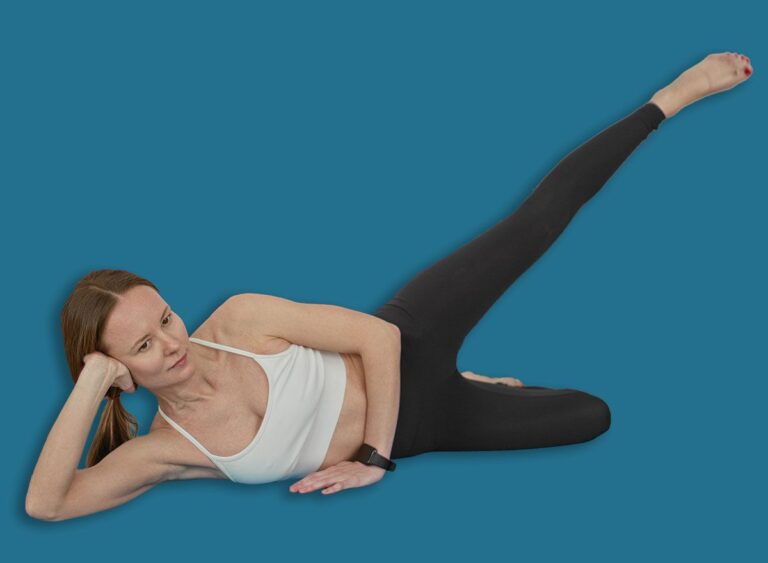
Another exercise targets the gluteus medius, described by Dr. Hassan as one of the most important muscles for keeping the pelvis stable when you walk. Weakness here contributes directly to an unsteady gait and poor balance—precisely the problems that lead to falls. A third exercise, the clamshell, strengthens the muscles responsible for hip stability and control. Dr. Hassan points out that these muscles often don’t receive enough attention during everyday activities, making clamshells especially valuable for restoring lost function.
Targeting Hip Flexors and Leg Lifting
Two additional exercises address hip flexor strength. One works the hip flexors while challenging your core and pelvic control, strengthening the muscles involved in lifting your legs during walking. The other specifically strengthens both hip flexors and quadriceps, muscles that help with lifting the leg, walking, and a task many people over 65 struggle with: getting in and out of bed smoothly without using their hands or assistance.
Improving Lower-Body Control
The final exercise targets the inner thigh muscles, which help control leg positioning and contribute to pelvic stability. Strengthening them improves overall lower-extremity control, particularly when changing positions—rising from sitting, shifting from standing to kneeling, or any movement that requires repositioning your legs with control.
Medical Clearance and Safe Progression
Before beginning any new exercise routine, especially after 65, check with your physician to get the green light. Your doctor knows your medical history, any previous injuries, and any conditions that might affect how you exercise safely. This single conversation prevents complications and ensures you’re working within appropriate boundaries.
From Foundation to Full Strength
Bed exercises serve as an entry point, not an endpoint. As your hip strength improves and your confidence builds, you can progress these exercises by increasing repetitions, adding small resistance, or transitioning to standing variations. The goal isn’t to stay on the bed forever; it’s to rebuild the foundation so you can safely handle the resistance and demands of daily life—and eventually, more challenging training if desired.
Reclaim Your Independence
Hip strength isn’t optional after 65. It’s the difference between confidently climbing a flight of stairs and gripping the railing for support. Between standing up to greet a friend and struggling up from a chair. Between walking without thinking and focusing on every step. Six bed exercises can restore this capacity, delivered by science and recommended by someone whose profession is helping people move safely into their later years.
Source: Eat This Not That
Frequently Asked Questions
Why are bed exercises better than gym machines for hip strength after 65?
Bed exercises strengthen specific hip muscles without requiring you to support your body weight, making them ideal for someone just starting this work. According to Dr. Shady Hassan, gym machines have a place for progressive resistance training, but for beginners—especially those with arthritis, poor balance, or significant weakness—bed exercises improve muscle activation and control without equipment or joint strain.
What muscles do these six bed exercises target?
The six exercises target the glutes, essential for standing and climbing stairs, the gluteus medius for pelvic stability when walking, hip flexors for leg lifting and core control, quadriceps for getting in and out of bed, and inner thigh muscles for leg positioning and overall lower-body control.
Should I check with my doctor before starting these exercises?
Yes. Before beginning any new exercise routine, especially after 65, check with your physician to get the green light. Your doctor knows your medical history and any conditions that might affect how you exercise safely.
