
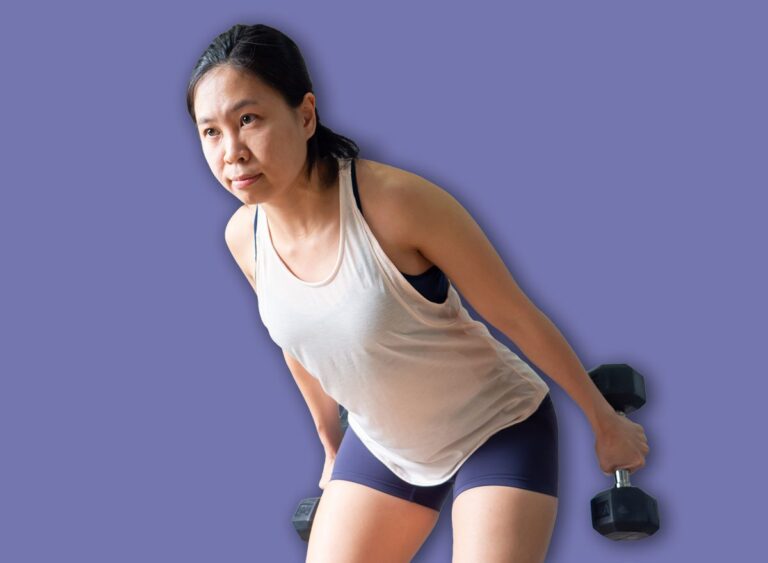
Key takeaways
- Standing exercises force your entire upper body and core to work together, creating greater muscle activation than isolated arm exercises.
- These four functional movements—overhead press, rows, triceps extension, and cross-body punches—require minimal equipment and fit into brief workouts.
- Stronger shoulders, upper back, and triceps translate directly to easier everyday tasks like lifting boxes and placing items on high shelves.
- Consistent training improves your posture and confidence, making your arms appear more defined simply from standing taller.
After turning 50, many people notice their upper arms look different—the skin appears looser and the muscles seem less defined. While the instinctive response is to spend more time doing isolated curls and triceps exercises, this approach rarely delivers the results people expect. A far more effective strategy focuses on functional movements that simultaneously train the shoulders, triceps, chest, upper back, and core. These integrated exercises build stronger, more capable arms while improving how your entire body moves and functions.
Why Your Arms Change After 50
Your body transforms significantly after 50 in ways that directly affect arm appearance. Muscle mass naturally declines as you age, a process that accelerates without resistance training. The body also shifts where it stores fat, often accumulating in the upper arms and shoulders. These concurrent changes create the loose-looking skin that frustrates so many adults. The positive news: you can slow and even reverse these changes through properly designed standing exercises.
By age 50, most adults have already lost considerable muscle mass compared to their 30s. This decline happens gradually—you might not notice it until several years have passed. The upper arms are particularly vulnerable because they’re smaller muscle groups that don’t receive much demand during normal daily activities. Your pectorals, shoulders, and upper back experience similar decline. The triceps, which make up a significant portion of your upper arm, require specific attention to maintain and rebuild. Fat redistribution amplifies the problem: even if your total weight hasn’t changed, the composition beneath the skin may look softer and less defined.
The Limitations of Isolation Training
Many people assume that more curls and triceps extensions will solve the problem. Isolated movements tell only half the story. A single-joint exercise like an isolation curl demands little from your core, legs, or postural muscles. Your body can perform the movement while slouching, creating no incentive to improve posture or core stability. The result: you might build some tricep muscle, but your arms still look less defined because you’re standing in a rounded, slouched position.
The most common mistake is spending an hour in the gym performing isolated exercises while hoping more repetitions will quickly transform arm appearance. This approach misses the bigger picture. Compound movements that involve multiple joints and muscle groups create a completely different training stimulus. These functional exercises engage your shoulders, triceps, chest, upper back, and core together, building more muscle throughout your entire upper body. The goal is building usable strength rather than chasing an endless pump from isolated exercises—strength that actually changes how you move and carry yourself.
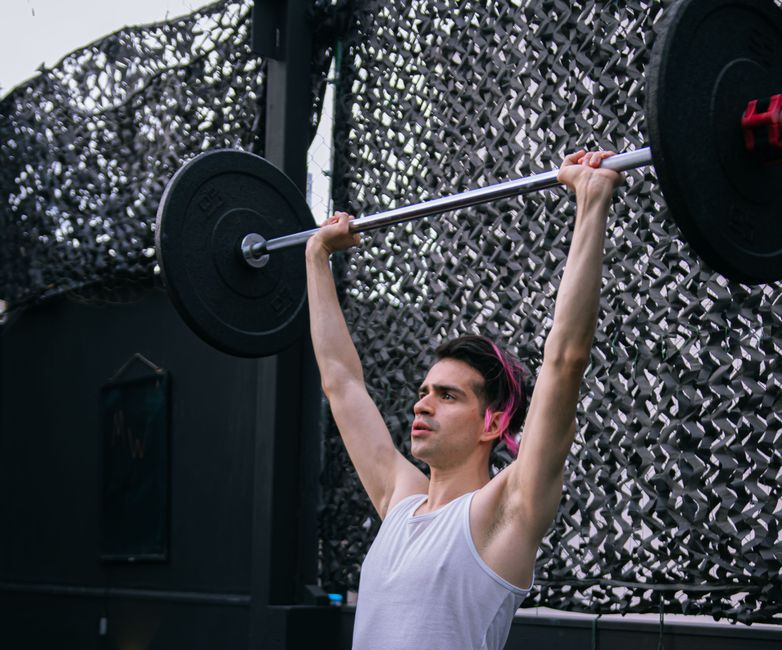
Standing Functional Movement for Total-Body Results
Standing exercises transform the way your body responds to training. When you perform a standing overhead press instead of a seated machine press, your entire body must work to keep you balanced. Your core tightens to prevent excessive arch in your lower back. Your legs engage to ground you. Your shoulders stabilize your spine. This total-body activation creates stronger neural adaptation and greater muscle recruitment compared to isolated movements. Standing exercises force your upper body to work while your legs and core help stabilize your position, creating greater total-body involvement with every repetition.
Functional strength translates directly to everyday tasks. Stronger shoulders make it easier to place dishes on a high shelf or lift a box overhead without strain. Stronger upper back muscles make hours at a desk or in a car more comfortable. The triceps strength you build translates to easier pushing, lifting, and carrying throughout your day. These movements also improve posture—something that becomes increasingly important after 50. Years of sitting at desks, driving, or looking at screens create rounded shoulders and forward head position. Standing rows specifically counteract this rounded posture by strengthening the muscles that pull your shoulders back and open your chest.
The visual transformation extends beyond muscle gain. When your legs, core, and upper body are stronger, you naturally stand taller and move with greater confidence. This postural change alone makes your arms appear more defined and your entire physique look stronger. It’s not just the muscles—it’s how you present yourself to the world. Simply standing taller and carrying yourself with greater confidence makes your arms look more defined. This confidence boost often surprises people; they notice it in photographs and in how others respond to them.
Four Essential Standing Exercises
You don’t need an hour-long gym session to challenge your arms effectively. These four movements require minimal equipment and fit easily into a morning routine, lunch-break session, or quick evening workout. Consistency matters more than volume—performing these movements regularly with controlled technique beats sporadic high-intensity sessions. Focus on simple movements with excellent technique, and you’ll give your upper body a much better reason to maintain muscle as you age.
Overhead Press for Shoulders and Triceps
The overhead press deserves a place in nearly every upper-body routine because it trains the shoulders and triceps simultaneously. The standing variation is particularly valuable because your entire body contributes to keeping you stable as you press. This means your core works continuously throughout the set, not just during one specific movement. Use light dumbbells or resistance bands to start, and prioritize smooth, controlled movement over heavy weight. As your pressing strength improves, everyday activities such as placing dishes on a high shelf or lifting a light box overhead become easier. Stronger shoulders provide the foundation for nearly every reaching and lifting task you perform throughout the day.
Resistance Band Rows for Upper Back Development
Firm-looking arms require strong pulling muscles just as much as strong pushing muscles. Resistance band rows target your upper back, rear shoulders, and biceps while encouraging you to maintain an open chest and properly positioned shoulders. Many people discover that upper-back strength has an immediate impact on arm appearance—stronger posterior muscles create visual balance across your entire upper body. The movement also counteracts the rounded posture that often develops from years of sitting at desks, driving, or looking down at screens. I frequently use rows with clients who want better-looking arms because stronger upper-back muscles improve posture and create a more balanced physique. Every controlled pull gives your arms and back a reason to stay strong.
Standing Triceps Extension for Arm Definition
Your triceps make up a significant portion of your upper arm, making their strength critical for achieving arm definition. This standing variation isolates the triceps without requiring complicated machines or heavy loads. The key detail: keep your upper arms still while extending your elbows. Many people make the mistake of swinging the weights, which shifts work away from the target muscles and onto your shoulders and core. Slow repetitions create much more productive tension than rushing through a long set. As your triceps grow stronger, pushing, lifting, and carrying tasks throughout your day become noticeably easier.
Cross-Body Punches for Arm Endurance
Cross-body punches combine arm endurance with core stability and gentle rotational movement. Every punch challenges your shoulders and triceps while your abdominal muscles stabilize your torso and your legs keep you grounded. Unlike an isolated arm exercise, this movement keeps multiple muscle groups working continuously, making it an excellent way to finish a short workout. The steady rhythm also raises your heart rate without requiring complicated equipment. Focus on control rather than speed, and you’ll feel your shoulders and arms working hard by the end of the set.
Consistency and Long-Term Results
The adults over 50 who achieve the most dramatic arm transformations aren’t training harder—they’re training smarter. They perform these four movements consistently, focusing on excellent technique with every repetition. They understand that building usable strength takes time and that the results extend far beyond appearance. They notice that they move through the world with greater ease and confidence, with improved posture and better ability to perform daily tasks. Perform these exercises two to three times per week, allowing at least one day between sessions for recovery and adaptation. Your arms will become noticeably stronger and more defined as you age—something that felt impossible before you started this approach.
Frequently Asked Questions
What equipment do I need for these standing arm exercises?
Light dumbbells or resistance bands. You can start with resistance bands for all four movements and progress to light dumbbells as you grow stronger.
How often should I perform these standing exercises?
Perform them two to three times per week, allowing at least one day between sessions for recovery and muscle adaptation.
Why are standing exercises better than isolated arm curls for adults over 50?
Standing exercises force your core, legs, and entire upper body to work together, improving posture and balance while building more functional strength. Isolated exercises only target one muscle group and don't improve how you carry yourself.
