
Key takeaways
- Dead bugs teach your core to stabilize your spine while your limbs move—the real-world skill that planks never develop.
- Five distinct exercises (dead bugs, reverse crunches, flutter kicks, bear holds, hollow holds) give your midsection different challenges, preventing the boredom that static holds create.
- Three to five workouts per week using 2 to 3 sets per exercise builds measurable core strength without the shoulder and wrist strain of extended plank holds.
Core training after 55 works best when it feels simple and repeatable, yet challenging enough to build real strength. The problem with long plank holds is that your shoulders often fatigue before your abs get meaningful work. More importantly, planks don’t teach your core to stay active when your arms or legs are moving—and that’s the skill that actually matters for daily life. The solution is bodyweight core work that gives your midsection a different job in each exercise: some demand stability while you move, others create contraction through a limited range, and others build endurance. This variety works better than marathon static holds, and it’s easier to sustain as a consistent practice.
Dead Bugs: Stability Through Movement
Proper Form and Progression
The alternating dead bug teaches your abs to hold your lower back steady while your arms and legs move. Lie on your back with your knees bent and feet flat on the floor. Extend your right arm straight up toward the ceiling, then straighten your left leg and lower it toward the floor without touching down. Return both limbs to the starting position, then alternate sides. Perform 2 to 3 sets of 6 to 10 reps per side. If your lower back starts to arch, shorten the reach. Variations include bent-knee dead bugs, heel-tap dead bugs, and slower dead bugs.
Why Control Beats Static Holds
This movement gives the dead bug more value than a static hold because it trains control—the exact skill you need when reaching, stepping, or bending in real life. The dead bug teaches your core to stabilize your spine while your limbs create movement, building the functional strength that matters most after 55.
Reverse Crunches and Flutter Kicks: Contraction and Endurance
Reverse Crunches for Lower Abs
The reverse crunch gives your lower abs a clear job without requiring large ranges of motion. Lie on your back with your knees bent and feet flat. Using only your core, curl your hips slightly off the floor and bring your knees slightly toward your chest. Think about lifting your hips, not swinging your legs. The movement is small but challenging. Perform 2 to 3 sets of 8 to 12 reps. Variations include bent-knee reverse crunches, reverse crunches with a pause, and smaller-range reverse crunches.
Flutter Kicks for Core Endurance
Flutter kicks keep your abs active while your legs move continuously, creating sustained challenge through your midsection. Lie on your back with your legs extended. Keep your lower back pressed to the floor and make small, rapid up-and-down kicks from the hip. Keep the range small enough that your lower back stays steady. Perform 2 to 3 sets of 20 to 30 seconds. This move adds pace without becoming high-impact. Variations include bent-knee flutter kicks, higher-leg flutter kicks, and shorter flutter-kick intervals. Together, reverse crunches and flutter kicks train your core to work in two different ways: one creates a strong contraction, the other builds endurance.
Bear Hold with Shoulder Taps: A Different Position
The bear hold brings your core work off your back and onto your hands and knees, where your abs have to keep your torso steady while one hand leaves the floor. Start on your hands and knees with your wrists under your shoulders and knees under your hips. Engage your core and lift your knees just an inch off the floor so your weight rests on your palms and the balls of your feet. Lift your right hand and tap your left shoulder, then return to the center. Alternate sides. Perform 2 to 3 sets of 6 to 10 taps per side. Keep your hips as level as possible when your hand lifts—that’s where the real work happens. Variations include a standard bear hold without taps, bear hold with slower taps, and elevated bear hold. This position builds trunk strength, shoulder control, and coordination in one simple movement.
Hollow Body Holds: Building Full-Body Tension
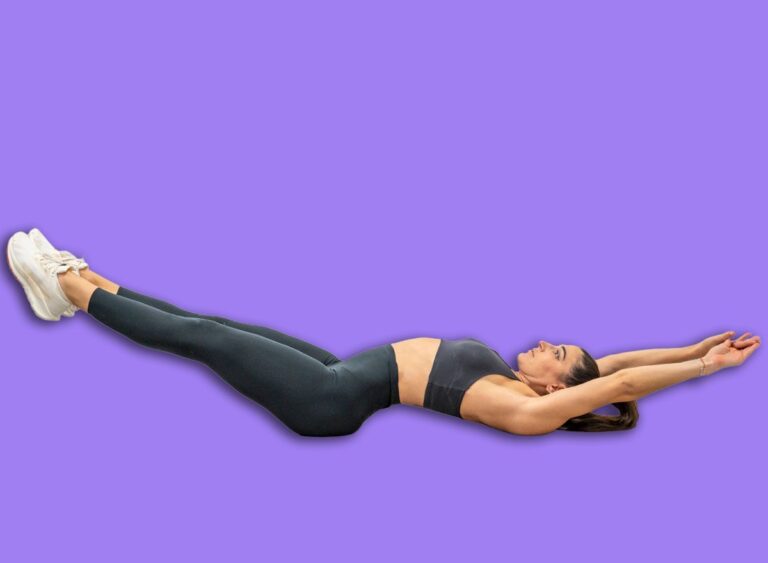
The hollow hold teaches full-body tension through your core. Lie on your back and press your lower back into the floor. Extend your arms straight up toward the ceiling, then press them back over your head while straightening your legs and lifting them slightly off the floor. Your body forms a hollow shape with all tension flowing through your core. Perform 2 to 3 holds of 10 to 25 seconds. If your lower back starts to leave the floor, bend your knees to reduce the demand. Variations include a tuck hollow hold, one-leg hollow hold, and hollow body rock. This is a strong finisher because it ties together all the elements you’ve trained: tension, stability, and control.
Programming Your Routine for Consistent Results
Use these five exercises three to five days per week. Start with two rounds, resting as needed between movements. Once the reps feel steady, add a third round or extend the holds by a few seconds. Keep the focus on control and breathing—the effort level should let you come back to the routine again. Core strength after 55 improves through steady practice, especially when the exercises give your abs different jobs without making the workout complicated. You don’t need marathon plank holds. You need movement, tension, and enough variety to keep the routine useful.
Frequently Asked Questions
How often should I perform these core exercises?
Use these five bodyweight core exercises three to five days per week. Start with two rounds of each movement, resting as needed between exercises, then progress to three rounds or longer holds once the reps feel steady.
What should I do if my lower back arches during these movements?
Reduce the range of motion. For dead bugs, shorten your reach. For flutter kicks and hollow holds, keep the range small enough that your lower back stays pressed to the floor. If needed, bend your knees in the hollow hold to reduce demand.
Why are these exercises better than planks for core strength after 55?
These exercises teach your core to stay active while your arms and legs move, which is the real-world skill you need. Planks create a static demand that tires your shoulders and wrists before your abs get meaningful work.
