
Key takeaways
- Four simple home exercises—chair squats, step-ups, leg extensions, and glute bridges—build thigh strength as effectively as lunges without requiring difficult balance.
- Consistency and controlled movement matter more than difficulty or heavy weights when training thighs after 65.
- Equipment is minimal: just a sturdy chair, a low step, and body weight to start seeing results within weeks.
- Each exercise reinforces functional movements you use daily, like climbing stairs and standing up from a seat.
Strong thighs are the foundation of independent movement after 65. Your quadriceps and hamstrings handle the real work your body performs every single day—rising from a chair, climbing stairs, stepping over obstacles, and controlling your descent when you lower yourself down. Most older adults recognize that thigh weakness limits confidence and freedom. Yet many assume stronger legs require lunges or other complicated single-leg movements demanding excellent balance.
Why Traditional Lunges Fall Short for Older Adults
Lunges have earned their reputation as an effective leg exercise, but they present a significant challenge for most people over 65. A proper lunge requires you to balance on one leg while lowering your body toward the ground, then drive back up to standing. For anyone with balance concerns, shaky knees, or hip tightness, the movement becomes primarily about managing stability rather than strengthening your thighs. The mental challenge of not falling often outweighs the physical benefit to your muscles.
A simpler approach produces better results. When you train your thighs without making balance the limiting factor, you can focus directly on the muscles you’re trying to strengthen. You perform more repetitions with better form. You train more frequently without fatigue or fear interfering. Most importantly, you actually do the work regularly instead of avoiding it because it feels risky. This is where most people miss the opportunity to rebuild their lower body strength.
Building Thigh Strength With Minimal Equipment
You don’t need a gym membership, fancy equipment, or heavy weights to rebuild your thighs. Resistance comes from your own body weight and gravity. Your quadriceps and hamstrings respond to consistent challenge applied regularly over weeks and months. Controlled squats, step-ups, bridges, and leg extensions deliver that challenge while allowing you to adjust difficulty to your current fitness level.
These four exercises also reinforce movement patterns you actually use outside your home. They train your legs to perform familiar tasks more powerfully and under better control. Building strength through movements that mirror daily life produces more useful results than mastering a complicated exercise you’ll never repeat. You’ll need a sturdy chair, a low step—a standard stair works perfectly—and your body weight. That’s all.
The Four Foundational Exercises
Chair Squats: The Safety-First Foundation
Chair squats provide the safest starting point for rebuilding thigh strength. Lower yourself toward a chair as if preparing to sit, pausing just above the seat, then push through your heels to stand back up. Every repetition targets your quadriceps and glutes while your hamstrings help control the descent.
The chair provides two critical advantages. First, it gives you a consistent depth target—you know exactly how far down you need to go each time. Second, it offers a safety point if your legs become fatigued. You’re never worried about falling because the chair is right there. Focus on lowering slowly rather than dropping quickly onto the seat. Controlling your body downward creates the valuable strength challenge that quick movements don’t provide. As your legs improve, you can gradually increase repetitions or hold light weights while performing the movement.
Step-Ups: Practical Stair Training
Step-ups closely mimic what happens when you climb a staircase, making them one of the most practical exercises you can practice at home. Place one foot on a low, sturdy step. Drive through that leg to lift your body up onto the step, bringing your other foot to meet it. Step back down with control and repeat on the same leg for several repetitions before switching sides.
Each repetition requires your quadriceps and glutes to lift your body while your supporting leg stabilizes your knee and hip throughout the movement. Start with a low step because controlled movement matters far more than climbing high. Clients often notice that everyday stairs become easier after consistently practicing step-ups. This exercise lets each leg work independently without requiring the complicated balance of a forward lunge.
Seated Leg Extensions: Isolated Quadriceps Building
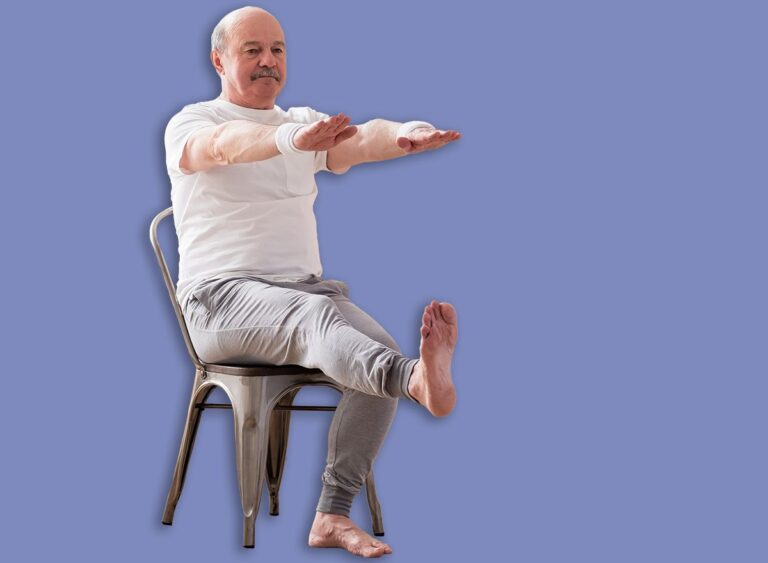
If your thighs need extra strengthening without placing your full body weight through your legs, seated leg extensions offer an excellent option. Sit in a sturdy chair and straighten one leg out in front of you until it reaches a comfortable straight position. Pause briefly, then lower your leg back down slowly. The movement directly targets your quadriceps while the chair provides complete support for your torso and spine.
This exercise shines for people who struggle with standing movements or who are just beginning their strength-building journey. It allows you to build strength before progressing to more demanding exercises. The controlled tempo makes a surprisingly big difference. By pausing briefly when your leg reaches its straightened position and lowering slowly back down, you increase the strength challenge without needing to add weight.
Glute Bridges: Strengthening the Posterior Chain
Lie on your back with your knees bent and feet flat on the floor, positioned about hip-width apart. Push through your heels to lift your hips off the ground until your body forms a straight line from your knees to your shoulders. Squeeze your glutes at the top, then lower back down with control. Glute bridges primarily target the glutes and hamstrings, but they also teach your lower body to generate force while your core stabilizes your spine.
The importance of this movement goes beyond the glutes. Weak hips often force your thighs to compensate during squats, stairs, and walking, leading to poor movement patterns and eventual discomfort. Building your posterior chain—the muscles along the back of your body—creates a more balanced lower body and helps your legs produce power more efficiently. You’ll strengthen muscles that traditional lunges don’t always challenge as effectively, creating a more resilient lower body.
Making Consistency Your Real Goal
After years of coaching adults over 65, the pattern is clear: consistency matters far more than choosing the hardest exercise possible. These four movements target the major muscles of the thighs while also strengthening the hips and improving control through the knees. They work best when you perform them several times each week on an ongoing basis.
You’re not trying to exhaust yourself on every set. You’re applying a regular challenge to your muscles so they adapt and grow stronger. Start with a manageable number of repetitions—perhaps 10 to 15 chair squats, 8 to 12 step-ups per leg, 10 to 15 leg extensions, and 10 to 15 bridges. Over several weeks, gradually increase repetitions or slow down the movement tempo. Track your progress and celebrate when daily tasks feel noticeably easier.
Advancing Your Routine Over Time
Your thighs will adapt to the challenge you provide. When an exercise begins feeling easier, you have several progression options. Add more repetitions to your sets. Slow down the movement, pausing longer in challenging positions. For chair squats and leg extensions, hold light weights—a water bottle or dumbbell—to increase resistance. For step-ups, choose a slightly higher step. Small changes prevent boredom while keeping your muscles challenged and growing stronger week after week.
Frequently Asked Questions
What are the four exercises for thigh strength after 65?
Chair squats, step-ups, seated leg extensions, and glute bridges. All use minimal equipment and can be performed several times each week at home.
Do I need heavy weights to build thigh strength after 65?
No. Controlled squats, step-ups, bridges, and leg extensions provide adequate resistance to your quadriceps and hamstrings while allowing you to adjust difficulty to your fitness level.
Why are these exercises better than lunges for older adults?
They don't require the balance that lunges demand. Balance is not the limiting factor, so you can focus entirely on strengthening your thighs while performing them safely and consistently.
