
Key takeaways
- Lunges demand too much ankle mobility and deep knee bending for older adults with balance concerns.
- Single-arm carries build anti-rotation core strength while mimicking functional movements like carrying groceries.
- Foot and ankle proprioceptors are the first line of defense against falls, requiring dedicated strengthening.
As you reach your mid-60s and beyond, your legs become your primary foundation for independence, athletic performance, and injury prevention. The natural decline in muscle mass that comes with aging, the slowing of your nervous system’s reaction time, and physical changes in your inner ear and eyesight all contribute to measurable shifts in how your body manages balance. Add to this the reality that some prescription medications can worsen instability, and the case for dedicated leg training becomes clear. But not all leg exercises deliver equal results. According to Dr. Melanie Wintle, a chiropractor and corrective exercise specialist with ISSA certification and more than 25 years of clinical experience in rehabilitation and functional strength training, the exercises that work best for younger bodies may actually hinder progress in older adults. “Balance isn’t just about standing still—it’s about maintaining stability,” she explains. “Stability means you can stay upright and react quickly if something shifts beneath your feet, like uneven ground, ice, or stairs. That requires both joint stability and power to catch yourself before a fall happens.”
Why Lunges Fall Short for Balance Training After 65
The lunge has dominated fitness culture as a go-to lower-body exercise, recommended by trainers and magazines alike. But for people in their 60s and beyond, it presents unnecessary obstacles and risks. Forward lunges demand a deep knee bend, extensive ankle mobility, and significant power to push yourself back upright—a combination that doesn’t favor older joints. “Lunges are extremely difficult for people just beginning their fitness journey, especially those already dealing with balance or mobility challenges,” Dr. Wintle emphasizes. “They require so much ankle range of motion, they need a really deep knee bend, and you need enough strength and power to push back out of that position. They’re not the right tool for balance training because they require too much from joints that may already be compromised.”
The beauty of moving away from lunges isn’t sacrifice—it’s liberation. Abandoning this one exercise opens the door to five alternatives that build the stability systems your body actually needs, with lower injury risk and more direct carryover to everyday movement patterns.
Single-Arm Carries: Training Dynamic Stability Like Daily Life
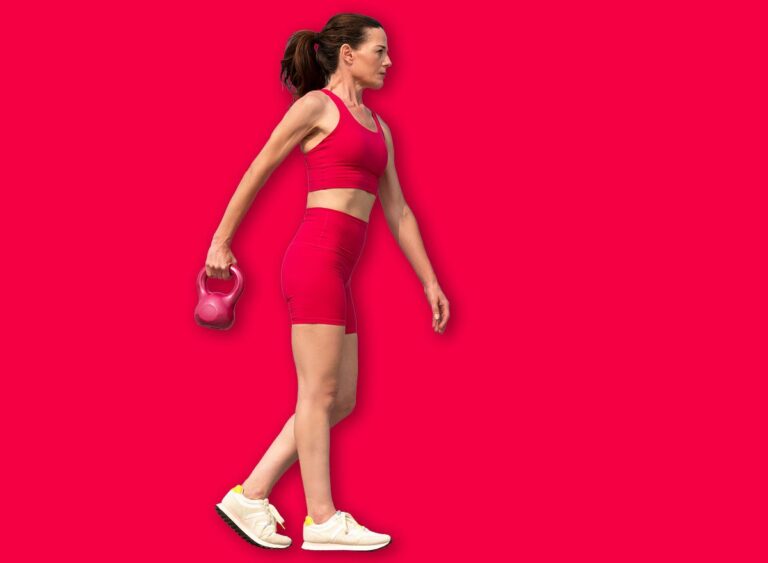
One of the most practical exercises for building real-world balance involves nothing more than holding weight in one hand while you walk. “When you offset your body’s center of gravity by holding weight on just one side, your core has to work much harder to maintain position,” Dr. Wintle notes. “This creates anti-rotation and anti-lateral-flexion demands—your trunk has to resist twisting and side-bending.” The practical payoff is immediate: carrying a suitcase from the airport, groceries from the car, or even a grandchild on one hip all become safer and easier.
Begin with a light dumbbell—5 to 10 pounds is plenty to start—and walk slowly for 30 to 60 seconds at an easy pace. Switch the weight to your opposite hand and repeat. This unilateral loading trains your core to stabilize dynamically rather than statically, building the real-world strength and balance you need when life requires you to carry things unevenly distributed.

Step-Ups: Recreating Stairs and Public Transit
Climbing onto a bus, ascending stairs, or stepping up onto a curb are movements you perform regularly without thinking about them. Yet these movements become trickier with age, and falls on stairs represent a major injury risk. Step-ups recreate these functional demands in a controlled setting where you can build confidence and strength. “This exercise simulates the kind of dynamic movement you’d do going up stairs or stepping up into public transit,” Dr. Wintle explains. “It’s training your body for the exact movements you do in real life.”
Use a low step or bench approximately 6 to 12 inches high. Place one foot on the elevated surface and push through your heel to bring your body up, driving your back knee forward naturally. Step down under control and repeat for 8 to 12 repetitions, then switch legs. The key is moving with intention—no rushing or momentum. This exercise builds the strength and balance required for the exact movements that often trip up older adults or leave them feeling wobbly.
Glute and Hip Stabilizer Strength: The Powerhouse for Staying Upright
Your glutes are more than aesthetic; they’re core to the entire stability picture. “Glute strength is crucial because these are powerful posterior chain muscles that stabilize your pelvis and hips during both walking and standing balance,” Dr. Wintle explains. “The glutes are also what control braking when you’re walking downhill or catching yourself if you start to lose your footing.” Without strong glutes, your hips and knees compensate in ways that invite injury and instability.
One-Leg Weight Shifts for Hip Stability
A simple but remarkably effective glute and hip stabilizer exercise involves shifting your weight onto one leg while maintaining balance. Stand with feet hip-width apart, slowly transfer all your weight onto one leg, and hold steadily for 2 to 3 seconds while keeping your torso upright. Return to center and repeat on the other side for 12 to 15 repetitions per leg. “These directly target the glutes and hip stabilizers, which are essential when your weight transfers fully onto one leg during normal walking,” Dr. Wintle says. “This is the movement pattern that happens with every step you take.”
Foot and Ankle Foundation: Where Balance Starts
Many fitness routines overlook the feet and ankles, yet they’re where your balance system actually originates. “Your feet and ankles are the first to respond when your center of gravity shifts,” Dr. Wintle points out. “They’re filled with proprioceptors—sensors that tell your brain where your body is in space and how it’s moving. A strong foot and ankle foundation is non-negotiable for good balance and the ability to catch yourself.”
Progressive Proprioceptive Challenge
To make ankle and foot work progressively harder, try standing on one leg while making small circles with your arms simultaneously. Perform the same one-leg balance work with your eyes closed if you have something stable to touch. These additions force your proprioceptive system to work harder, strengthening the neural pathways that keep you steady. You can also challenge your feet by standing on a soft surface like a pillow or cushion, which demands greater ankle stabilization and responsiveness.
Start with one-leg stands for 20 to 30 seconds, or try variations for 2 to 3 sets. As your balance and confidence improve, close your eyes or add the arm circles to keep the challenge growing and prevent adaptation.
Putting It Together: A Practical Morning Routine
These five exercises don’t require expensive equipment—a light dumbbell and a low step are all you need. Perform them early in the day when your mind is fresh and energy levels are highest. A complete routine takes 15 to 20 minutes. Over weeks and months of consistent practice, you’ll notice easier movement on stairs, greater confidence walking on uneven surfaces, and fewer moments of catching yourself or feeling unstable.
The goal isn’t to become an athlete or achieve fitness magazine covers—it’s to stay independent, active, and injury-free. By training stability rather than chasing vanity strength metrics, you’re investing in the quality of your life.
Frequently Asked Questions
Why aren't lunges recommended for balance training after 65?
Lunges require a deep knee bend, significant ankle mobility, and considerable power to push back up—too much for people with balance or mobility challenges. Dr. Wintle recommends alternative exercises that build stability more safely.
How do single-arm carries improve balance?
Holding weight in one hand creates anti-rotation and anti-lateral-flexion demands on your core, mimicking functional daily tasks like carrying groceries or luggage and forcing your trunk to maintain stability.
What role do feet and ankles play in balance for older adults?
The feet and ankles contain proprioceptors that sense your body's position in space and are the first to react when your center of gravity shifts, making their strength foundational to catching yourself before a fall.
