
Key takeaways
- Five exercises—Down Dog to Cobra, walking lunges, incline push-ups, one-arm rows, and farmer carries—require no special equipment beyond resistance bands or a bench.
- Perform the routine two to four days a week for 30 days to rebuild strength and regain confidence in daily movement.
- Progress by adding one more repetition, completing an extra set, or increasing resistance when current workloads start feeling manageable.
When activity drops off in later years, the body adapts downward. Strength diminishes, mobility shrinks, and movements that once felt automatic become risky. According to Eat This Not That, spending 30 days with consistent training can reverse much of that decline, not by turning back the clock but by rebuilding the capacities that diminish most when activity halts.
The intention is not to reverse a decade of aging in a single month. Instead, focus on improvements that matter: returning strength to muscles, expanding the range your joints can move through, and building the stamina to do more work without exhaustion. These shifts create a noticeable change in how your body performs in daily life.
A Simple Five-Exercise Structure
The routine Eat This Not That recommends uses five exercises to cover upper body, lower body, and the mobility work that underpins both. The session requires no special equipment beyond resistance bands or access to an incline surface, a bench, steps, or sturdy chair. Performed two to four days a week, this work can help you start feeling stronger and more capable within a month.
Opening with Mobility: Down Dog to Cobra
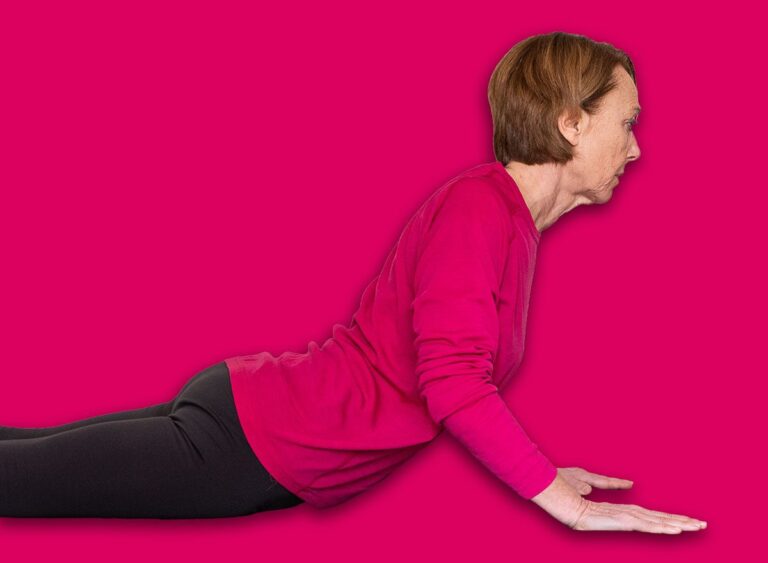
Mobility work preps the body before strength training. The Down Dog to Cobra movement takes the shoulders, spine, and hips through a larger range than most daily activities demand. You move from a downward dog position with hips raised, arms extended, and head relaxed into a cobra position with the chest lifted and shoulders open.
Perform 2 to 3 sets of 6 to 8 repetitions, resting for 30 seconds between sets. The key is working within your comfortable range rather than pushing toward end positions you’re not yet ready for. Shorter-range transitions, elevated Down Dog to Cobra using a bench or step, or slower controlled movements all serve as variations as you explore what works for your body.
Rebuilding the Lower Body: Walking Lunges
Each leg must support your full body weight and then propel you forward in a walking lunge. This single-leg demand rebuilds lower-body strength while keeping the movement athletic and functional, since stepping is something your body does every day.
Aim for 2 to 3 sets of 6 to 10 repetitions per side, with 45 to 60 seconds of rest. If balance becomes the limiting factor, shorten your stride or position yourself near a rail or wall for support. You can progress by using a supported walking lunge, taking shorter strides while maintaining control, or alternating reverse lunges if forward lunges feel less stable.
Upper Body: From Incline Push-ups to Rows
Starting with Incline Push-ups
You don’t need to start with traditional floor push-ups. An incline using a bench, steps, or wall reduces the load your upper body must overcome when pressing. This allows you to build clean repetitions and gain confidence before progressing to lower surfaces as strength improves.
Perform 2 to 3 sets of 8 to 12 repetitions, resting for 30 to 45 seconds. Variations include wall push-ups for lighter loading, lower-incline push-ups as you gain strength, or slow-tempo versions that emphasize control throughout the movement.
Building Back Strength with One-Arm Rows
One-arm rows balance the pressing work by strengthening the upper back while building core stability. When pulling with one arm, your torso wants to rotate toward the working side. Your core must resist that rotation and keep you stable. A resistance band makes progression simple: increase the band tension as the movement becomes easier.
Perform 2 to 3 sets of 10 to 15 repetitions per side, resting for 30 to 45 seconds between sets. Modify by using a two-arm band row to lighten the load, upgrading to stronger band tension, or slowing the movement for greater time under tension.
Finishing with Loaded Carries
The Farmer Carry: Simplicity and Strength
The farmer carry is deceptively simple: pick up weights, walk, then set them down. The grip must hold throughout. The core must support the load without letting it pull your shoulders forward. From the moment you lift until you set the weight down, every muscle works to maintain position and posture.
Perform 2 to 3 carries lasting 30 to 45 seconds, with 45 to 60 seconds of rest between carries. Lighter weights for longer carries, heavier weights for shorter distances, or suitcase carries, holding weight in one hand, all adjust the stimulus to match your current ability.
Building Momentum Over 30 Days
Thirty days provides enough time to establish a training rhythm and notice the changes. Perform this routine two to four times per week. When the current workload starts to feel manageable, make small progressions: one extra repetition, one extra set, slightly heavier resistance, or a longer carry distance. Small increases compound into noticeable strength gains.
The feedback from your body, movements becoming smoother, tasks feeling less taxing, confidence returning, tells you the routine is working. These improvements in strength and mobility make the daily physical world more manageable and more enjoyable.
Source: Eat This Not That
Frequently Asked Questions
How many times per week should I do this routine?
According to Eat This Not That, perform the routine two to four days per week for best results.
What should I do if incline push-ups feel too difficult?
Start with wall push-ups to reduce body weight load, then progress to lower inclines as your upper-body strength improves.
Do I need equipment to do these exercises?
No special equipment required. You need access to an incline surface like a bench or steps for push-ups, a resistance band for rows, light weights for farmer carries, and a wall for starting push-ups.
