
Key takeaways
- This 30-day routine covers five exercises ranging from mobility work to loaded carries and can be trained two to four days per week for noticeable strength gains.
- Each movement has specific rep ranges, rest periods, and progression options designed to match your current ability and adapt as strength returns.
- Walking lunges, incline push-ups, and one-arm rows rebuild lower and upper body strength, while farmer carries engage your entire body under load.
- Thirty days provides enough time to notice meaningful changes in daily movement quality, fatigue levels, and confidence with physical tasks.
After 65, months or years of reduced activity can make the body feel less capable than it once did. Joints may feel stiffer, daily tasks require more effort, and confidence in your ability to move without caution may have faded. The good news: consistent strength work over 30 days can reverse much of that decline.
This isn’t about erasing a decade of aging in four weeks. Instead, the goal is to recover the physical qualities that tend to slip first when activity drops. Strength can return. Mobility improves. Your capacity to handle work without fatigue increases. Those changes show up in how your body feels day to day, and they compound quickly with regular training.
According to Eat This Not That, a four-week program built around five key movements provides enough stimulus to notice meaningful improvement. The routine covers upper and lower body strength, mobility, and loaded carries that engage your full body. Train two to four days per week, rest adequately between sessions, and within a month you’ll likely feel noticeably more capable.
Down Dog to Cobra: Opening Your Hips and Shoulders
This movement prepares your joints for the strength work ahead. Down Dog to Cobra takes your shoulders, spine, and hips through a larger range of motion than most daily activities demand. That matters. Movement quality improves when your joints have regular practice working through their available range.
How to Perform the Exercise
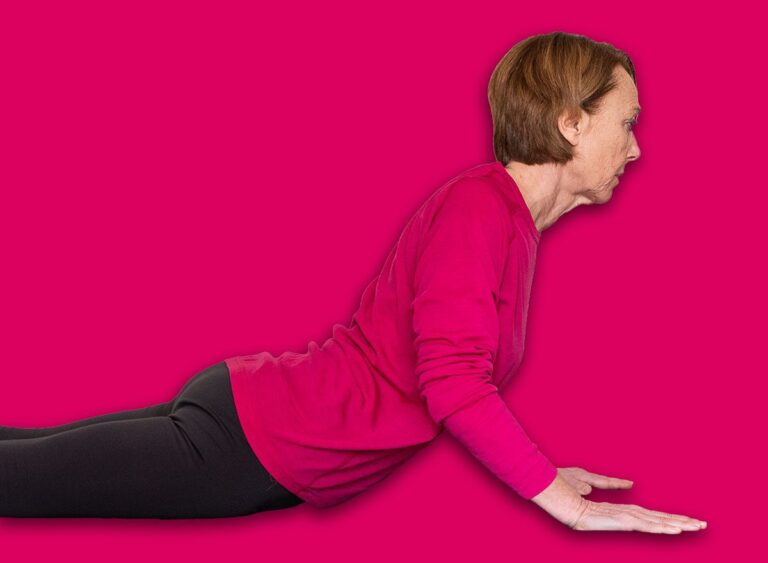
Start in a downward-facing dog position with your hands and feet on the ground, your body forming an inverted V. Transition smoothly into cobra position, where your hands support your weight and your chest moves forward. Return to down dog and repeat. The movement should feel like a flow, not a jolt.
Sets, Reps, and Rest
Perform 2 to 3 sets of 6 to 8 repetitions. Rest for 30 seconds between sets. Focus on moving through a range that feels comfortable rather than pushing into pain at either end of the motion. If full-range movement feels difficult, try an elevated down dog with your hands on a sturdy chair or bench, or transition more slowly between positions.
Progression Options
As the pattern becomes familiar, lower your hands to increase the challenge. A slower, more deliberate transition also builds strength through the range. These variations let you progress without needing new equipment.
Walking Lunges: Building Single-Leg Strength
Each leg must support your body weight and propel you forward. That makes walking lunges valuable for rebuilding lower-body strength while keeping the movement athletic and functional. Unlike stationary movements, lunges challenge your balance and coordination in ways that carry over to real-world activity.
Proper Form and Adjustments
Step forward with one leg and lower your body until both knees reach approximately 90 degrees. Push through your front leg to step forward into the next lunge. Maintain control throughout. If balance becomes the limiting factor, place a hand on a wall or back of a chair. Shorten your stride if needed. A controlled, smaller step is more effective than a longer stride you cannot manage safely.
Sets, Reps, and Rest
Perform 2 to 3 sets of 6 to 10 repetitions per leg. Rest 45 to 60 seconds between sets. The longer rest interval allows your nervous system to recover so you can maintain quality movement in the next set.
Supported and Modified Versions
Walking lunges with one hand on a chair or wall reduce the balance demand without reducing the strength work. Alternating reverse lunges, stepping backward instead of forward, are another option. Use whichever variation lets you move with control and confidence.
Incline Push-Ups: Rebuilding Upper Body Pressing Strength
Pressing strength often declines first when activity drops. Incline push-ups reduce the proportion of your body weight you must press, creating a starting point that’s challenging but sustainable. As strength returns, you lower the surface progressively until you’re pressing from the floor.
Finding Your Starting Height
Place your hands on a sturdy table, countertop, or the back of a sturdy couch. The higher the surface, the easier the movement. Lower surfaces demand more strength. Start at a height where you can complete the prescribed reps with clean form, meaning your body moves as one unit without your hips sagging or your elbows flaring excessively.
Sets, Reps, and Rest
Perform 2 to 3 sets of 8 to 12 repetitions. Rest 30 to 45 seconds between sets. Lower the surface by a few inches every one to two weeks once the current height feels noticeably easier.
Advancement Strategies
Wall push-ups offer an even easier starting point if needed. Slower, deliberate repetitions at your current height also increase the challenge without changing the surface. Moving down to a lower incline is the primary progression once pressing strength improves.
One-Arm Rows: Targeting the Upper Back
Rowing strength comes back without starting on the floor or using heavy equipment. One-arm rows let you work each side of your upper back separately, building balanced strength across both sides. The single-arm position also demands core engagement to prevent your torso from rotating as you pull.
Setup and Execution
Secure a resistance band to a fixed point at chest height, or hold a light dumbbell. Pull the weight toward your hip, keeping your elbow close to your body. Focus on squeezing your shoulder blade back and down. Return with control and repeat.
Sets, Reps, and Rest
Perform 2 to 3 sets of 10 to 15 repetitions per arm. Rest 30 to 45 seconds between sets. These higher reps make rows particularly valuable for building endurance in your back muscles.
Progression and Alternatives
Stronger resistance bands or slightly heavier dumbbells increase difficulty. A slower, more deliberate pull also increases the challenge. Two-arm rows with a lighter band provide a less demanding variation if single-arm rows feel too difficult initially.
Farmer Carries: Full-Body Loaded Strength
Farmer carries appear simple. Pick up weights, walk, put them down. The simplicity hides their effectiveness. Your grip must maintain tension throughout the carry. Your core braces against the load. Your legs support everything. From pickup to putdown, your entire body works.
Carrying Position and Form
Hold a weight in each hand at your sides, standing upright. Walk at a steady pace while maintaining an upright posture. Avoid letting the weights pull your shoulders forward. That means engaging your shoulder stabilizers and keeping your core tight throughout the carry.
Duration, Sets, and Rest
Perform 2 to 3 carries lasting 30 to 45 seconds each. Rest 45 to 60 seconds between carries. Start at the lower end of the time range and gradually increase duration as you adapt.
Load Variations
Lighter loads for longer carries build muscular endurance. Heavier loads for shorter distances emphasize pure strength. A suitcase carry, holding a single weight on one side, challenges your core’s ability to stay upright against an uneven load.
Frequency and Progressive Expectations
Train with this routine two to four days per week. On non-training days, light activity like walking supports recovery without adding fatigue. Over 30 days, make small increases: one more repetition per exercise, or progress to a more difficult variation when the current workload feels comfortable.
Thirty days is enough time to notice real changes in how your body feels. Movements that felt stiff or effortful become easier. Your ability to handle daily tasks without fatigue increases. You move with more confidence and control. Those shifts reinforce the habit of training, making it easier to continue beyond the first month.
Source: Eat This Not That
Frequently Asked Questions
Can I do this routine if I haven't exercised in years?
Yes. Each exercise has modifications. Start at a height or load that feels manageable, such as elevated push-ups, wall support during lunges, or lighter farmer carry weights, and progress gradually.
How often should I train each week?
Train two to four days per week. On rest days, light activity like walking supports recovery. Make small progressions, such as one more repetition or a harder variation, when your current workload feels comfortable.
Which exercise is most important for building strength after 65?
All five work together. Down Dog to Cobra opens your mobility, lunges and push-ups rebuild lower and upper body strength, rows balance upper back development, and farmer carries challenge your entire body under load.
