
Key takeaways
- Direct strength work combined with mobility is more effective than flexibility training alone for recovering from years of inactivity.
- These five exercises add muscular load to newly opened range of motion, targeting core stability, legs, and shoulders with manageable progressions.
- Progress takes time: the goal is making awkward movements feel natural again, not compensating for a decade of inactivity in weeks.
People who spend years moving minimally often discover that basic activities have become harder than they remember. Reaching down to pick something off a floor requires more effort. Walking longer distances leaves your legs fatigued faster than before. That reality does not mean jumping into intense workouts. Your body needs gradual, deliberate reasons to regain lost capacity.
Flexibility work like yoga helps, but it’s incomplete for someone returning to activity. After coaching older adults through this transition, the evidence shows that muscles also need direct strengthening work, not just range-of-motion improvement. Muscles supporting your body weight and gradually taking on more load is what actually rebuilds the capacity you’ve lost.
The routine below builds around that principle. You’ll start with movement that loosens your joints, then ask those same muscles to do meaningful work through that new range. In your first few sessions, keep everything comfortable and focus on making each movement feel natural before adding intensity.
Why Strength Rebuilding Requires More Than Flexibility Work
Yoga and similar flexibility practices improve mobility and can be an entry point for someone who has been sedentary. But coaches working with older adults know that mobility work alone does not recover strength.
What Yoga Does and Doesn’t Do
Yoga teaches your body to move through larger ranges and become comfortable in positions it has not visited in years. Those are real gains. When you’ve spent months or years moving minimally, that comfort matters.
Why Your Muscles Need Direct Work
What yoga often does not do is load your muscles with enough demand for them to actually rebuild. Rebuilding lost strength works better when your muscles have to support your body weight and handle gradually increasing work over time. A movement that opens your range is useful, but a movement that opens your range while your muscles actively support and control that motion is what changes your capacity.
That’s why this routine pairs mobility with direct strengthening work in the same exercises.
Down Dog to Cobra: Opening Your Shoulders and Spine
Down Dog to Cobra works because it forces you to change positions instead of holding a single posture. Your shoulders and spine move through a larger range of motion, and your core has to control the transition between positions. After years of minimal movement, that alone creates useful stimulus.
Perform 2 to 3 sets of 6 to 10 repetitions, resting 30 to 45 seconds between sets. The most important form cue is moving only through a range that feels comfortable in your shoulders and lower back. Don’t chase depth here. If you need to modify, try a shorter range of motion, perform the movement from an elevated position, or move through the sequence slowly. The goal is controlled movement, not reaching maximum range.
Lunge with Overhead Reach: Lower Body and Shoulder Range
This exercise covers more ground with each step than most people expect. The lunge challenges your legs to control the step forward and then manage the return to standing, while the overhead reach opens the shoulder and thoracic spine through a range you might not move through during the day.
Perform 2 to 3 sets of 6 to 8 repetitions on each side, with 45 seconds of rest between sets. If balance or control feel uncertain at first, shorten your step length so you can stand back up under full control. The variations include a supported forward lunge, a reverse lunge with an overhead reach, or a shorter-range version of the move.
Core Foundation: Kneeling Side Plank and Shoulder Taps
Kneeling Side Plank
After years away from structured training, your core has not had to stabilize much beyond normal daily activity. A kneeling side plank gives the muscles along your trunk a manageable place to start. You can extend the hold time gradually without jumping straight into a full side plank from your toes.
Hold each side for 15 to 30 seconds, performing 2 to 3 holds per side with 30 seconds of rest. As this becomes easier, you can progress to a full side plank or add a top-leg lift for extra challenge.
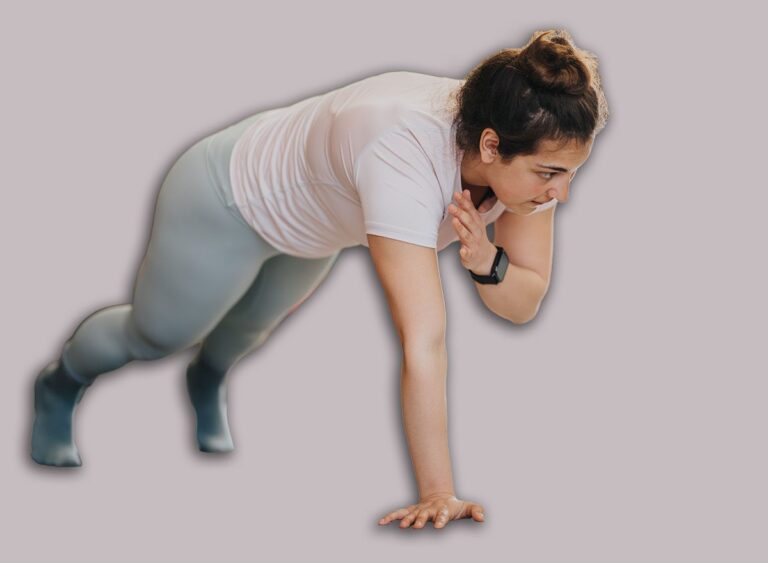
Shoulder Taps
Shoulder taps challenge your body to handle small movements while staying braced and stable. Each time one hand leaves the floor, your core has to prevent the rest of your body from shifting. If staying in a full plank position feels too demanding, you can widen your feet or perform the movement from an inclined position.
Perform 2 to 3 sets of 6 to 10 taps on each side, resting 30 to 45 seconds between sets. Keep your hips level as each hand leaves the floor. The variations include incline shoulder taps, kneeling shoulder taps, or taps with a narrower stance.
Box Squat: The Real-World Strength Test
Few movements reveal lower-body strength as clearly as sitting down and standing back up. A box squat lets you practice that pattern with a consistent target, making progress easier to see over time. When your current box height starts feeling manageable, you can lower the box or add resistance like a weight you hold in front of your body.
Perform 2 to 3 sets of 8 to 12 repetitions, resting 45 to 60 seconds between sets. You can progress this movement by using a higher box to start, then a lower box as you get stronger, or by holding weight in front of your chest for a goblet squat variation.
Starting Smart: Progression Without Overdoing It
The point is not to make up for 10 inactive years in the span of a month. The real win is getting strong enough that movements which felt awkward and unfamiliar at first start feeling natural and automatic again. Keep your early sessions comfortable, focus on smooth, controlled motion, and let your body adapt over time.
Source: Eat This Not That
Frequently Asked Questions
How do these exercises differ from yoga for older adults returning to activity?
Yoga improves mobility and comfort with movement, which is valuable. This routine adds direct strength work—muscles supporting your body weight with gradually increasing load. That muscular demand is what rebuilds the capacity years of inactivity eroded.
What should I do if an exercise feels too hard at first?
Each movement has modifications listed. For example, kneeling side planks are easier than full side planks, box squats use a higher box to start, and lunges can use a shorter step. Start with the modification that lets you move smoothly and in control.
How quickly will I notice improvements?
In the first few sessions, focus on smooth movement and comfort rather than adding difficulty. As weeks pass, movements that felt awkward become automatic. You're not trying to recover 10 years of lost strength in a month; you're building it back gradually.
