
Key takeaways
- Five wall exercises target leg power, push-off strength, and side stability that treadmills cannot build.
- Wall sits build endurance for longer walks, while calf raises restore push-off power and shorter steps.
- Use this routine two to three days per week alongside regular walks so your strengthened legs can apply what they've built.
Walking remains one of the most accessible ways to maintain fitness as you age. Beyond just staying active, regular walking supports heart health, promotes independence, and ensures you can continue the activities that matter most to you. After turning 60, protecting and strengthening your walking ability becomes worth treating as a genuine strength goal, not simply a cardio habit. Yet when walking starts to feel harder, simply walking more isn’t the complete solution. Shorter steps, weaker push-off power, or difficulty controlling weight on one leg often signal that leg strength has declined over time.
Treadmills let you practice the walking pattern itself, but they don’t directly build the leg strength needed to make each step feel more powerful. A wall provides an elegant solution: it offers support while you work on leg strength through targeted movements, without requiring expensive equipment or a full gym. The wall acts as a reference point, allowing you to focus on building muscle rather than managing balance. This approach makes strength training both safer and more effective for older adults.
According to Eat This Not That, these five wall-based moves address the specific components behind a stronger stride: leg power, push-off strength, single-leg stability, and the side-core control that keeps you steady as weight shifts between feet.
Wall Squats Build Standing Strength
Strong thighs and hips are essential for handling your body weight without premature fatigue. Wall squats train exactly this strength through a movement that directly transfers to standing from a chair, climbing stairs, and everyday movement. The wall serves as a steady reference, letting you concentrate on leg strength rather than balance concerns.
The Starting Position and Movement
Stand with your back against the wall, feet hip-width apart about 12 inches away from the wall, and slide down until your knees reach a 90-degree angle. Push back up to standing. Perform 2 to 3 sets of 8 to 12 reps, resting 45 to 60 seconds between sets.
Adjusting Difficulty
If standard wall squats feel too demanding initially, try a shallower descent. If you want progression, consider these variations:
- Hold the bottom position longer
- Attempt bodyweight squats away from the wall
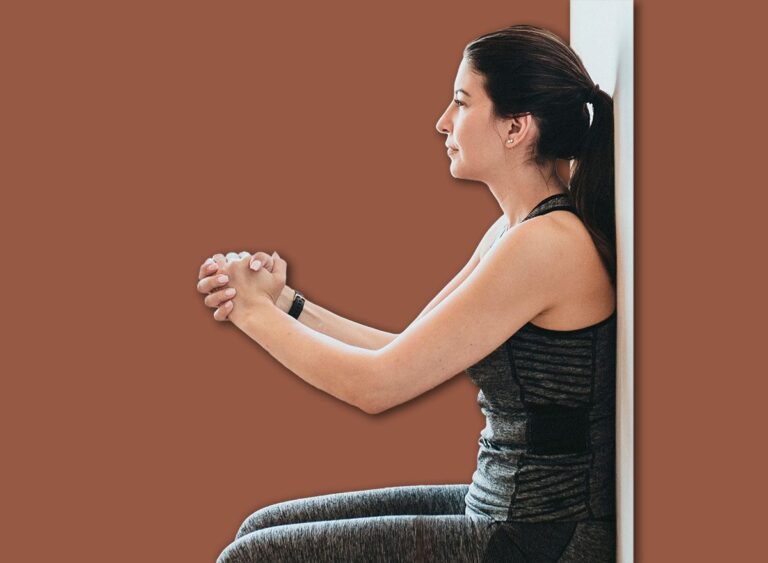
Wall Sits Build Endurance Under Load
Unlike wall squats, which rest your legs between repetitions, wall sits keep muscles under steady tension. This continuous load builds the muscular endurance needed when walks grow longer or hills become steeper. The exercise is particularly valuable for older adults because the setup is straightforward and difficulty can be reduced immediately by sitting less deeply against the wall.
Holding Under Steady Tension
From the same starting position as wall squats, lower yourself until your thighs are parallel to the floor (or closer to parallel if that feels more comfortable). Hold this position. Perform 2 to 3 holds of 20 to 40 seconds, resting 45 to 60 seconds between holds.
Progressions include:
- Sitting at a higher position
- Holding for shorter durations as a warm-up before deeper holds
- Lifting alternating heels off the floor while holding
Wall Calf Raises Target Push-Off Power
Every step ends with your calf muscles pushing you forward. When this strength declines, your stride can become shorter and lose its typical rhythm. Wall calf raises give you direct push-off practice while the wall prevents balance from becoming the limiting factor in the exercise.
Face the wall with your hands lightly touching it at about shoulder height. Rise up onto the balls of your feet, then lower back down. Perform 2 to 3 sets of 10 to 15 reps, resting 30 to 45 seconds between sets.
For added challenge, consider these variations:
- Slow down the movement
- Remove one hand from the wall to practice single-leg support
- Perform the exercise sitting in a chair while holding the wall for balance
Wall Marches Train Weight Shifting
Practicing Walking Mechanics
This exercise moves the routine closer to actual walking mechanics. Each knee lift places more weight on the standing leg while your hips work to keep you steady as the other leg moves. The wall lets you practice this weight shift with confidence, then increase the pace as your control improves.
Stand facing the wall with your hands lightly touching it. Lift one knee up toward your chest in a controlled manner, set the foot back down, then repeat on the other side. Set each foot down under control before switching sides. Perform 2 to 3 rounds of 20 to 40 seconds, resting 30 to 45 seconds between rounds.
Variations include:
- Moving more slowly to emphasize control
- Lifting knees higher
- Alternating faster knee drives as you build confidence
Wall Side Planks Strengthen Core Stability
Walking requires your torso to remain stable while weight moves from side to side. Wall side planks train the oblique muscles that control this lateral shift, making your stride feel more stable and controlled. The upright setup keeps the exercise manageable while still giving your core meaningful work to do.
Face the wall and place your forearm on the wall at roughly shoulder height, with your elbow directly under your shoulder. Step your feet away from the wall until your body forms a straight line from head to heels. Hold this position. Perform 2 to 3 holds of 15 to 30 seconds per side, resting 30 to 45 seconds between sides.
Progress by:
- Moving farther from the wall to increase the challenge
- Holding longer as strength improves
- Placing your hands on a counter instead of your forearms for a different angle
How to Build These Into Your Routine
Strength work proves most effective when it supports the walking you’re already doing. Use this five-exercise routine two to three days per week, allowing at least one rest day between sessions so your muscles can recover and adapt. On other days, maintain your regular walking schedule so your newly strengthened legs can apply what they’ve built.
This approach builds walking strength steadily without requiring special equipment or gym membership, making it practical for long-term consistency.
Source: Eat This Not That
Frequently Asked Questions
Why are wall exercises better than treadmills for walking strength?
Treadmills let you practice the walking pattern, but they don't directly build leg strength. Wall exercises target the specific muscles behind walking power: thighs, hips, calves, and core stability. The wall provides balance support so you can focus on building strength rather than managing balance.
How often should I do these exercises?
Use this five-exercise routine two to three days per week, allowing at least one rest day between sessions for recovery. On other days, maintain your regular walking schedule so your newly strengthened legs can apply what they've built.
What should I do if an exercise feels too hard?
Every exercise has easier variations. For wall squats, try a shallower descent. For wall sits, sit at a higher position against the wall. For calf raises, slow down the movement or hold the wall with both hands instead of one. Each exercise can be adjusted to your current strength level.
