
Key takeaways
- Walking lunges, step-ups, and band walks train knee strength in movement patterns you actually use daily, building strength that carries over better than gym machines.
- Perform these four exercises 2 to 4 days per week: 2-3 sets of 6-10 reps for lunges and step-ups, 2-3 sets of 5-8 lateral steps and 8-12 forward steps for band work.
- Hip and glute strength prevents your thigh from drifting inward during walking, which protects your knees from tracking at stressful angles.
- You can progress by shortening your stride, using support, or slowing your tempo to build strength safely without rushing into too much range of motion.
Your knees absorb impact, guide your stride, and control your movement with every single step. For adults over 60, knee strength often determines whether a walk to the store feels manageable or risky. When your knees can handle curbs, stairs, hills, and longer distances without hesitation, something shifts: you’re more likely to get outside, move more often, and stay active without overthinking it. That consistency compounds over weeks and months into stronger legs, more confidence, and better overall fitness without requiring you to turn every workout into a major production.
Strength training for knees doesn’t require expensive equipment or machines. Gym equipment can play a role in a good plan, but according to coaching perspectives shared by Eat This Not That, your strength still has to carry over once you’re on your feet in the real world. Walking patterns, step patterns, and hip control in movement are what matter most. The four exercises below all train your legs and hips in positions that are close to how you actually move outside the gym, which is why they build strength that translates to daily life.
Walking Lunges: Building Forward Strength in a Walking Pattern
Walking lunges give your knees a controlled strength challenge with every repetition. Your front leg accepts your full body weight, lowers you down with control, and then pushes you forward into the next step. This single movement strengthens your quads and glutes while also training balance in a pattern that feels natural because you use it every day when you walk.
How the Movement Works
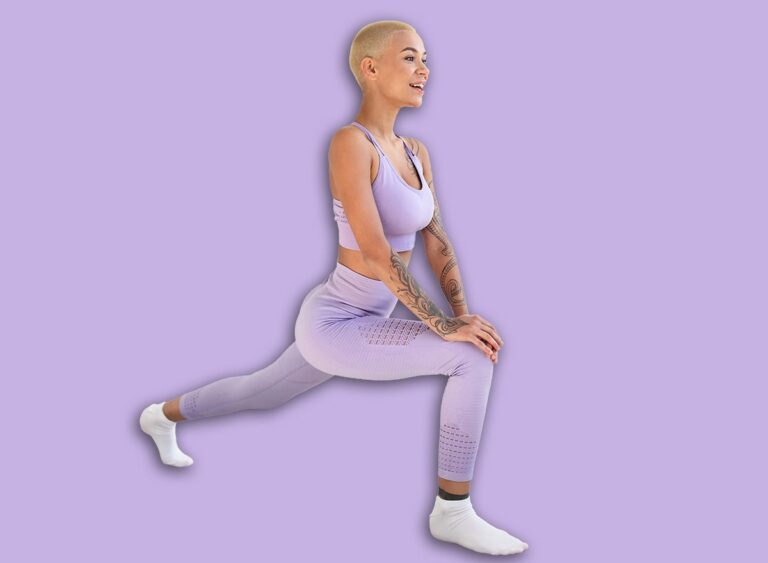
Step forward with your front leg and lower your back knee toward the floor. Your front leg carries most of your weight; your heel stays grounded as you lower. Push through your front heel to stand and step forward into your next repetition. The goal is smooth, controlled descent and rise, not speed or momentum. Keep your stride short enough that you can lower with control and stand without twisting your upper body, which is especially important for knee safety.
Sets, Reps, and Recovery
Perform 2 to 3 sets of 6 to 10 repetitions per side. Rest for 45 to 60 seconds between sets. This volume builds strength in the muscles that support your step without overloading a joint that matters for daily life and long-term mobility.
Variations for Different Needs
If balance feels uncertain, try a supported walking lunge with your hand on a railing or wall. If the full range of motion feels too aggressive, shorten your stride instead, which still builds strength in the same muscles. Reverse lunges, where you step backward instead of forward, work the same muscles and sometimes feel easier on the knee joint itself, making them a solid option if forward lunges cause any discomfort.
Low Step-Ups: Replicating Stairs and Curbs
A low step-up is one of the most direct ways to build knee strength for walking because it mirrors the challenges you meet during a typical day. Curbs, porch steps, staircases, all of these ask one leg to drive your body weight upward while your knee stays stable under load. Starting low keeps the movement approachable, and it gives you a clear target on every single repetition you perform.
Why Low Height Matters Most
A low step is not a compromise or a beginner version that you outgrow; it’s the right choice because it’s realistic. Using a low step, a sturdy curb, or even a single stair keeps you in a realistic scenario that your knees will encounter. You’re not training in an awkward angle that doesn’t exist outside the gym. You’re training the exact movement pattern your legs will face every time you encounter a step in daily life.
Sets, Reps, and Recovery
Perform 2 to 3 sets of 6 to 10 repetitions per side. Rest for 45 to 60 seconds between sets. If balance is a concern early on, use a railing, wall, or counter for support. This doesn’t reduce the benefit to your legs; it just lets you focus on the movement pattern itself and build confidence with each repetition.
Progressions as You Build Strength
As you adapt to the movement, progress by slowing your tempo: take 2 to 3 seconds on the way up to the step. Another option is the supported step-up, where you hold onto a railing or counter while performing the movement. Once those feel solid and easy, try the same movement on a step that’s slightly higher, which increases the challenge without requiring a completely different exercise.
Hip and Glute Control: The Hidden Foundation of Knee Health
Your knee strength depends on more than the muscles directly around the kneecap. Your hips and glutes play a major role in how well your knee tracks when you walk, climb stairs, and turn. When these muscles are weak, your thigh drifts inward as you move, which forces your knee to track at an angle that adds stress over hundreds of steps. Two specific band walks address this problem directly by strengthening the exact muscles your knees rely on for support.
Lateral Mini-Band Walks for Hip Stability
Loop a resistance band around your legs just above the knees or around your lower legs just above the ankles. Step sideways while keeping tension on the band throughout the entire set. You’ll feel the work along the outer edge of your hips and glutes, exactly where many walking and strength plans need more support. This movement trains your glutes, outer hip muscles, quads, hamstrings, and core in a single exercise. Perform 2 to 3 sets of 5 to 8 steps per side, resting 30 to 45 seconds between sets. If the full range feels too much, take smaller lateral steps to reduce the difficulty. Another option is placing the band above your knees instead of below, which changes the angle slightly and sometimes feels better on your joints.
Forward Mini-Band Walks for Walking Strength
With the band in the same position, step forward in small, controlled steps. The band resists your forward movement, which forces your glutes to work as you step. This trains hip stability in a walking pattern, the exact pattern your knees will face every time you walk. The form tip matters here: take smaller steps than you think you need, especially at first, so your knees stay lined up with your feet and track properly. Perform 2 to 3 sets of 8 to 12 steps forward, resting 30 to 45 seconds between sets.
Building Your Program for Consistency
Stronger knees come from training your legs and hips in ways that carry over to your actual stride. Use these four exercises 2 to 4 days per week, then keep easy walks in your routine so the strength you build actually gets used and reinforced. Gym equipment can still fit into a solid program, but these exercises teach your body to practice the movement pattern you’ll use every single day. Over time, that specificity of training strength in the exact positions you need builds knees that feel steadier, more reliable, and ready for whatever you encounter on foot.
Source: Eat This Not That
Frequently Asked Questions
Do I need gym equipment for these exercises?
No. These exercises use bodyweight and optionally a resistance band. Gym equipment can fit into a program, but these movements train knee strength in positions close to how you move outside the gym.
How many days per week should I do these exercises?
Use these exercises 2 to 4 days per week, keeping easy walks in your routine so the strength you build has an outlet.
What's the difference between the lateral and forward band walks?
Lateral band walks train your outer glutes and hips by stepping sideways, addressing hip stability. Forward band walks train hip stability in a walking pattern by stepping forward, which more directly mirrors your walking stride.
