
Key takeaways
- Five home exercises—incline push-ups, band rows, squats, glute bridges, and shoulder taps—rebuild muscle after 65 using only bodyweight and bands.
- Each exercise targets multiple muscle groups and directly supports daily movements: stairs, standing from chairs, walking, and balance.
- Progressive variations allow you to scale difficulty as strength improves without needing expensive equipment or a gym membership.
- Pairing workouts with adequate protein, daily movement, and recovery time maximizes muscle growth and functional improvements.
Muscle loss after 65 is not simply an aging inconvenience—it changes how you function in everyday life. Climbing stairs becomes harder, walking slows down, and confidence dips when your body feels less capable. Maintaining muscle mass directly supports the movements that keep you independent, mobile, and engaged in the activities that matter most.
According to Eat This Not That, home workouts can rebuild muscle effectively when you apply the same principles that govern any serious strength program: sufficient effort, proper control, and consistent repetition. The advantage for people over 65 is accessibility—you can start at home, scale the difficulty to your current ability, and repeat the routine without leaving your house.
Upper Body Pressing: Incline Push-Ups
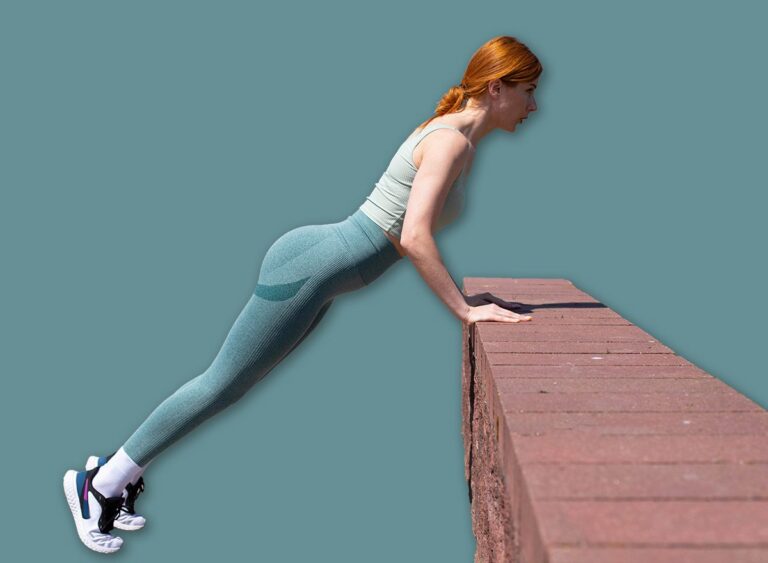
Every time you push against a counter, bench, or chair during daily life, your upper body produces force. Incline push-ups train that pattern in a controlled, scalable way by angling your body against a raised surface rather than working from the floor.
What Muscles Work
This movement builds the chest, shoulders, triceps, and core simultaneously. The angle lets you choose how challenging the movement feels, which matters when you are rebuilding muscle and need to train hard without compromising form. Stronger push-ups transfer directly to standing from a chair, bracing yourself with your hands, and pushing through doors or objects during daily tasks.
Programming and Variations
Perform 2 to 3 sets of 6 to 12 repetitions. If the standard incline position feels too difficult, progress backward: start with wall push-ups, move to counter push-ups as you build strength, then adjust the angle lower over time. Slowing the tempo—taking 2 to 3 seconds to lower your body—also increases demand without requiring a steeper angle.
Upper Body Pulling: Standing Band Rows
The back often gets neglected in home routines, yet it plays a critical role in posture and upper-body strength. Standing band rows address this gap by training the muscles that pull your shoulders back and support how you carry yourself.
Why Pulling Matters After 65
Band tension creates resistance that feels different from bodyweight work alone. You can dial the challenge up or down by choosing a band with different thickness or standing closer to or farther from your anchor point. The movement trains the upper back, lats, rear shoulders, biceps, and core—muscles that support everyday movements like picking objects off shelves and opening doors.
Execution and Progression
Perform 2 to 3 sets of 10 to 15 repetitions using enough band tension that the final few reps feel hard while your shoulders stay stable and controlled. Variations include seated band rows (if standing balance is limited), one-arm rows (which increase core demand), or slowing the movement through each phase.
Lower Body Foundation: Bodyweight Squats
Few movements matter more for lower-body strength than learning to squat well. A solid squat trains your thighs and glutes through a range of motion you use every single day—sitting down and standing up—making it one of the most practical exercises for fighting muscle loss.
Functional Carryover
A stronger squat makes chair stands feel easier, stairs less daunting, and getting up from lower seats more reliable. Because bodyweight alone provides enough resistance, you can increase difficulty through tempo (moving slower), depth (going lower), or extra reps before ever adding load.
Sets, Reps, and Technique
Perform 2 to 3 sets of 8 to 15 repetitions. Focus on controlled movement—lower yourself slowly, pause briefly at the bottom if you can, then drive through your heels to stand. If full bodyweight feels too hard, rest your hands lightly on a chair or counter for support as you build strength.
Hip Strength: Mini-Band Glute Bridge
Glute strength fades quickly when you sit most of the day, yet hip strength is essential for walking, balance, and lower-body control. The mini-band glute bridge targets this weakness by creating tension in the outer hips while your core keeps your pelvis steady.
How the Band Changes the Movement
Lying on your back with knees bent and a band looped around your thighs just above your knees, you drive your hips upward into a bridge position. The band forces your outer hip muscles to work harder throughout the movement, making the exercise more valuable for walking and balance than a regular bridge alone. The beauty of this variation is that it builds serious tension without requiring heavy equipment.
Dosage and Options
Perform 2 to 3 sets of 10 to 15 repetitions. Variations include a regular glute bridge without a band (less demanding), a bridge hold (pause at the top for 2 to 5 seconds), or a banded bridge with a pause at the top of each repetition to increase time under tension.
Core and Full-Body Stability: Shoulder Taps
Once you can hold a plank position on an inclined surface, shoulder taps turn that foundation into a full-body challenge. Each tap shifts your weight into one arm, forcing your core and shoulders to stabilize your entire body while you move.
Muscle Activation
The movement rebuilds muscle throughout the arms, chest, shoulders, and midsection—large muscle groups that support upper-body strength and posture. Because you perform it from an inclined position using a counter or chair, the setup stays more approachable than floor-based work while still demanding significant core engagement.
Movement Quality and Progression
Perform 2 to 3 sets of 6 to 10 taps per side, moving slowly and keeping each tap visibly controlled. Start with your hands higher on the counter, which makes the movement easier, then gradually lower your hand position as strength builds. Focus on not letting your hips rotate or drop as you tap.
Programming Your Routine
Home exercises build muscle when sets feel purposeful and challenging. According to Eat This Not That’s recommendations, choose movement variations that let you maintain good form, then push close enough to real effort that your muscles receive a stimulus to adapt. Perform these exercises 2 to 3 times per week with at least one rest day between sessions.
Supporting Recovery and Progress
Combine your workout routine with daily movement—walking, gardening, or light activity on off days supports overall muscle preservation. Include protein-forward meals at each eating occasion to provide the building blocks your body needs to repair and build muscle tissue. Sleep and recovery matter too; your body rebuilds muscle during rest periods, not during the workout itself.
Why This Approach Works
Home-based strength work removes barriers that might otherwise keep you from training consistently. No commute, no equipment costs beyond a resistance band, and full control over your schedule make these exercises sustainable long-term. The movements themselves address the specific patterns that keep you strong for daily life—pressing, pulling, squatting, and stabilizing—rather than chasing arbitrary strength numbers. Over time, these five exercises accumulate into measurable improvements in how you feel during stairs, how confidently you move, and how independent you remain.
Source: Eat This Not That
Frequently Asked Questions
How often should I do these exercises after 65?
Perform these exercises 2 to 3 times per week with at least one rest day between sessions. This frequency provides enough stimulus for muscle growth while allowing recovery time.
Can I do these exercises if I have limited mobility or balance issues?
Yes. Each exercise includes variations that make it more accessible. Wall push-ups, seated band rows, supported squats using a chair, and higher-hand shoulder taps all reduce difficulty while still building strength.
What should I eat to support muscle growth with these workouts?
Include protein-forward meals at each eating occasion to provide building blocks for muscle repair. Pair your training routine with daily movement and adequate sleep, since your body rebuilds muscle during rest periods.
