
Key takeaways
- Standing exercises train the stair-climbing movement pattern directly, making strength gains transfer faster than from lunges.
- Hip stability built through mini-band lateral walks prevents the wobbling and inward knee drift that weakens stair confidence.
- Perform these four exercises two to four days weekly, adding real-world stair practice when legs feel fresh.
Standing Exercises Beat Lunges for Stair Strength After 60
Stair climbing demands three things from your lower body: the quad and glute to push you upward, the standing leg to remain stable as weight shifts, and the hips to manage the movement. After 60, weakness in any of these areas makes stairs feel draining and unsafe.
Lunges build these qualities, but they do so by stepping in and out of position—a movement pattern that differs from climbing stairs. Stairs keep your base narrow and upright; you’re standing on one leg while the other steps up, then you’re standing on both legs briefly before repeating. Exercises that match this standing position train your body for the exact movement it will perform.
This specificity matters practically. When a strength exercise mimics the position and pattern of stairs, your nervous system learns that exact pattern faster. Confidence comes not from general leg strength but from feeling strong in the position that previously felt shaky.
Mini-Band Lateral Walks Build Outer Hip Stability
Your outer hip muscles—glutes and hip abductors—prevent your pelvis from tilting when one foot leaves the ground. Weak outer hips force your knee inward, create side-to-side wobbling, and make stairs feel unstable regardless of thigh strength. This is why hip stability comes first.
A mini-band lateral walk places a resistance band just above your knees or around your ankles. Walk sideways in small steps, keeping the band taut. The band provides outward pressure your hips must resist continuously. Small steps are essential; large steps let the band go slack, which loses the training stimulus.
Perform 2 to 3 sets of 5 to 8 steps per side, resting 30 to 45 seconds between sets. The exercise trains glutes, outer hips, quads, hamstrings, and core. Tighten the band closer to your knees if the movement feels too easy, or position it higher on your thigh if it slips on clothing.
Step-Ups: The Movement That Is Stairs Slowed Down
Step-ups are the direct stair-climbing exercise because they are stairs performed slowly and isolated. Plant one foot on a step or box, drive your opposite leg upward, and rise under control. Your front leg’s quad and glute push the motion; your standing leg provides a stable base.
Start with a step 6 to 8 inches high to reduce range and intensity while teaching the pattern. Perform 2 to 3 sets of 6 to 10 reps per side, resting 45 to 60 seconds between sets. If balance feels uncertain, hold a chair or railing—the exercise targets leg strength, not balance.
Why the Downward Phase Builds Stair Strength
When you step down from a step, your quad and glute control the lowering so your knee doesn’t slam into extension. This eccentric phase—where muscles lengthen under tension—builds the specific strength needed for descending stairs safely. Lower yourself slowly, taking 2 to 3 seconds on the way down, and pause briefly if you can. This lowering phase is where the stair-specific adaptation happens.
Split Squat Holds: Single-Leg Strength Without Stepping
Stair climbing is fundamentally a series of single-leg positions. At the moment your foot lands on the step above, your back leg extends fully while your front leg holds most of your weight at an angle. This instant—when your body rests on one leg in a partial squat position—is where stability matters most.
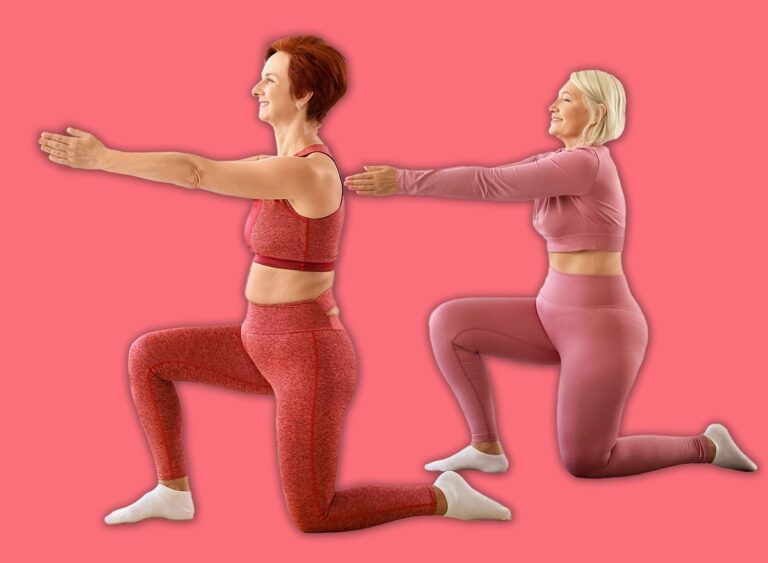
A split squat hold builds strength in that exact position without the complexity of stepping in and out. Step one foot forward into a lunge position, then hold that position stationary. Your front quad stays active, your glute fires, and your core keeps your torso upright. This isometric hold trains the position stairs actually demand.
Hold for 15 to 30 seconds per side, performing 2 to 3 holds with 45 to 60 seconds rest between sets. Place a chair or counter beside you for light balance support only; your hands should barely touch. If 15 seconds feels easy, work toward 30 seconds. If 30 seconds feels impossible, start at 15 and build over weeks.
Finding the Right Depth for Your Knees
A full deep lunge isn’t necessary for stair strength. A shallower position—where your front knee bends to about 60 degrees instead of 90—reduces intensity while still training the muscles in the position stairs use. Many people feel steadier in this shallow range and can hold longer, which accumulates more total training time. Find the depth where you can remain upright, keep your front knee tracking over your toes, and hold steady.
Goblet Box Squats Build Bilateral Power and Control
Climbing stairs is ultimately a bilateral movement. You push with both legs, control the descent with both legs, and repeat dozens of times in succession. Stair strength requires quad power, glute strength, and the hip stability to manage it all. Goblet box squats train all three simultaneously.
Hold a weight at your chest—a dumbbell, kettlebell, or medicine ball—stand in front of a box, and squat down until you lightly touch the box. The box serves as a clear target and a stopping point that removes guesswork about depth. Stand back up, driving your legs evenly. The weight held at your chest keeps your torso upright, preventing the forward lean that happens when knees bend without proper load positioning.
Perform 2 to 3 sets of 8 to 12 reps, resting 45 to 60 seconds between sets. Muscles trained include quads, glutes, hamstrings, core, and upper back. Select a box height that lets you sit lightly and stand without rocking forward; if your torso tilts forward to stand, lower the box height.
Light Weight, Strong Movement Pattern
Older adults build substantial stair strength with relatively light loads. A 5- to 15-pound weight is often sufficient. The benefit comes from controlled, consistent movement, not from maximum weight. If lighter weight allows cleaner movement and better focus on driving evenly through both legs, that’s the right choice for building durable strength.
Programming Four Exercises for Complete Stair Strength
These four exercises address different aspects of stair climbing: hip stability (lateral walks), step power (step-ups), single-leg control (split squat holds), and bilateral power (goblet box squats). Together they cover the complete lower-body demand stairs place on your body.
Use these exercises two to four days per week. One option is performing all four in a single session. Another is splitting them across two sessions—lateral walks and step-ups one day, split squat holds and goblet box squats the next. Always take at least one full day between sessions. After your strength work, practice stairs at a comfortable pace when your legs feel fresh. This real-world practice reinforces the gains and builds confidence. Lunges remain a good supplementary exercise if they feel comfortable; they complement these four but aren’t necessary if these feel sufficient.
Frequently Asked Questions
Which exercise trains your outer hips for stair stability?
Mini-band lateral walks. The resistance band placed above your knees creates outward pressure your hip muscles must resist continuously throughout small side steps.
How often should you do these exercises?
Two to four days per week, with at least one full day of rest between sessions.
What weight should you use for goblet box squats?
A 5- to 15-pound weight is typically sufficient for older adults. Movement quality and consistency matter more than using heavy weight.
