
Key takeaways
- Chair exercises integrate into your workday without equipment or clothing changes, and they interrupt the sitting patterns that create the damage.
- In the first 1–2 weeks you'll notice less stiffness; by 4–6 weeks your legs and mid-back are noticeably stronger and slumping decreases.
- Standing every 30–45 minutes and scattering these five movements through your day provides better results than occasional yoga classes.
- The five movements specifically target muscles sitting deactivates: hip flexors, glutes, hamstrings, mid-back, and chest.
After 55, the physical effects of years in a desk chair become visible in specific, measurable ways: hips tighten, shoulders roll forward, the lower back stiffens, and rising from a chair requires more effort than it should. A personal trainer with 40 years of experience in fitness coaching, who has spent the last 25 years running TRAINFITNESS—the UK’s leading fitness education provider—has witnessed this decline repeatedly. The pattern is consistent and predictable, but the important news is that it’s fixable. The damage doesn’t require a gym membership, special equipment, or even a change of clothes. Five movements performed in the chair where you’re already sitting can reverse most of the stiffness and weakness within weeks.
What Sitting Actually Does to Your Body
The physical damage from a decade at a desk isn’t random or uniform. Weak glutes and thigh muscles develop because sitting keeps you from using the muscles required for standing, walking, and climbing stairs. Your hip flexors tighten from constant bending at 90 degrees. Your shoulders roll forward because the chest muscles shorten through years of hunching while the mid-back muscles fall dormant, their job forgotten. Your lower back loses its natural curve, flattened by years of slumped sitting against the chair. Beyond the muscular weakness lies a loss of movement quality. After 55, people typically push off armrests to stand instead of using their legs to drive the movement. They reach for objects by rounding the back instead of maintaining a flat spine and hinging from the hips. Tension accumulates in the neck and shoulders throughout the day, with neither moment to release it nor the muscular stability to prevent it. This isn’t a lost cause—the source of the problem is sitting itself, and the solution is directly addressing the muscles sitting deactivates.
Why Chair Exercises Beat Occasional Yoga
Yoga classes are worthwhile, and a trained instructor provides valuable guidance, but they occur once a week or occasionally, entirely outside the context where damage accumulates. You remain in the chair eight hours a day, and those eight hours are when the problem develops and deepens. Chair exercises have one decisive advantage that separates them from all other approaches: you perform them in the chair you already sit in, through the working day, without changing clothes or dedicating a separate time block. They interrupt the sitting itself at the exact moments the damage is happening. Traditional yoga addresses stiffness after it accumulates, requiring you to wait until evening or the weekend to attempt repair. Chair exercises prevent accumulation from happening in the first place, working on the muscles while they’re still in the position that created the problem. This isn’t criticism of yoga; it’s simply that occasional practice can’t compete with daily intervention done on the spot. That distinction becomes more important after 55, when consistency emerges as the primary lever for change.
Five Movements That Restore Lost Function
Sit-to-stand with control
Sitting weakens the glutes and thigh muscles you rely on for standing, walking, and climbing stairs. Standing up and sitting down under control rebuilds those muscles and simultaneously breaks the sitting pattern itself. Lower yourself slowly; let your legs do the work rather than dropping into the chair or pushing off with your hands. The slower the descent, the more your muscles engage and strengthen. This single movement addresses the fundamental problem: lower-body weakness.
Shoulder blade squeeze
Years at a desk round the shoulders forward, engaging only the chest muscles while the mid-back goes dormant. The shoulder blade squeeze strengthens the muscles across the mid-back that pull the shoulders back into proper position. Keep your shoulders low and focus the squeeze in the space between your shoulder blades. This realigns your posture and interrupts the forward-rounding pattern before it causes neck pain or thoracic stiffness.
Chest opening
Hunching over a desk shortens the muscles across the front of the chest, which reinforces the forward shoulder position and makes the rounded posture feel like your body’s natural state. Opening the chest stretches these shortened muscles and lets the shoulders sit back. Stay tall while holding the stretch across the front of your shoulders. The movement is gentle but targeted at the exact muscles pulling your posture forward.
Pelvic tilts
Slumped sitting flattens the natural curve in your lower back, removing mobility from a region that should move freely and contribute to your overall stability. Tilting the pelvis back and forth restores movement to a stiff lower back and reactivates the muscles that maintain a neutral spine. Keep the movement small and originate it from your pelvis rather than your shoulders or upper back. This single movement can ease chronic lower-back tension in a way that stretching alone cannot.
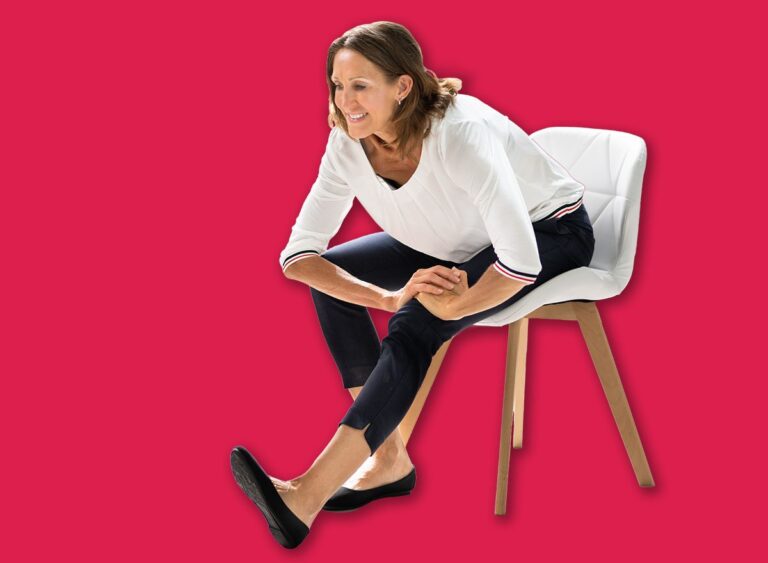
Hamstring lengthening
Sitting keeps the hamstrings short, which tugs on the pelvis and adds to lower-back tightness as part of a chain reaction. Lengthening them eases the pull on the lower back and restores the leg’s full range of motion. Keep your chest lifted and your back flat, hinging from your hips to deepen the stretch gradually. This movement addresses the mechanical chain that sitting triggers: short hamstrings pull the pelvis, which tilts the spine, which stiffens the lower back.
Building the Habit Into Your Day
The entire set takes under 10 minutes, but the critical factor is scattering these movements through your working day rather than saving them for one session at the end of the day. Do the sit-to-stand when you get up for a coffee or a glass of water. Do the shoulder blade squeeze while you’re reading an email or waiting for a file to load. Do the pelvic tilts when you feel your back stiffen after an hour of uninterrupted sitting. The most important habit is standing up every 30 to 45 minutes, even if it’s just for a minute—movement itself matters as much as the specific exercises. The exercises work best when they interrupt the sitting, not when they’re tacked on after eight hours of immobility. This approach transforms the exercises from a separate task requiring willpower into part of your existing day, something you do while already taking a break.
When You’ll Feel the Change
In the first week or two you’ll notice less stiffness when you stand up, and getting out of a chair will feel noticeably easier—a shift that seems minor until you experience how it improves your morning and your evening routine. By four to six weeks your legs and mid-back are noticeably stronger, and sitting tall takes less conscious effort. You’ll catch yourself slumping less often because the muscles holding you upright are doing their job again, not because you’re forcing better posture through sheer willpower. A decade of sitting can’t be fully undone, but most of the stiffness and weakness reverses with consistency, and that makes a tangible difference to how you move through the day. Stick with it and the chair stops being the thing that holds you back.
Frequently Asked Questions
When will I notice the first improvements from doing chair exercises?
In the first 1–2 weeks, you'll notice less stiffness when standing up, and getting out of a chair will feel easier. By 4–6 weeks, your legs and mid-back are noticeably stronger.
Can chair exercises fully undo 10 years of sitting?
No, a decade of sitting can't be fully undone. However, most of the stiffness and weakness does reverse with consistency, making a real difference to how you move through the day.
