
Key takeaways
- Weak core strength increases fall risk three-fold and leads to lost independence; sedentary adults over 50 lose 40% activation capacity in the transverse abdominis.
- Dead bug, bird-dog, advanced side plank, rotation resistance, and bear position with shoulder taps target deep stabilizer muscles more effectively than crunches.
- Mastering two exercises thoroughly produces better results than rotating through six movements with partial attention, especially for older adults with limited recovery capacity.
Excess belly fat and skin overhang are not phenomena confined to a single age or life stage. They accumulate gradually through a cascade of physical changes: muscle loss that accelerates with each decade after 30, reduced elasticity in the skin as collagen production slows, and hormonal shifts that reshape where the body stores fat. For women, these changes often intensify during the 40s and 50s as estrogen levels drop and the body preferentially deposits fat around the midsection. Men experience similar patterns as testosterone declines. Substantial weight loss creates a specific problem: skin that has been stretched for years cannot snap back to its original shape, leaving loose tissue that hangs below the abdominal wall. Pregnancy causes similar lasting changes to the connective tissue beneath the skin. The common factor across all these scenarios is that aging makes the body’s recovery capacity weaker, so all forms of body composition change leave deeper marks as time passes.
Core Strength and Aging: The Real Stakes
When fitness professionals discuss a strong core, they are describing far more than a cosmetic benefit. Meera Watts, Founder and CEO of Siddhi Yoga—an organization focused on helping individuals regain strength and body awareness through movement, breathing, and mindfulness—explains the real-world impact: “The core is the body’s structural anchor. When the core becomes weak, mundane activities such as lifting a bag or getting up from a chair become visible struggles.” The stakes rise considerably with age. Weak deep core musculature is directly proportionate to a three-fold increase in lower back injury rates in older adults, and this category of injury is one of the primary drivers of lost independence among seniors. Loss of core function doesn’t just make everyday tasks harder; it sets off a cascade in which pain and injury reduce activity, leading to further muscle loss and an accelerating cycle of decline.
Why Traditional Ab Exercises Fall Short
Most people’s mental image of core training centers on crunches, sit-ups, and planks. These exercises have dominated fitness culture for decades, but they address only the surface layer of the abdominal wall. Erik Pride, Personal Trainer at Pride Fitness, advocates for a fundamentally different approach: “[The exercises I selected] train the deeper muscles that support better posture, balance, and movement quality while being easier on the joints than many traditional ab exercises.” This distinction matters for older adults whose joints cannot tolerate the spinal compression and hip flexor tension that crunches demand. The five movements recommended by Watts and Pride target stabilizer muscles rather than movers, which means they build functional capacity rather than bulk.
The Five Exercises That Target the Deep Core
Dead Bug
The dead bug directly activates the transverse abdominis, the deepest and most functionally important layer of abdominal muscle. According to Watts, after age 50, sedentary individuals lose up to 40% of their activation capacity in this muscle—a loss so significant that it alone contributes to poor posture and unstable movement patterns in older age. The dead bug reverses this decline by systematically re-establishing the neural connection between the brain and these critical deep stabilizers.
Bird-Dog
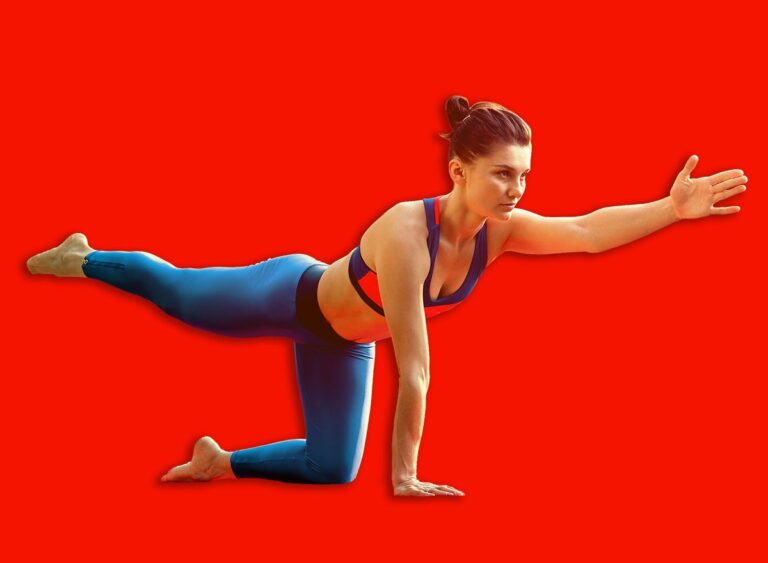
Watts identifies the bird-dog as her preferred choice for this age group, calling it “one of my favorite morning movements for this age group.” Unlike exercises that isolate one muscle group, the bird-dog simultaneously activates the erector spinae (the muscles that run vertically along both sides of the spine) and the glute medius (the thick muscle on the outside of the hip that is responsible for hip stability). These two muscles together are the primary drivers of balance in standing and movement. After age 50, their weakness correlates directly with an increased fall risk—a concern that affects not just athletic performance but independence, mobility, and the ability to live without fear of injury.
Advanced Side Plank
Pride points to the advanced side plank as an overlooked exercise that targets both the obliques (the muscles on the sides of the torso responsible for rotation and lateral flexion) and the hip adductors (the inner thigh muscles). Strong adductors provide pelvic stability, which is essential for proper walking mechanics and the ability to climb stairs without compensation. When the adductors are weak, strain on the knees increases and the gait becomes inefficient—changes that accelerate wear and tear on the lower extremities.
Rotation Resistance
This exercise, performed with a resistance band or cable machine, trains the core in a different pattern: resisting rotational force rather than creating it. According to Pride, this is “one of the best functional exercises for protecting the spine during lifting, carrying, and everyday activities.” For people who maintain their own homes and yards, this protective function is not theoretical—it is deployed constantly when carrying groceries, moving boxes, or working in the garden.
Bear Position With Shoulder Taps
Unlike a standard plank, which allows a large base of support and can be held passively by simply holding tension, the bear position (on hands and feet with hips elevated) reduces stability and forces continuous engagement of the deep core. Each shoulder tap adds a destabilizing component that requires the trunk to resist rotation. According to Pride, this resistance to rotation improves overall stability while simultaneously protecting the lower back—a region that is particularly vulnerable to injury when the deep core is weak.
Depth Beats Breadth in Training
Meera Watts offers a counterintuitive insight about program design that runs counter to much contemporary fitness marketing: “Going deep on two [exercises] beats skimming across six any day.” This observation suggests that mastering two movements thoroughly—learning the precise cues, feeling the correct muscles engage, and progressing gradually over weeks—produces superior results compared to rotating through a long list of exercises with only partial attention and mediocre form. For older adults who have less recovery capacity, less time to devote to training, and less tolerance for accumulated joint stress, this advice is particularly relevant. Quality and consistency matter more than variety and volume.
Applying These Movements to Your Routine
Transitioning from understanding the importance of core work to actually implementing it requires a practical approach grounded in the realities of aging and fitness. These five movements can form the backbone of a training routine, or—following Watts’s philosophy—two can be practiced regularly while the others are incorporated less frequently. For anyone over 65 who has been sedentary, starting conservatively and allowing the nervous system to gradually re-engage with these stabilizing muscles will produce faster progress than attempting to move quickly or add high volume too soon. The fact that these exercises are gentler on the joints than traditional ab work reduces the likelihood of pain or compensatory injuries that interrupt training and create setbacks.
Frequently Asked Questions
Why are deep core exercises better than crunches for people over 65?
Crunches create spinal compression and hip flexor tension that older joints cannot tolerate. Deep core exercises target stabilizer muscles for functional capacity rather than bulk, while being gentler on joints and improving balance, posture, and movement quality.
What specific percentage of core activation do people over 50 lose?
According to Meera Watts, sedentary people after age 50 lose up to 40% of their activation capacity in the transverse abdominis muscle, the deepest layer of abdominal muscle.
How does a weak core increase injury risk?
Weak deep core musculature is directly proportionate to a three-fold increase in lower back injury rates in older adults, which is one of the primary reasons seniors lose independence.
