

Key takeaways
- Arm strength declines through avoidance patterns, not sudden weakness, but resistance training at home can reverse the cycle.
- Water jugs and grocery bags provide sufficient resistance for rebuilding arm strength without expensive equipment or gym membership.
- Jacob Siwicki, ranked #1 personal trainer in Washington D.C., emphasizes that consistency and progressive challenge matter more than equipment choice.
- Strong arms restore independence for daily tasks like reaching, carrying, and pushing, directly impacting quality of life after 60.
Keeping your arms strong becomes increasingly important as you age. Daily tasks that once seemed effortless—reaching into high cabinets, pushing a shopping cart, carrying multiple bags of groceries—depend directly on arm strength. The stronger your arms, the more independent you remain in everyday life. Yet many people over 60 believe that building arm strength requires a gym membership, heavy barbells, and dedicated hours of training. This assumption often prevents them from starting at all.
The truth is different. Rebuilding arm strength after 60 is achievable through resistance training at home using everyday items. Jacob Siwicki, founder and head coach of Siwicki Fitness and a fitness expert with credentials including NCSF and AFAA certification, explains the psychology behind lost arm strength and why it matters more than aesthetics.
The Quiet Progression of Lost Independence
When arm strength declines, the changes happen gradually and often go unnoticed at first. “When arm strength fades, people quietly start avoiding things. They carry fewer bags, stop reaching overhead, and ask for help with tasks they used to handle themselves,” Siwicki explains. “Keeping the arms and grip strong helps prevent that loss of confidence and independence.”
This isn’t merely about physical capability—it’s about self-reliance. Each time someone chooses not to reach overhead or carries fewer items because of weak arms, they reinforce a pattern of limitation. The avoidance becomes habit. Over time, people internalize the belief that they simply cannot do these tasks anymore, even if their strength could actually support them with proper training.
The behavioral pattern compounds the physical decline. Someone who stops carrying groceries loses the daily resistance stimulus that would otherwise maintain arm strength. Someone who avoids reaching overhead loses the mobility and functional strength needed for that movement. The mind adapts to these new limitations and accepts them as permanent. This psychological shift is often harder to reverse than the physical weakness itself.
Understanding What Happens to Arm Strength
The Biological Reality
Muscle loss accelerates with age. Arm muscles respond to disuse by atrophying—they shrink because they are no longer challenged. Grip strength and overall arm capacity decline in tandem with reduced activity.
However, the positive news is equally important: muscles at any age respond to resistance. The adaptation process works in older adults just as it does in younger people, though the timeline may be slightly longer. The stimulus that triggers adaptation is consistent: tension applied to muscle fibers forces them to rebuild stronger.
The Confidence-Activity Loop
Strength and confidence reinforce each other. Strong arms enable overhead reaching, which reinforces the belief that overhead reaching is possible, which leads to more reaching, which further reinforces arm strength. This positive cycle can be reversed: weak arms discourage reaching, which reinforces the belief that reaching is not possible, which eliminates the stimulus that would rebuild strength.
Breaking this cycle requires external intervention. Deliberate resistance training interrupts the pattern and restarts the positive loop.
Resistance Training Does Not Mean Heavy Weights
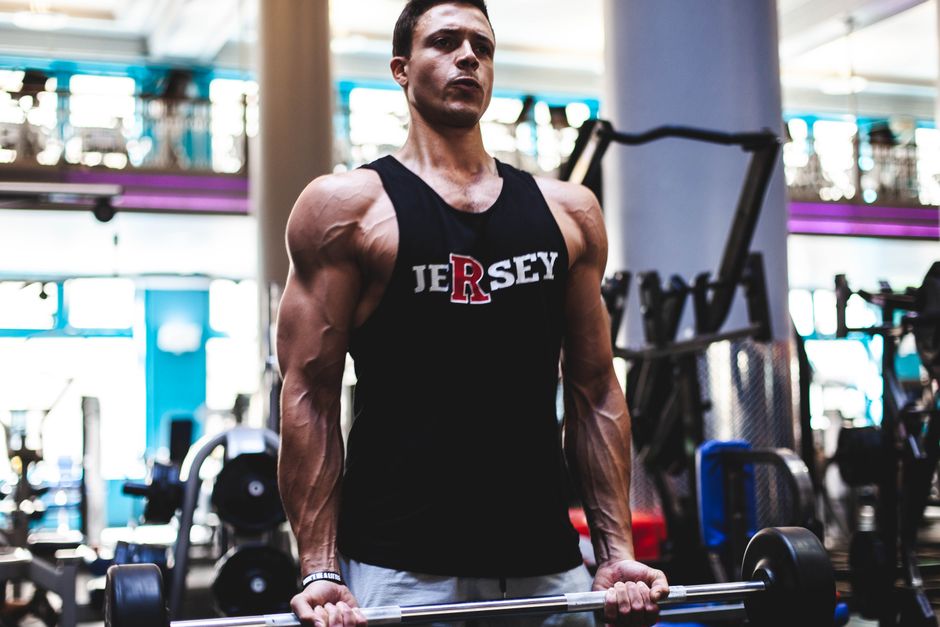
A critical misconception stops many people from starting: the belief that arm strength requires heavy barbells or machines. Siwicki directly addresses this barrier: “The difference is that you do not need heavy barbells or an hour at the gym. A pair of dumbbells, water jugs, or grocery bags can provide enough resistance to make progress at home.”
Resistance is the active ingredient. Your muscles respond to tension and challenge, not to the specific source of that challenge. A water jug creates exactly the same type of resistance stimulus as a weight plate. Your biceps cannot distinguish between lifting a dumbbell and lifting a full grocery bag. The physiological response is identical: muscle fiber recruitment, activation of growth signals, and progressive strengthening.
This is why home-based training works so effectively. You need resistance—something that creates opposition as you move. That opposition can come from equipment that costs money, or from equipment already in your kitchen and pantry.
Equipment You Already Have at Home
Building arm strength doesn’t require shopping for gear. Three options are immediately available in most homes:
Water Jugs and Bottles
Fill a pitcher, jug, or large bottle with water to create a portable resistance tool. You can adjust the weight by filling partially to vary the challenge. The handle structure makes it functional for many movement patterns. Multiple jugs can be combined for heavier resistance as you grow stronger.
Grocery Bags
Full bags of groceries provide variable resistance. You control the weight by choosing items and quantities. Unlike fixed-weight dumbbells, grocery bags can accommodate progressive overload—add more items as you grow stronger. They also mimic a functional movement (carrying groceries) that directly transfers to daily life.
Dumbbells
Light dumbbells create sufficient resistance for someone rebuilding strength. The precision of weight and the comfortable grip make them ideal for controlled movement. However, they are not necessary if other options are available.
The key is consistency and progressive challenge. You start with whatever resistance is manageable, perform the movements with control, and gradually increase the challenge over time. This approach works with any of these options.
Who Jacob Siwicki Is
Siwicki brings substantial credentials to this guidance. He is a former Equinox group fitness instructor who was ranked in the top 1% globally in 2019—a distinction reflecting the breadth and quality of results he produced with group fitness clients. He holds degrees from Dartmouth College, where he studied economics and played football, combining athletic background with formal education. He was ranked #1 personal trainer in Washington D.C. in 2021, according to local rankings of individual trainers. He appears as a fitness expert on FOX 5 DC, bringing his methods to a regional media audience.
His perspective on arm strength is grounded in working with hundreds of clients across different age groups and fitness levels. He understands both the physical mechanics and the behavioral barriers that prevent people from starting. His background as a Dartmouth football player gives him insight into how muscles adapt to challenge. His work at Equinox exposed him to evidence-based training methods applied at scale.
Training at Home: The Practical Reality
The at-home approach removes the most common obstacles. There is no commute to the gym. There is no cost of membership. There is no intimidation of being around other lifters. There is no requirement to find an hour—training can happen in 15 to 30 minutes.
Your living room becomes your gym. Your kitchen provides your equipment. The consistency that builds strength becomes sustainable because the friction disappears. You can train first thing in the morning, during a lunch break, or in the evening, without any travel.
Progressive resistance means you add slightly more challenge each week: one more repetition, slightly more weight, or a harder variation of the movement. Your muscles adapt to this escalating demand, and strength increases measurably. This progression can continue indefinitely—there is always a next level of challenge.
Starting Now
The timing for rebuilding arm strength is always today. The specific equipment matters far less than the decision to apply resistance to your arms through movement. Whether you use dumbbells, water jugs, or grocery bags, the stimulus is real and the results are measurable. Independence in your daily life depends on it. Reaching for items, carrying groceries, pushing a cart, and handling everyday tasks all become easier and safer as arm strength returns. The avoidance pattern reverses, confidence rebuilds, and your sense of self-reliance is restored.
Frequently Asked Questions
Do I need heavy weights or a gym membership to rebuild arm strength after 60?
No. According to Jacob Siwicki, water jugs, grocery bags, or dumbbells at home provide sufficient resistance. Heavy barbells and gym memberships are not necessary—consistency matters more than equipment type.
What happens when arm strength fades?
Siwicki explains that people quietly start avoiding activities—they carry fewer bags, stop reaching overhead, and ask for help with tasks. This avoidance pattern reinforces weakness and loss of confidence and independence.
What types of household equipment can I use for resistance training?
You can use water jugs filled to your preferred weight, grocery bags that you can fill with items to adjust resistance, or light dumbbells. You start with whatever is manageable and progressively increase the challenge over time.
