
Key takeaways
- Arm sagging after 55 results from muscle loss, declining collagen, and reduced skin elasticity, all addressable with strength training.
- Strength training rebuilds muscle but cannot selectively eliminate arm fat or completely tighten loose skin—realistic expectations are essential.
- The proven approach combines progressive resistance training, adequate protein intake of 1.2 to 2.0 grams per kilogram daily, healthy body composition, and 6 to 12 weeks of consistency.
- Stronger arms enable daily activities like carrying groceries and grandchildren, improving both function and quality of life beyond aesthetics.
Arm sagging is a natural consequence of aging. As we move through our 50s and beyond, our bodies undergo significant changes that affect the appearance and firmness of our arms. The root causes are well-documented: loss of muscle mass, declining collagen production, and reduced skin elasticity all contribute to the appearance of loose skin and flabbiness under the arms. Understanding these changes is the first step toward addressing them effectively.
The good news is that targeted strength training can help. However, according to Jacob Siwicki, founder and head coach of Siwicki Fitness, the approach requires managing expectations. Siwicki, who holds NCSF and AFAA certifications and serves as a fitness expert on FOX 5 DC, was ranked the #1 personal trainer in D.C. in 2021. A Dartmouth economics graduate and former Dartmouth football player, he brings both academic rigor and practical athletic background to his recommendations.
Understanding the Aging Arm
The visual changes in arm appearance stem from three distinct physiological processes. First, sarcopenia—the age-related loss of muscle mass—occurs naturally as we age. Second, collagen, the structural protein that gives skin its firmness and elasticity, decreases over time. Third, skin elasticity itself diminishes. Together, these changes create the loose, sagging appearance many people experience under their arms.
The timeline for these changes varies by individual, but most people notice significant shifts in their 50s and beyond. Genetics, sun exposure, overall health status, and body composition all play roles in how quickly and dramatically these changes manifest.
What Strength Training Can and Cannot Do
The Promise and Limitations
“Strength training can rebuild the muscle underneath and improve the arm’s shape, but it cannot completely tighten loose skin or selectively remove arm fat. That part is important to be honest about,” Siwicki explains. This distinction is crucial for anyone starting an arm-tightening program.
The realistic promise of resistance training is improved muscle tone and a better-defined arm contour. The unrealistic expectation is that exercise alone will eliminate all loose skin or target fat loss exclusively from the arms. The body does not work this way. When fat loss occurs, it happens systematically across the whole body based on genetics and caloric deficit, not by choice of location.
The Complete Strategy
The most effective approach, according to Siwicki, combines multiple elements: “The best approach is building muscle, maintaining a healthy overall body-fat level, eating enough protein, and giving the process time.” None of these elements alone produces optimal results; together, they create conditions for visible improvement in arm appearance and functionality.

Building Muscle Underneath
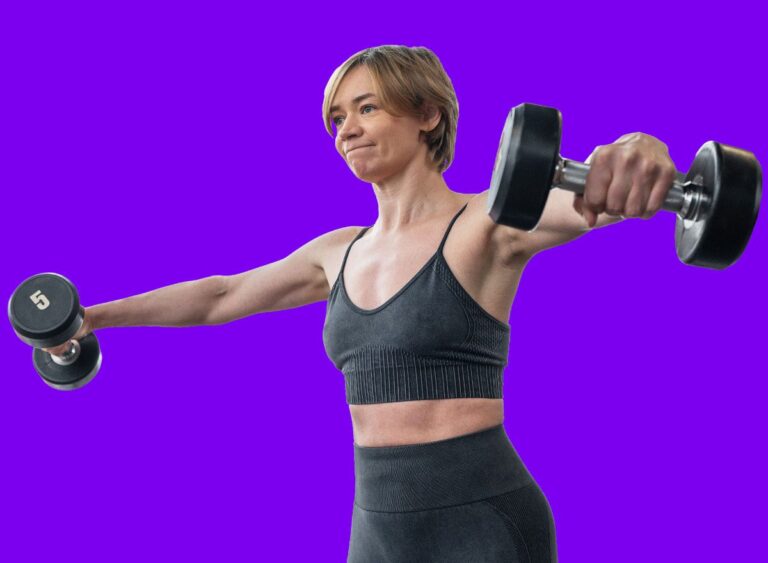
Progressive strength training provides the foundation for visible arm improvement. The principle is straightforward: creating lean muscle underneath loose skin provides definition and support that can make the overall arm appearance firmer and more toned. This is achievable even for people in their late 50s, 60s, and beyond.
Home-based resistance training offers advantages for older adults. Equipment needs are minimal—resistance bands, light dumbbells, and bodyweight exercises can all be effective. The ability to train in a familiar, climate-controlled environment reduces barriers to consistency. Consistency, in turn, is one of the primary determinants of success.
Progressive overload matters. Starting with resistance that allows 8 to 12 controlled repetitions per set, with proper form throughout, builds strength without excessive joint stress. Over time, gradually increasing resistance or reps challenges the muscles further, driving continued adaptation.
Nutrition as a Critical Component
Protein Requirements for Muscle Building
Adequate protein intake is non-negotiable for muscle building, especially after 55. As we age, protein synthesis becomes less efficient, meaning older adults typically need slightly more protein per unit of body weight to stimulate the same muscle-building response as younger individuals.
Protein requirements for older adults engaged in strength training generally fall between 1.2 and 2.0 grams per kilogram of body weight daily. For a 70-kilogram adult, this translates to 84 to 140 grams of protein daily. Meeting this requirement through whole foods—chicken, fish, eggs, Greek yogurt, cottage cheese, legumes—provides the amino acids necessary for muscle repair and growth.
Overall Body Composition
Equally important is maintaining a healthy overall body-fat level. Neither severe caloric restriction nor complete caloric surplus supports the goal. Instead, a modest caloric intake aligned with activity level—enough to support muscle building without excess fat gain—creates the conditions for visible improvement.
Patience and the Timeline for Results
Siwicki emphasizes the importance of patience. The 30-day timeframe in many fitness headlines is somewhat arbitrary. While some improvements in strength and muscle engagement can occur within 30 days, visible aesthetic changes often require longer.
Most people begin noticing tangible visual improvements in arm appearance and firmness between 6 and 12 weeks of consistent training combined with adequate nutrition. This timeline assumes regular sessions (3 to 4 times weekly), proper form, progressive overload, sufficient protein, and overall healthy lifestyle habits including sleep and stress management.
The Functional Payoff Beyond Aesthetics
While aesthetic improvement motivates many people, the functional benefits of stronger arms should not be overlooked. Strong arms make daily life easier and safer across multiple domains.
Carrying grocery bags without strain becomes possible again. Picking up grandchildren or young relatives becomes feasible without concern or assist. Recreational activities gain accessibility—swinging a golf club, paddling a pickleball, gardening for extended periods, or even opening jars with confidence all depend on arm strength. These gains in functional capacity improve quality of life in concrete, measurable ways.
For many older adults, returning to activities they enjoyed in earlier decades or enabling new ones provides as much motivation as visual changes.
Starting a Home Arm Program
Beginning a home-based arm strengthening program after 55 requires attention to a few principles. First, form always takes precedence over resistance. Proper technique not only builds muscle more effectively but also prevents injury. Second, variety prevents plateaus and boredom. Rotating exercises and rep ranges maintains challenge and engagement.
Third, recovery matters. Adequate sleep, hydration, and rest days between training sessions allow muscles to repair and grow. Training hard every single day without recovery actually hinders progress. Fourth, consistency compounds over time. Missing occasional workouts is normal, but the overall pattern should be steady. Most people find success with 3 to 4 sessions weekly, each 20 to 30 minutes in duration.
Siwicki’s emphasis on combining muscle building, healthy body composition, adequate protein, and patience provides a realistic roadmap for anyone ready to address arm sagging after 55.
Frequently Asked Questions
Can strength training completely eliminate sagging arm skin after 55?
No. According to Jacob Siwicki, strength training rebuilds muscle underneath and improves arm shape, but it cannot completely tighten loose skin or selectively remove arm fat. The realistic goal is improved muscle definition combined with overall body composition management.
How much protein do people over 55 need when doing arm exercises?
Generally 1.2 to 2.0 grams per kilogram of body weight daily. For a 70-kilogram adult, this means 84 to 140 grams of protein daily from sources like chicken, fish, eggs, yogurt, cottage cheese, and legumes.
How long does it take to see visible results in arm appearance?
While some strength improvements occur within 30 days, most people notice visible aesthetic changes between 6 and 12 weeks of consistent training combined with adequate nutrition, proper rest, and healthy lifestyle habits.
