
Key takeaways
- Muscle power declines 2.2 to 2.4 percent yearly after age 60, nearly twice faster than strength loss.
- Step-ups, standing knee drives, calf raises and reverse leg lifts require only a chair and step, no gym equipment.
- These exercises build functional power for climbing stairs, crossing streets safely and steadying yourself on uneven ground.
Getting out of a chair takes more effort than it used to. The walk across a busy intersection feels tighter than before. A slip means you grab for something to steady yourself instead of catching your balance on your own. If you’re over 60, these moments reveal a shift that research confirms: your legs are losing power year after year.
The decline isn’t inevitable, though, and it doesn’t require a squat rack or a gym membership. According to Eat This Not That, James Brady—a certified personal trainer at OriGym—has identified four morning exercises that can rebuild that lost leg power without relying on the standard squats that most people recommend. These movements work with your body’s actual movement patterns and use equipment most people already have at home.
Why Leg Power Matters After 60
Strength and power are not the same thing. After 60, the distinction matters more than ever. Research cited by Brady shows that muscle power—the ability to generate force quickly—declines at roughly 2.2 to 2.4 percent per year. That’s nearly twice as fast as the rate at which your overall strength declines. This gap explains why you can still feel strong in general but find yourself unable to stand up quickly or move fast enough when you need to.
That rapid decline in power affects your daily life in concrete ways. Climbing a flight of stairs, pushing yourself up from a low sofa, rushing across an intersection before the light changes—all of these demand power, not just strength. A minor stumble turns dangerous when your legs can’t catch you fast enough. This is why focusing specifically on leg power, rather than pure strength, pays off in real-world function.
The Case Against Relying on Squats
Conventional fitness advice points to squats as the answer for leg strength at any age. They are, objectively, excellent for building leg muscle. But for adults over 60, squats carry specific risks and may not be the fastest route to the power you actually need.
Physical Demands and Injury Risk
A squat requires significant knee bend, hip mobility and balance control simultaneously—all areas where adults over 60 are more vulnerable to injury. The movement is also technically demanding, which means it’s easy to compensate with your back or knees rather than your legs, defeating the purpose.
Movement Patterns You Already Know
Brady’s approach sidesteps these issues by anchoring exercises in movement patterns your body already performs. Step-ups replicate climbing stairs. Knee drives mimic walking with power. Calf raises come from everyday balance adjustments. These patterns work your lower body—including your glutes, hamstrings, calves and quads—while keeping you in positions your body recognizes, making them safer and more effective for lasting power.
Step-Ups: Building Single-Leg Power
Step-ups anchor Brady’s routine because they work one leg at a time. This matters: most people have slight strength imbalances side to side, and working both legs together in a squat lets the stronger one do extra work. Step-ups force your working leg to stabilize and drive simultaneously, which evens out those differences and builds real, usable power.
Brady notes that this movement targets the thighs, glutes and calves with each repetition. Each rep demands that your working leg lift your entire body weight and control the descent—a pattern directly borrowed from the stairs. You need only a sturdy step or bench at knee height. The movement is slower and more controlled than a squat, which means your muscles work harder and your joints face less impact.
Standing Knee Drives: Hip Strength and Reactivity
Developing Hip Power and Stability
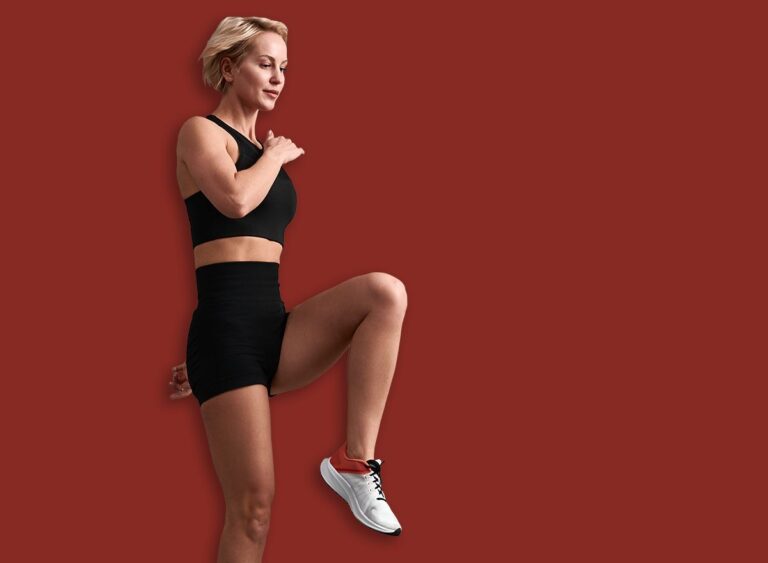
Standing knee drives rebuild the power in your hips by lifting one knee repeatedly while standing. Brady explains that this movement enhances hip strength and builds the stability you need for balance and the quick, forceful steps that keep you upright when the ground becomes uneven or you must move fast.
Core Engagement and Full-Body Coordination
The exercise challenges your core to keep your torso steady while you lift one knee at a time, building full-body coordination alongside leg power. You’re training your entire lower body to work together rather than in isolation. The movement mimics the dynamic walking pattern your legs should be performing, so the power you build transfers immediately to how you move through the world.
Calf Raises: Strength for Stability
Your calves are involved in nearly all standing movements, which is exactly why they deserve dedicated attention. Brady notes that calf raises strengthen the lower leg and enhance your capacity for steady walking and reliable balance. A weak calf means wobbling on uneven ground or struggling to rise onto your toes when you need a burst of upward stability.
Keeping your calves strong pays off across the board, from climbing stairs to simply staying steady on your feet. The exercise requires no equipment beyond your body weight, though holding a chair for balance is wise. Each lift builds power in the part of your leg that works hardest when you’re trying to stay upright or move with intention.
Reverse Leg Lifts: The Neglected Powerhouse
The back of your hips—your glutes and hamstrings—are easy to neglect. When people think about leg strength, they picture the front of the thigh. But Brady emphasizes that the back of your legs are essential for hip stability and powerful strides. Reverse leg lifts target exactly these muscles, strengthening the back of your hips and improving balance in the process.
These muscles do crucial work when you’re walking, climbing, or steadying yourself after a stumble. Neglecting them creates imbalance and limits your actual power, even if the front of your leg feels strong. A focused reverse leg lift session rebuilds that posterior chain and restores the stability that keeps you moving with confidence.
Building Real-World Strength
The equipment list is minimal: a step and a sturdy chair. No squat rack, no weights, no expensive gym membership. All four exercises use your body weight and movement patterns you already know, which means you can do them first thing in the morning as part of your routine. The functional strength they build translates directly to climbing stairs without hesitation, crossing an intersection with steady strides, and catching your balance on uneven ground instead of reaching for the nearest wall.
Brady’s framework prioritizes what actually works in your daily life rather than what looks impressive in a gym. That distinction is the key reason these four exercises rebuild leg power faster than squats for adults over 60. The power is real, measurable and immediately useful.
Source: Eat This Not That
Frequently Asked Questions
How is leg power different from leg strength after 60?
Strength is your maximum force capacity, while power is your ability to generate that force quickly. After 60, muscle power declines 2.2 to 2.4 percent annually, nearly twice as fast as strength loss, which is why movements like standing up quickly become harder.
Why doesn't Brady recommend squats for adults over 60?
Squats require significant knee bend, hip mobility and simultaneous balance control—areas where adults over 60 face greater injury risk. The movement is also technically demanding, making compensation with your back or knees easy, which defeats the exercise's purpose.
What equipment do you need for these four exercises?
According to Brady, you need only a step or bench at knee height and a sturdy chair for balance. No squat rack, weights, or gym membership required, making these exercises accessible for home practice.
