
Key takeaways
- Push-ups, reverse lunges, shoulder taps, and squat jumps form a complete morning strength routine targeting upper body, legs, core stability, and power.
- Each exercise specifies 2 to 3 sets with different rep ranges, with rest periods of 30 to 60 seconds, and easier variations available for any condition.
- Incline push-ups, supported lunges, and slow movements reduce intensity while preserving the movement pattern and benefits.
- Consistency matters more than perfection; adjusting the routine on harder mornings keeps you returning daily rather than skipping workouts that feel too demanding.
Men over 60 often measure youth not by their age but by what their bodies can accomplish. The ability to stand from the floor without help, move with purpose, or perform a solid push-up represents genuine physical capability that extends far beyond aesthetics. According to Eat This Not That, a brief morning routine that combines strength, movement, and a touch of power can sustain these skills without demanding hours at the gym or specialized equipment.
Morning movement works precisely because your body emerges from hours of stillness. Eight or more hours of horizontal position tighten your muscles, stiffen your joints, and create a kind of temporary inertia. A handful of focused exercises loosen what has tightened, activate muscles that have gone quiet, and set a productive tone for the day. The routine below takes this principle and structures it around four fundamental movements, each reinforcing a different aspect of physical capacity.
Press Your Upper Body with Push-ups
Push-ups require nothing but your own body weight and reveal a great deal about upper-body strength in a matter of seconds. Your chest and triceps handle the pressing work while your core maintains a stable position from neck to knees. Unlike machines that guide your movement or external weights that vary the load, your body weight presents a consistent challenge that translates directly to real-world capability.
If traditional floor push-ups feel too demanding first thing in the morning, or if you are returning to training after time away, use a counter, sturdy table, or bench to reduce the load. This adaptation preserves the movement pattern while making the work accessible.
Sets and Reps
Perform 2 to 3 sets of 6 to 12 repetitions, resting 30 to 45 seconds between sets.
Adapt to Your Condition
Incline push-ups against a raised surface work equally well for building chest and triceps strength. Knee push-ups distribute the load differently while keeping the movement pattern and upper-body engagement intact. Slow push-ups, lowering for three full seconds before pressing back up, build strength with less intensity and improve body control.
Combine Strength and Mobility with Reverse Lunges
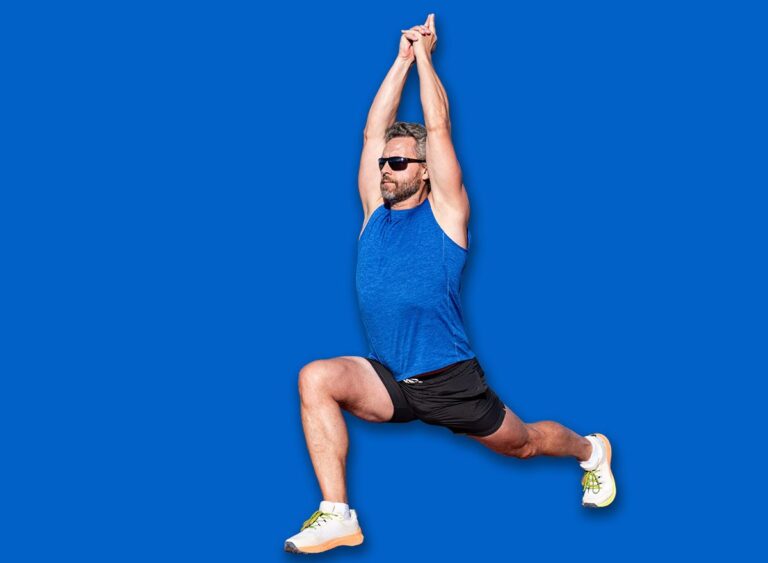
The reverse lunge with an overhead reach accomplishes something unique: it addresses stiffness while building leg strength. Stepping backward challenges your hips and thighs in a way that forward walking rarely does; the overhead arm position opens a range of motion that your body likely avoids during sleep and most daily activities. This combination teaches your legs to work while your shoulders and spine move through a position that matters for daily function.
Sets and Reps
Perform 2 to 3 sets of 6 to 8 repetitions per side, resting 30 to 45 seconds between sets.
Maintain Proper Form
Stay tall through your torso as you reach overhead. Slouching or arching your lower back during the reach diminishes the mobility benefit and creates unnecessary strain. A tall posture ensures the movement loosens your spine as much as it strengthens your legs.
Reduce the Challenge When Needed
A supported reverse lunge using a wall, chair back, or light hold simplifies the balance demand if you are still building confidence in this movement. Reducing the range of the lunge step, a shorter backward step, or substituting a bodyweight split squat with reach offers similar strength and mobility benefits with less intensity.
Reinforce Core Control with Shoulder Taps
Shoulder taps demand something push-ups and lunges do not: precise core control as your support shifts from side to side. Holding a plank position while tapping each shoulder forces your core to work harder to keep your hips level and stable. Unlike simple planks, this movement brings coordination into the equation because your torso must stay tight even as one arm lifts and taps.
This exercise teaches your core to brace dynamically, a skill that transfers to everyday activities like reaching across your body or reacting to unexpected balance challenges.
Sets and Reps
Perform 2 to 3 sets of 6 to 10 taps per side, resting 30 to 45 seconds between sets.
Progress Carefully
Start with slower, cleaner repetitions and resist the urge to rush. Speed comes naturally once your core learns to control the movement pattern. Incline shoulder taps against a bench reduce the intensity while preserving the core-bracing demand. Wider foot spacing increases stability if you need it, giving your foundation more area to work with.
Build Power with Squat Jumps
Power, the ability to generate force quickly, tends to fade faster than pure strength when you stop training it deliberately. This matters because power is what allows you to move briskly, react quickly, and handle unexpected physical demands. Squat jumps reintroduce this quality without excessive volume.
You do not need significant height to get the benefit. The goal is teaching your legs to accelerate, even if that acceleration happens over a short distance. On days when jumping feels wrong for any reason, fast bodyweight squats with sharp intent deliver much of the same training effect.
Sets and Reps
Perform 2 to 3 sets of 5 to 8 repetitions, resting 45 to 60 seconds between sets.
Modify for Your Day
A low squat jump or even a supported squat jump using a stable surface gives you power work with less intensity. Some mornings the impact of jumping will feel unwelcome; the alternative is fast squats performed with focused intent, which trains the same explosive quality.
Making the Routine Stick
The routine works best when it remains sustainable enough to perform daily. Some mornings you will feel strong and complete the work as described. On others, dropping back to an easier variation or performing one fewer set makes perfect sense. The goal is consistency, not perfection. A routine you do four times per week at full intensity beats a routine you never start because it feels too hard.
Controlled effort and purposeful adjustments keep you returning day after day. This short sequence covers upper-body pressing, leg strength and mobility, core stability, and a dose of power, considerably more than simple stretching and enough to remind your body it still moves. Your body will adapt to this work, and you will notice that movements you perform hundreds of times a day become a little easier and feel a little lighter.
Source: Eat This Not That
Frequently Asked Questions
How long does this routine take to complete?
With rest periods of 30 to 60 seconds between sets, the entire routine takes roughly 15 to 20 minutes depending on your pace. The sequence covers upper-body pressing, leg strength and mobility, core stability, and power development without requiring extended training sessions.
What should I do if the standard version of an exercise feels too difficult?
Each exercise has specific modifications: use incline push-ups or knee push-ups instead of floor push-ups, perform supported reverse lunges using a wall or chair, and try low squat jumps or fast bodyweight squats instead of full jumps. You can also perform one fewer set or move more slowly through each repetition.
Why is power work included in a routine focused on strength?
Power, the ability to generate force quickly, tends to fade faster than pure strength when you stop training it deliberately. Squat jumps or fast bodyweight squats keep this quality active, which matters for moving briskly, reacting quickly, and handling unexpected physical demands in daily life.
