
Key takeaways
- Morning strength training preserves muscle better than cardio alone while forcing your core to work harder through rotation and lateral movement.
- The five exercises use 2-3 sets with 5-10 reps per side depending on the move, with bodyweight and lighter-load variations to scale difficulty.
- Each movement targets full-body engagement: the wood chop trains rotation, the lateral lunge adds side-to-side stability, and the kettlebell deadlift combines hinge and pull.
- Muffin-top changes come from combining strength training with daily movement, good nutrition, recovery, and consistency—not cardio machines alone.
After 50, muffin top often becomes a cardio problem in people’s minds. The goal feels straightforward: burn more calories and hope the waistline follows. Many people respond by adding longer treadmill sessions or bike rides, but that approach misses a critical opportunity. Cardio absolutely belongs in your week—walking, cycling, or any activity you’ll do consistently matters—but strength training changes the equation for your midsection specifically.
Strength work preserves muscle while engaging your core through full-body movement, creating more active tissue and a stronger metabolic signal than cardio alone. Morning training fits this pattern naturally because you don’t need an hour. A short session with five full-body exercises can raise your effort quickly and make your core work while the rest of your body moves. That setup beats saving all your energy for one long workout you may not have time for, especially on busy mornings when a full workout feels impossible.
When designing routines for clients over 50, the priority is simple: exercises that feel useful right away. The movements should be easy to understand, simple to scale, and strong enough to make the morning feel productive. The five exercises below mix rotation, strength, and controlled bodyweight movement, giving your waist more to work against than steady cardio alone can achieve.
Why Morning Strength Beats Cardio for Your Midsection
The Problem With Cardio-Only Approaches
Steady cardio burns calories, and calorie deficit matters for fat loss, but cardio preserves very little muscle. When you lose muscle while losing fat, your midsection often stays soft even after significant weight drop because your core muscles never got stronger. They weren’t asked to work hard enough. Add hormonal changes after 50, and the typical treadmill routine becomes increasingly less effective for the specific problem of muffin top. You’re shrinking yourself without strengthening yourself.
Why Full-Body Strength Changes the Signal
Strength work preserves muscle while giving your midsection an active role in movement and balance. When you perform full-body exercises with rotation and lateral movement, your core has to control weight paths and keep you stable through shifts. That demand far exceeds what standing ab work or side bends create. A morning routine with these five moves sends a daily signal to your whole body that muscle matters, and it delivers that signal specifically to your midsection when your core works to balance and rotate against resistance.
The Five Morning Exercises for Muffin Top
Dumbbell Wood Chop
The dumbbell wood chop trains rotation while your legs and core work together. Your midsection has to control the weight path, making this exercise far more useful than small side-bend movements. The full-body feel comes from hips, torso, and shoulders all contributing to the movement, which is why it outperforms isolation ab work for reshaping your midsection.
Use a light dumbbell so the movement stays smooth. The key form tip: turn through your upper body and hips without yanking the weight across your body. Perform 2 to 3 sets of 8 to 10 reps per side. If you want to scale, try bodyweight wood chops, cable wood chops, or slower dumbbell wood chops.
Inchworm Walkout
The inchworm walkout builds trunk strength in a moving plank position, making it a better fit for full-body training than floor crunches. It gives your core a bigger job while bringing your shoulders and hamstrings into the routine. The exercise adds just enough pace to wake up your body without needing impact or high-intensity bursts.
Keep the range comfortable and bend your knees as needed—this isn’t about reaching maximum distance. The form rule: walk out only as far as you can keep your body steady. Perform 2 to 3 sets of 5 to 8 reps. Scale with elevated inchworms, shorter walkouts, or inchworm to shoulder tap.
Dumbbell Lateral Lunge
Many routines miss lateral work entirely, leaving the outer thighs and hips undertrained. The dumbbell lateral lunge moves you side to side, training the hips and thighs while your core keeps you balanced through the shift. This adds bigger strength demand than standing ab work and makes your lower body feel more athletic instead of locked in straight-ahead movement. The muscles trained include glutes, quads, hamstrings, inner thighs, and core.
Perform 2 to 3 sets of 8 to 10 reps per side. Variations include bodyweight lateral lunges, side step to squat, or shorter-range lateral lunges if mobility limits you.
Kettlebell Deadlift to High Pull
This exercise combines a hinge and an upper-body pull into one movement, making it feel active without unnecessary complexity. Your hips create the initial strength, and your upper back finishes the pull. That combination delivers a stronger full-body stimulus and helps you raise effort quickly in a morning window. The muscles trained include glutes, hamstrings, upper back, shoulders, and core.
Choose a light kettlebell so every rep stays crisp and controlled. The form priority: drive the movement from your hips before pulling with your arms—not the other way around. Perform 2 to 3 sets of 8 to 10 reps. Scale with kettlebell deadlift alone, dumbbell high pull, or kettlebell deadlift to row.
Step-Back Lunge With Overhead Reach
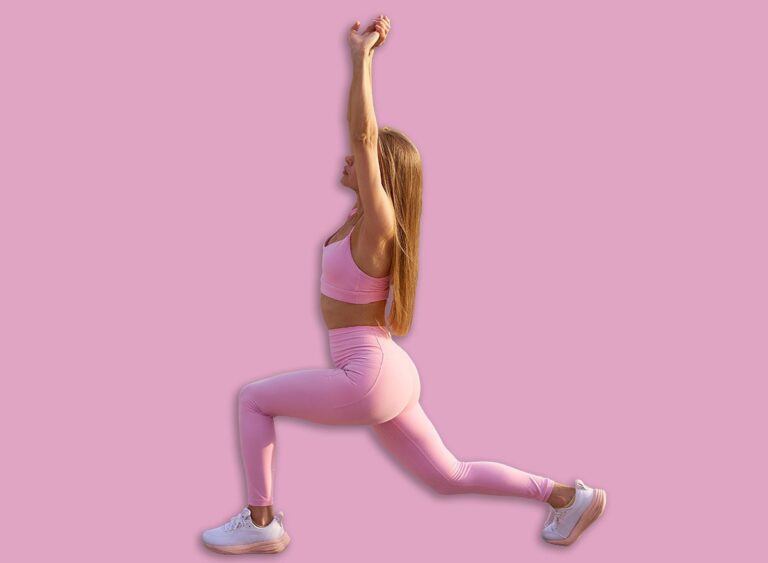
The step-back lunge with overhead reach finishes the routine by combining lower-body strength with a long core position. Stepping back challenges each leg independently, and the reach encourages your torso to stay tall and engaged. The exercise builds strength, balance, and body control after 50 while staying equipment-free if you prefer a lighter option. Muscles trained include the quads, glutes, hamstrings, and core throughout the reach.
Keep the reach tall without arching your lower back—the reach should extend from your core, not create spinal arch. Perform 2 to 3 sets of 6 to 10 reps per side. Variations include step-back taps with reach, supported reverse lunge, or bodyweight reverse lunge.
Making Your Morning Routine a Habit
Muffin top changes usually come from the combination of strength training, daily movement, nutrition, recovery, and patience. You don’t have to overhaul everything at once to see progress. Start with realistic habits that help you move more, preserve muscle, and manage energy intake without making your day feel restricted. The more repeatable the plan feels, the easier it becomes to stay with it long enough to notice a difference.
A morning routine gives your day a strong start, especially when it connects to habits you can repeat throughout your day. You don’t have to spend hours on cardio machines to trim muffin top after 50. A short morning routine with full-body strength work gives your body a better daily signal, and the habits around it determine whether that work shows up over time.
Frequently Asked Questions
Why is morning strength training better than cardio for muffin top after 50?
Cardio burns calories but preserves little muscle, leaving your midsection soft even after weight loss. Strength training preserves muscle and forces your core to work harder through rotation and lateral movement, creating a stronger metabolic signal. A short morning session with full-body moves raises effort quickly without needing hours on a treadmill.
How many sets and reps should I do for each exercise?
Most exercises require 2 to 3 sets of 8 to 10 reps per side. The inchworm walkout uses 2 to 3 sets of 5 to 8 reps, while the step-back lunge with overhead reach ranges from 2 to 3 sets of 6 to 10 reps per side. Start with lighter weight and bodyweight variations, then progress as your form improves.
Do I still need to do cardio if I'm doing these morning exercises?
Yes. Cardio absolutely belongs in your week, especially walking, cycling, or any activity you'll repeat consistently. These five morning moves work better than cardio alone for targeting muffin top, but combining strength training with regular cardio, daily movement, and good nutrition produces the best results for reshaping your midsection.
