
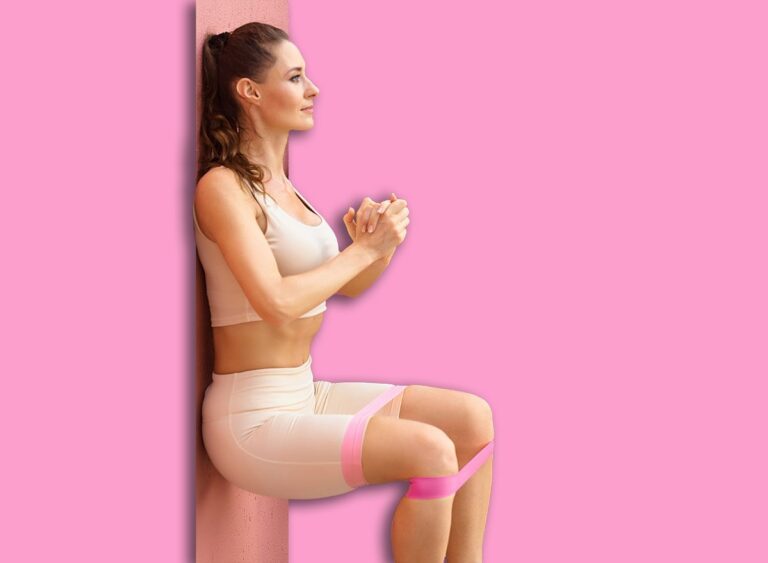
Key takeaways
- A wall sit measures isometric strength and lower-body endurance without equipment, testing your ability to hold a static position under continuous tension.
- After 50, holding a wall sit for 90 seconds or longer demonstrates leg strength that matches or exceeds most adults in their 30s.
- Proper form requires your back against the wall, feet flat, and knees aligned over your ankles; use the same setup every time to track real progress.
- Improvement comes from clean, controlled sets with gradual time increases rather than grinding maximum-effort holds each workout.
Most people think of leg strength in terms of heavy weight and explosive movement: deep squats, loaded lunges, or impressive numbers on a leg press. Wall sits tell a different story. This simple, no-equipment exercise reveals something equally important—your ability to hold a strong position under continuous muscle tension. For adults over 50, a wall sit benchmarks something that matters in daily life: the capacity to sustain lower-body strength once the fatigue starts.
A wall sit also exposes a myth about age and fitness. Youth does not automatically mean better endurance. Plenty of people in their 30s can move quickly through a workout but struggle to hold a fixed position for extended time. A wall sit rewards control, patience, and the discipline to keep your legs working once the burn begins.
What a Wall Sit Actually Tests
Wall sits measure isometric strength—your ability to generate force without moving through a full range of motion. Once you settle into position, your quads must prevent your knees from shifting angle, while your glutes stabilize your hips. The constant, unbroken tension is what makes the hold feel manageable at first and progressively harder as time passes.
This exercise also reveals lower-body endurance in a static position. Your quads remain under continuous load, your hips must stay level, and your breathing stays controlled as fatigue accumulates. Unlike exercises that depend on speed, cadence, or how you move through repetitions, a wall sit simply asks a single question: how long can your legs maintain a strong position before fatigue breaks your form?
After 50, this distinction matters. Wall sits challenge your legs, provide a clear metric, and let you adjust difficulty without needing any equipment or apparatus. A long, controlled hold demonstrates that your lower body can tolerate sustained tension, hold alignment, and remain stable as effort climbs.
How to Set Up a Wall Sit
The Setup
A proper wall sit begins before you even lower yourself. Position your feet shoulder-width apart, roughly 2 feet away from the wall. Press your back and shoulders fully against the wall surface. Choose a depth that feels stable and repeatable—you don’t need to go so deep that your knees ache. Thighs parallel to the floor is the full version, but starting higher is perfectly acceptable if it lets you maintain clean form and complete your hold.
The Form Standard
Your wall sit is valid when three elements align: your back stays pressed to the wall, your feet remain flat on the floor, and your knees track directly over your ankles. Knees should not cave inward or drift outward. This consistent setup matters because it makes your score repeatable. If you change the depth, foot distance, or wall itself, your benchmark becomes incomparable to previous attempts. Use the same position every time you test yourself so your progress actually reflects improvement rather than variation in setup.
Variations to Build Toward
Once you master the standard wall sit, you can progress by starting higher and gradually lowering the depth, moving to weighted versions where you hold dumbbells across your thighs, or adding resistance bands around your knees to increase quad activation. Each variation raises the demand without changing the core movement.
The Strength Benchmarks After 50
Your wall sit time tells you where your lower-body endurance stands. These benchmarks help you understand your current position and know what a strong target looks like.
Under 30 seconds is a solid starting point. You’ve established the position and built familiarity with the movement. Consistent practice at this level creates foundational strength with manageable joint stress.
30 to 60 seconds shows you have built a respectable strength base. Your legs tolerate the sustained tension without immediate breakdown, and you can begin pushing toward longer holds. At this level, your position stays relatively stable even as your muscles begin to fatigue.
60 to 90 seconds is a genuinely strong score for anyone over 50. Your legs have developed enough endurance to remain active and engaged once the hold becomes uncomfortable. Your position stays steady, and your muscles maintain tension despite accumulated fatigue.
90 seconds or longer is an impressive achievement. Holding a clean wall sit for 90 seconds or more demonstrates that your legs can generate force, hold position with precision, and stay composed under the fatigue that builds. This level of lower-body strength stands out at any age, not just after 50.
Why Age Does Not Guarantee Endurance
The reason a 50-year-old who holds a wall sit for 90 seconds has demonstrated strength comparable to most 30-year-olds comes down to how fitness actually works. Many younger adults build their conditioning around speed and movement—running, cycling, circuit training. They excel at dynamic work but never practice holding a static position. When fatigue mounts and they must stay still against resistance, their bodies have no experience managing that specific demand.
A wall sit bypasses what makes many younger adults fast and focuses on what they often lack: the patience and muscular discipline to hold against resistance. That gap is why age alone does not determine wall sit performance.
Programming for Improvement
You do not need brutal, maximum-effort holds every session to improve your wall sit. Better progress comes from clean, controlled sets at a consistent depth, gradually adding time, and treating the movement as both a strength exercise and a skill. Better setup usually translates directly into longer holds.
Start with the depth and duration you can currently manage with good form. Each week, add a few seconds to one of your sets. After a few weeks, lower the depth slightly and repeat. This gradual progression builds strength without the joint stress that comes from grinding through maximum-time holds every workout.
Track your times in the same position so you know whether you are genuinely improving or just varying your setup. Consistency makes the benchmark meaningful.
What Makes Wall Sits Valuable After 50
Wall sits do not require a gym, weights, or special equipment. You need only a wall and your own body weight. They test a quality of strength that matters in daily life—the ability to stay stable and strong when your body must hold a position under load. Sitting down, standing up, and climbing stairs all require the quad and glute endurance that a wall sit measures.
A 90-second wall sit after 50 is not just a number on a scorecard. It is a real benchmark of lower-body strength and endurance that affects how well you move through your day. Start where you are, hold with control, and let your legs demonstrate their strength.
Frequently Asked Questions
What does a wall sit measure?
A wall sit measures isometric strength—your ability to generate force without movement. It tests whether your quads can prevent your knees from changing angle and whether your glutes can stabilize your hips under continuous, sustained tension.
What is a good wall sit time after 50?
Holding a wall sit for 60 to 90 seconds is a strong score after 50, showing your legs have enough endurance to stay active and steady as fatigue builds. Holding 90 seconds or longer is an impressive benchmark that demonstrates strength comparable to most younger adults.
How do I improve my wall sit time without injuring my knees?
Use the same depth and setup every time, add time gradually (a few seconds per week), and never lower yourself to a depth that causes knee pain. Treat the wall sit as a skill and strength exercise together—better form usually allows longer holds without extra joint stress.
