
Key takeaways
- The upper arms, belly, thighs, and glutes are the most common areas where loose skin sags after 60, and wall exercises specifically target all four.
- Wall exercises cost nothing and require no equipment, while laser treatments cost thousands and need repeating, yet deliver better results because they build the muscle that shapes skin appearance.
- Most people feel their arms and thighs firming within two weeks, see visible changes in the mirror by 4-6 weeks, and have others notice by 8-12 weeks.
When you’re over 60 and dealing with loose skin on your arms, belly, or thighs, you’ve likely tried multiple creams or treatments that underwhelmed. A personal trainer with 40 years of experience and 25 years running TRAINFITNESS, the UK’s primary provider of in-person and online personal training courses, identifies loose skin as one of the most common cosmetic concerns in women after 60. While exercise cannot literally tighten skin, it builds the muscle underneath, changing how the skin drapes on the body. Four specific wall exercises deliver more visible results than commercial creams.
Where Loose Skin Appears Most Often
The upper arms rank as the most common complaint, followed by the belly, the skin under the chin, and the inner thighs. These areas share a vulnerability: skin rests over relatively small amounts of muscle. Once that underlying muscle thins with age, the skin loses its structural support and begins to hang. The problem is not the skin itself weakening in isolation, but the loss of the structure beneath it.
Collagen and elastin, the proteins responsible for skin’s elasticity, both decline after age 40 and drop more steeply after menopause. Skin no longer holds its shape as well and does not snap back the way it did in younger years. Meanwhile, the muscle underneath atrophies from disuse. A bicep that once filled the space under skin now sits smaller and softer. A glute that once supported the back of the thigh has shrunk. The visible looseness comes primarily from muscle loss, not from the skin changing its inherent properties.
Weight fluctuations over decades compound this problem. Anyone who has gained and lost significant weight has stretched their skin, and skin does not fully recover from stretching. Genetics play a role in how much individual skin rebounds. Some people’s skin snaps back after weight change, while others’ remains stretched. Exercise addresses the one variable under your control: the muscle underneath.
Why Wall Exercises Beat Creams and Laser Treatments
Creams work on the surface of skin, a layer only a fraction of a millimeter thick. They cannot affect the muscle beneath, which determines the shape the skin takes on. Wraps produce temporary results. Laser skin tightening does stimulate some collagen production, but the effect is modest and still does not build or fill out the muscle underneath.
Wall exercises load muscles in a stable position, allowing older adults to push harder without the fall risk of freestanding movements. This intensity is what builds muscle, not the light, careful movements many over 60s have been told are safe. The cost difference is striking: a course of laser skin tightening requires thousands of dollars and repeated treatments, while wall exercises cost nothing and require no equipment.
Wall exercises also deliver benefits beyond appearance. They improve strength, balance, and bone density simultaneously—benefits no cosmetic treatment provides. The muscle built from wall exercises works continuously, producing ongoing improvements as long as you maintain the routine.
The Four Wall Exercises and Their Purpose
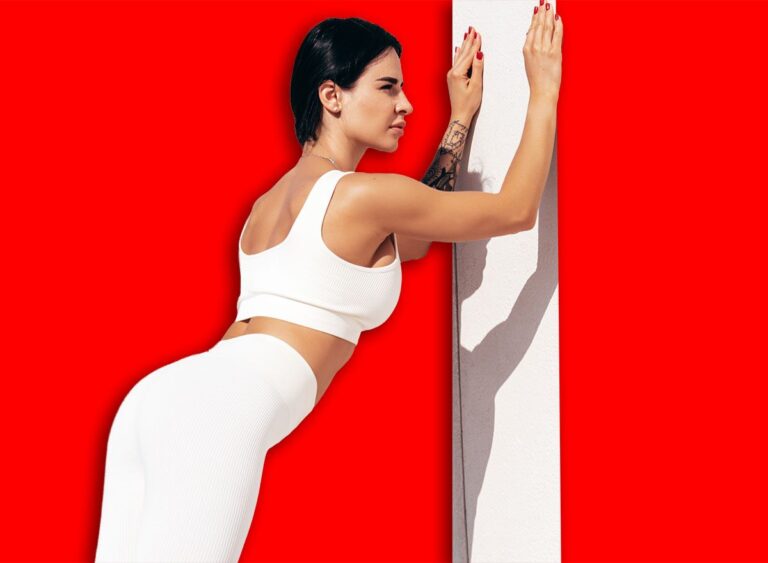
Wall Push-Ups for the Arms and Shoulders
This exercise targets muscle across the chest, shoulders, and the back of the upper arms. The back of the upper arm is where loose skin sags most noticeably—the “bat wing” effect. Adding muscle in this area fills out the entire region from underneath, changing the silhouette immediately.
Wall Sits for the Thighs and Glutes
Wall sits build muscle in the thighs and glutes, filling out the inner-thigh and back-of-the-leg areas where loose skin hangs most visibly. Because wall sits are isometric exercises, the muscle works at maximum contraction without impact on the joints, making them safer for older joints.
Wall Planks for the Trunk and Belly
This exercise targets the deep muscles of the trunk that hold the belly in and support the lower back. Building these muscles pulls the abdomen in from underneath, changing the belly shape even before any fat loss occurs. The wall version positions the body at a gentler angle than a traditional floor plank.
Hip Extensions for the Glutes and Back Thighs
Hip extensions specifically build the glute muscles, filling out the back of the upper thigh and the bottom. Loose skin over a flat bottom sits noticeably differently than loose skin over a strong bottom, and friends and family notice the difference when you wear fitted trousers within weeks.
Building Your Routine
Perform these exercises three or four times a week. Muscle requires recovery time between sessions to actually grow, which is when the visible change appears. Daily routines do not produce faster results and waste recovery potential.
All four exercises in a single session take about 15 minutes with short rest intervals. For the first two weeks, complete 2 sets of each exercise. After that, progress to 3 sets, which is when visible change typically begins. On your non-exercise days, walk to support overall body composition. Walking combined with muscle building produces the “toned” appearance people pursue.
After the first month, progress the exercises to more demanding versions or add weight. Wall push-ups can move to a lower surface to increase difficulty. Wall sits can be held longer. Hip extensions can add an ankle weight. This progression keeps muscles growing and prevents adaptation.
Timeline for Visible Results
Within the first two weeks, most people notice their arms and thighs feel firmer to the touch, even before any mirror change appears. The muscle is waking up and holding tension.
Between four and six weeks, changes become visible in the mirror. Arms look tighter, especially the underside. The bottom sits higher. The belly appears less soft. Clothes fit slightly differently around the arms and hips.
By eight to twelve weeks, family members and friends notice the change without being told. The improvement is real and visible, though the muscle underneath is doing the work rather than the skin itself tightening. Most people find that clothes they had shelved come back into regular rotation.
Beyond three months, the process continues building. Muscle takes six months to a year to fully develop in this age group, and each month adds more definition. For anyone whose skin has been stretched by decades of weight change, the realistic answer beyond the three-month mark is time, patience, and occasionally a consultation with a doctor.
Frequently Asked Questions
Why do creams and laser treatments not fix loose skin as well as exercise?
Creams work only on the skin's surface (a fraction of a millimeter thick) and cannot build the muscle underneath that determines skin shape. Laser treatments stimulate modest collagen production but still do not build muscle. Wall exercises fill out the muscle beneath, changing how the skin looks even without the skin itself tightening.
How long before I see visible changes from wall exercises?
Most people feel their arms and thighs feel firmer within the first two weeks. Visible mirror changes appear between 4-6 weeks, with arms looking tighter and the bottom sitting higher. By 8-12 weeks, others notice the difference without being told.
How often should I do these wall exercises?
Perform them 3-4 times per week. Do 2 sets of each exercise for the first two weeks, then progress to 3 sets, which is when visible change typically begins. Muscle requires recovery time between sessions to grow, so doing them daily does not produce faster results.
