
Key takeaways
- The chair sit test measures lower body strength without equipment—just hold the position and your time reveals your muscular endurance.
- For adults over 65, holding 30-45 seconds shows good strength, while 60+ seconds indicates excellent performance well above your age group.
- Older adults can build leg strength well into their 70s, 80s, and beyond—consistent training improves daily movement, confidence, and independence.
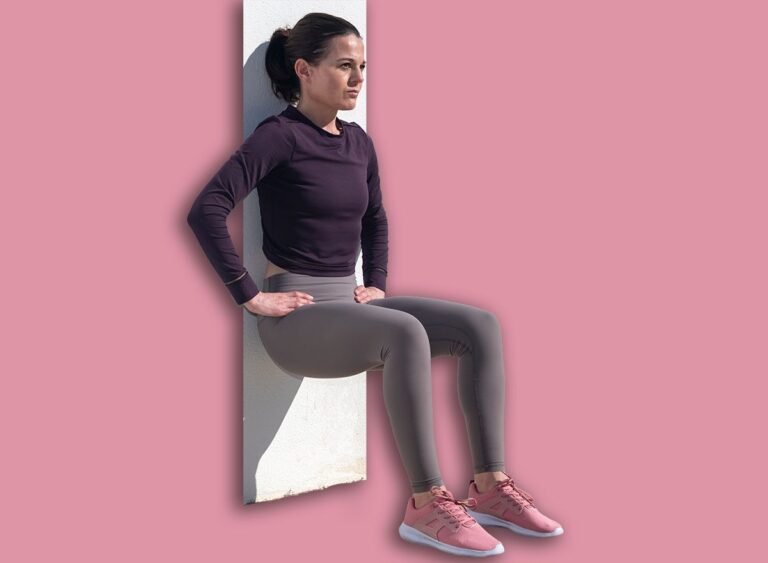
The chair sit test is one of the simplest yet most revealing assessments of your lower body strength after 65. Designed by James Brady, a certified personal trainer at OriGym, the test requires nothing more than a wall and your own bodyweight to uncover where your leg strength truly stands compared to your peers.
According to Brady, the chair sit test puts your quads, glutes, and hamstrings under sustained tension. Your ability to hold the position reveals critical information about your lower body strength and muscular endurance—two factors the National Institute on Aging identifies as essential for staying steady on your feet as you age.
Why Declining Leg Strength Threatens Your Independence
Lower body weakness isn’t just an inconvenience—it’s one of the biggest predictors of falls, mobility problems, and the loss of independence that many people fear most as they get older. Your leg muscles are responsible for the everyday movements you might take for granted: getting out of a chair, climbing a flight of stairs, getting up off the floor, or steadying yourself in unexpected situations.
The problem accelerates after 65. Muscle loss begins gradually in your 30s, but it doesn’t pick up real speed until after 60 unless you’re actively working to counter it. Your lower body muscles—especially the quads, glutes, and hamstrings—decline fastest during this period if you aren’t doing regular strength training. The cruel part is that muscle loss happens so gradually that most people don’t notice it’s happening until it shows up in their daily life: a chair becomes harder to rise from, stairs feel more exhausting, or a trip becomes riskier than it used to be.
The Chair Sit Test: How It Works and What You Need
The beauty of the chair sit test is its simplicity. You need no expensive equipment, no gym membership, and no specialized setup. The only requirements are a wall and your willingness to test where you stand.
The test works by placing your quads, glutes, and hamstrings under sustained tension, mimicking the muscle groups you rely on throughout your day. James Brady designed the chair sit test specifically to reveal your lower body strength and muscular endurance—the same qualities that keep you stable on your feet as you move through the world.
Starting Your Test
If you’re new to the exercise, Brady recommends starting with 15 to 20 second holds and gradually building your endurance over several weeks. Treat this initial time not as a final score, but as a baseline—a starting point from which to build.
Understanding Your Benchmark Performance
According to Brady, “For most healthy adults over 65, holding a chair sit for 30 to 45 seconds demonstrates good lower body strength and endurance. If you can maintain good form for 60 seconds or more, that’s an excellent result and suggests your leg strength is well above average for your age.”

What Your Results Actually Mean
Your hold time is more than just a number—it’s a window into how your body is aging and what your legs are capable of doing in real life.
The 30-to-45-Second Range
If your hold time falls between 30 and 45 seconds, you’re demonstrating good lower body strength and endurance. This puts you in solid standing among your peers, with legs generating enough force and stability to handle most daily tasks without strain or risk.
Reaching 60 Seconds or More
Holding a chair sit for a full minute or longer indicates excellent leg strength well above what’s typical for your age group. This level of performance suggests your lower body can handle demanding daily movements with confidence and low fall risk.
Building From Your Starting Point
If you’re just starting and your hold time lands between 15 and 20 seconds, that’s your legitimate baseline to build from. The key isn’t perfection on day one—it’s consistency and gradual progression as your muscles adapt and strengthen.
The Biological Reality: Muscle Loss and Recovery
The decline in leg strength after 65 isn’t random or inevitable without intervention. Muscle loss begins gradually in your 30s and continues through your 40s and 50s, but the pace quickens after 60 unless you’re actively training to preserve what you have. Your leg muscles are especially vulnerable, which is unfortunate since they’re also the ones you can least afford to lose.
The encouraging news? Research shows that older adults can build leg strength well into their 70s, 80s, and beyond. Your muscles respond to training at any age, which means that starting a strength routine now, regardless of your current age, can pay real dividends in how you move and feel.
From Measurement to Real-World Strength
The real value of the chair sit test isn’t just the number itself. According to Brady, “The goal is to strengthen the muscles that support your knees and hips, making everyday movements feel easier and more stable.” As your hold time increases, you’ll see those gains show up in the places that matter most.
You’ll notice the difference when you rise from a low chair without using your hands. You’ll feel it climbing stairs—fewer steps feel breathless or shaky. Walks around the neighborhood feel less risky. Getting up off the floor, which many people worry about after a certain age, becomes something you can do with confidence.
The test becomes most powerful when you repeat it every few weeks to track your progress as your legs get stronger. You’re not chasing a single score—you’re building a pattern of improvement that reinforces your commitment to maintaining the strength that independence requires.
Making the Chair Sit Your Foundation
Treat the chair sit test as the starting point for a simple leg-strengthening routine. The test itself is also a training tool: the muscles you’re testing are the same ones you’ll be building through consistent practice. Over time, that initial 15-to-20-second hold can progress to 30 seconds, then 45, then a full minute or more.
The payoff extends far beyond a number. It shows up in your ability to live the life you want to live—moving freely, climbing stairs without fear, staying active with family and friends, and maintaining the independence that matters most as you age.
Frequently Asked Questions
What does the chair sit test actually measure?
The chair sit test measures your lower body strength and muscular endurance by placing your quads, glutes, and hamstrings under sustained tension. According to the National Institute on Aging, this reveals how well you'll stay steady on your feet as you age.
What's considered good performance on the chair sit test after 65?
For most healthy adults over 65, holding a chair sit for 30 to 45 seconds demonstrates good lower body strength and endurance. If you can maintain good form for 60 seconds or more, that's an excellent result and suggests your leg strength is well above average for your age.
Can older adults really build leg strength after 60?
Yes. Research shows that older adults can build leg strength well into their 70s, 80s, and beyond. Your muscles respond to training at any age, which means starting strength work now can significantly improve your daily movement and independence.
