
Key takeaways
- Achieving 20 step-ups per side on a knee-height bench requires exceptional balance, muscular endurance, and neuromuscular control.
- Dr. Alan Mandell, a physician specializing in senior health, recommends pairing step-up exercises with omega-3 fatty acid supplementation to maximize muscle health and recovery.
- Beginners should start with 2 sets of 8–10 repetitions on a low step measuring 20–25 centimeters and focus on driving through the heel rather than pushing off the back foot.
- For decades, gerontology focused on managing decline in older adults rather than building genuine strength and power.
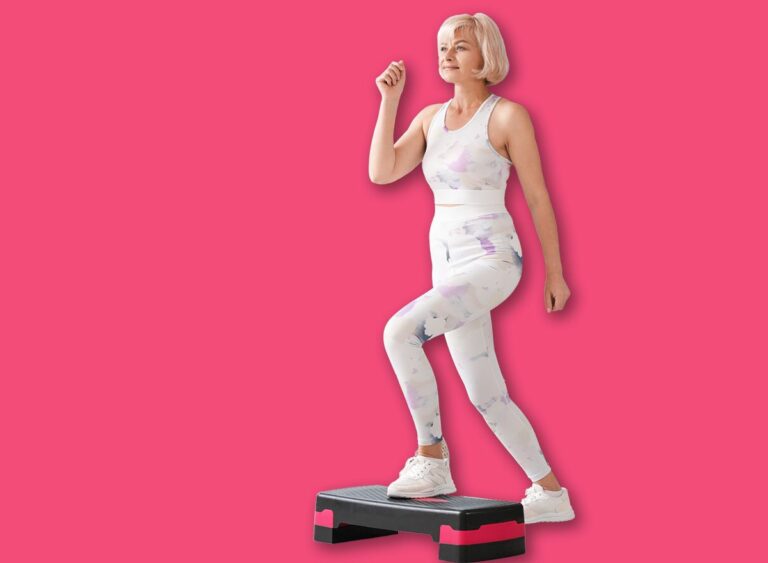
Completing roughly 20 step-ups per side with proper form and control defines elite leg power for adults over 60, while 5–8 step-ups per side indicates decent fitness in this age group. Fitness expert Washack established these benchmarks using a sturdy, knee-height step or bench as the testing apparatus. This straightforward assessment has emerged as a critical biomarker for predicting not only mobility and bone health but also cognitive aging over the next decade.
The Elite Benchmark: What 20 Step-Ups Per Side Really Means
Achieving 20 step-ups per side on a knee-height bench requires exceptional balance, muscular endurance, and neuromuscular control. The test demands that each repetition be performed with strict form, meaning the participant must drive through the heel, control the descent, and alternate legs without momentum or compensation. Most adults over 60 who maintain regular strength training fall into the “decent” category of 5–8 reps per side, while reaching elite status at 20 reps represents a fitness level that fewer than 10 percent of older adults attain.
The step-up exercise targets the glutes, quads, and hamstrings—the three largest muscle groups in the lower body. When performed with progressive overload (gradually increasing difficulty through heavier weights, higher step heights, or additional reps), step-ups build actual muscle mass and functional strength rather than simply improving endurance. The distinction between decent and elite performance hinges on muscular power: the ability to generate force quickly and sustain it across multiple repetitions without form breakdown.
Why Leg Power Predicts Brain Health and Longevity
Greater muscular fitness, specifically measured by leg power, is associated with improved cognitive aging over the subsequent 10 years, according to peer-reviewed research on non-impaired, community-living women. This finding reveals that leg strength is not merely a marker of mobility but a critical biomarker for brain health and the delay of cognitive decline. The connection between lower-body power and cognitive function suggests that the neuromuscular system and the brain age in tandem, making step-up training a preventive tool for both physical and mental deterioration.
Beyond cognitive benefits, step exercises enhance overall strength, balance, and mobility, directly addressing fall prevention in seniors—a leading cause of injury and loss of independence. The alternating nature of step-ups, which requires the participant to shift weight and control each leg independently, improves lateral stability and gait coordination. Adults over 55 also experience measurable increases in bone density from step-ups, as the impact and pressure of stepping onto a 6–12 inch platform stimulate bone remodeling, which is critical for preventing osteoporosis.
Nutritional Support: Omega-3s and Muscle Recovery
Dr. Alan Mandell, a physician specializing in senior health, recommends pairing step-up exercises with omega-3 fatty acid supplementation to maximize muscle health and recovery. In his guidance for seniors over 60, Dr. Mandell advises a daily dose of 3 to 5 grams of fish oil taken with water. This recommendation underscores that achieving elite leg power is not solely a function of exercise volume but depends equally on anti-inflammatory nutritional support that enables muscle repair and adaptation.
Research on weighted step training in older women confirms that low-volume, home-based protocols with external load can improve lower-limb muscle power and functional ability by approximately 10 percent. This efficiency gain means seniors need not commit to hours of training; instead, targeted strength work with proper nutrition yields measurable power gains. Progressive step-height training combined with incremental weight additions simultaneously improves functional ability, thigh muscle volume, and the force-velocity characteristics of the knee extensors—the muscles responsible for explosive movement and stair climbing.
Practical Training Protocol for Progression Toward Elite Status
Beginners should start with 2 sets of 8–10 repetitions on a low step measuring 20–25 centimeters and focus on driving through the heel rather than pushing off the back foot. This foundational approach builds capacity while minimizing injury risk. Form breakdown due to fatigue is a key safety concern, so using wall support or a lower step (regressions) ensures safe progression while building the neuromuscular control required to eventually reach elite performance.
For strength work targeting the 12–15 repetition range, the final three reps should feel genuinely challenging to the participant. A typical session includes one warm-up set followed by 2–3 targeted strength sets, with rest periods between sets to allow nervous system recovery. As strength improves, progression occurs through increasing step height, adding external weight via dumbbells or a weighted vest, or extending the repetition range—never by sacrificing form to chase higher numbers.
The Historical Arc of Aging and Functional Fitness
For decades, gerontology focused on managing decline in older adults rather than building genuine strength and power. The emergence of step-up benchmarks and their correlation with cognitive aging represents a shift toward proactive, preventive fitness models. This reframing positions older adults not as a population to be managed passively but as individuals capable of reaching elite performance standards with structured training and proper nutrition.
The recognition that leg power predicts cognitive aging over a 10-year window has transformed how fitness professionals and physicians approach senior health. Rather than viewing strength training as optional or secondary, leg power is now understood as a primary biomarker for healthy aging, placing step-ups and similar compound movements at the center of evidence-based senior fitness programming.
What Seniors Should Monitor Moving Forward
Older adults beginning step-up training should track their repetition capacity every 4–6 weeks to measure progress toward the 20-rep elite benchmark. Pairing consistent training with a daily omega-3 supplementation regimen of 3–5 grams will optimize the muscle-building and cognitive-protective benefits of the exercise. Progress may plateau, requiring adjustments to step height, external load, or training frequency to continue driving adaptation.
The step-up test offers a clear, measurable goal that motivates adherence and provides objective feedback on functional aging. Reaching elite status at 20 repetitions per side signals not only exceptional leg strength but also cognitive resilience and bone density that will support independence, mobility, and quality of life for years to come.
