
Key takeaways
- Chair exercises prevent falls and protect joints while building glute strength, making them safer than squats for adults over 55.
- Sit-to-stands and seated marches train functional glute patterns used in everyday activities like rising from a seat and climbing stairs.
- Single-leg extensions behind a chair can be progressively advanced by reducing hand support, building both unilateral strength and balance.
- The gluteus medius and hip stabilizers trained by these exercises are essential for balance, walking stability, and knee control.
For anyone over 55, the path to stronger glutes doesn’t require mastering the squat. D. Elijah Salters, M.S., from Memorial Hermann Rockets Sports Medicine Institute, advocates for a simpler, safer approach: chair-based movements that build the same strength without the balance demands of traditional compound exercises.
“Chair-based exercises allow someone to strengthen the hips and legs without requiring the standard balance, mobility, or depth that a traditional squat may demand,” Salters explains. The five exercises below work because they target muscles you use every day: carrying groceries, rising from a seat, climbing stairs. Each starts from a stable position, protecting your joints while building genuine functional power.
Why Chair Exercises Work Better Than Squats After 55
The primary advantage is protection. Staying seated or supported by a chair during exercise prevents the falls that can derail your physical independence after 55. Your joints avoid the cumulative stress of deep knee flexion and the demand to control your entire body weight at the lowest point of a movement.
Building Confidence Through Stability
“Chair-based exercises provide stability for the participants while they develop their confidence to grow in the movement patterns required for each one,” Salters notes. This stability is foundational. It bridges the gap between “I can do this safely” and actually building strength consistent enough to produce measurable results over weeks and months. For adults over 55, this confidence often determines whether an exercise routine sticks.
Sit-to-Stands: The Foundation
The sit-to-stand trains the same glute pattern you use when getting out of a chair or car, making it the most practical exercise on this list. It also works for anyone regardless of fitness level, which is why Salters places it first.
“Holding the chair for balance allows someone to practice loading the hips and glutes while maintaining control, feeling supported while the movement,” Salters notes. The setup is simple: sit with feet flat, shoulder-width apart. Lean forward slightly, shift your weight to your heels, and press through them to stand up fully. Pause at the top, then lower yourself back down under control without plopping back into the seat. Perform 10 to 15 repetitions. The chair isn’t a crutch; it’s a safety tool that lets you load your glutes without the full demand of freestanding squats.
Seated Marches: Train Your Stabilizers
Seated marches don’t feel immediately challenging until you hold the movement long enough to feel the burn. From a seated position with your back against the chair, lift one knee toward your chest as high as comfortable, lower it, then lift the opposite knee. Keep your posture upright. Perform for 30 to 60 seconds per side, resting briefly between.
Why the Gluteus Medius Matters
“This move strengthens the gluteus medius and other hip stabilizers, which are important for balance, walking, and controlling the knees,” Salters explains. This muscle group doesn’t get the attention the main glute does, but the gluteus medius is what keeps your knees stable when you walk, what prevents you from stumbling on uneven surfaces, and what supports single-leg movements. Building strength here is injury prevention in its most practical form.
Standing Leg Extensions Behind the Chair
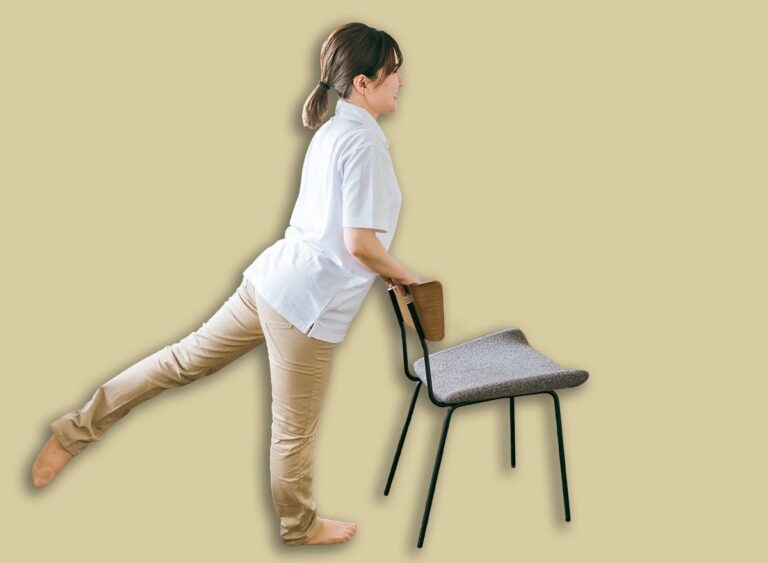
Face the back of a sturdy chair and hold both sides for balance. Lift one leg straight back as high as comfortable without arching your lower back, squeeze your glute at the top of the movement, and lower without touching the floor. Perform 10 to 15 repetitions, then switch legs. Keep your standing leg slightly bent throughout for stability.
Progression and Adaptation
“Standing behind a chair and extending one leg backward targets the glutes while providing stability and allowing the exercise to be progressed gradually,” Salters says. As your strength improves, you can reduce hand support or increase repetitions. This progression is what allows you to keep challenging yourself without jumping to a completely new movement.
Advancing Your Routine
Once you’ve mastered single-leg extensions with chair support, you can challenge yourself further. “This exercise is a more advanced progression that challenges unilateral glute strength, balance, and functional lower-body control,” Salters explains. You might reduce your hand contact with the chair, hold each repetition for two to three seconds, or increase your total repetitions. The key is gradual progression—every rep builds both confidence and strength.
Frequently Asked Questions
Why are chair exercises better than squats for people over 55?
Chair exercises provide stability and eliminate the balance, mobility, and joint stress demands of traditional squats, while preventing falls and protecting joints.
What are the main exercises mentioned in this routine?
The article covers sit-to-stands, seated marches, standing leg extensions, and more advanced progressions, all performed with chair support.
What is the gluteus medius and why does it matter?
The gluteus medius is a hip stabilizer muscle that's important for balance, walking, and controlling the knees. A strong gluteus medius helps prevent stumbling on uneven surfaces.
