
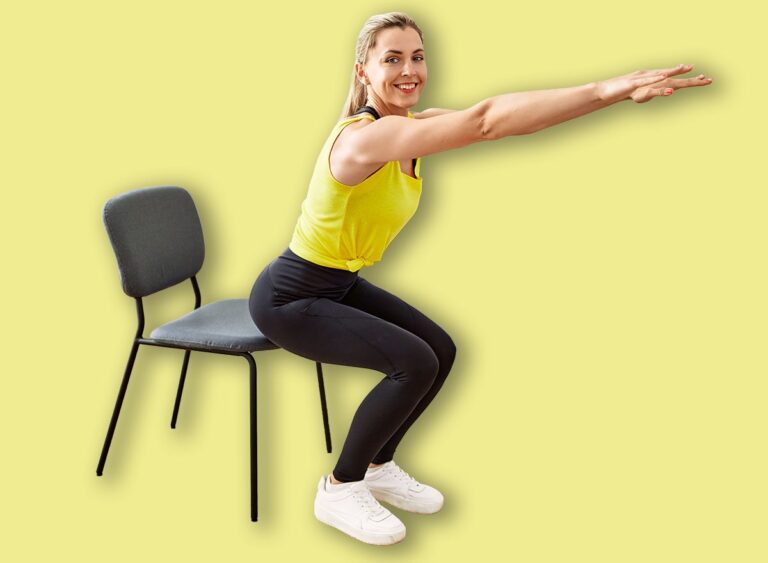
Key takeaways
- Chair exercises target the exact movement of standing from a chair, making them more specific and safer than squats for adults over 65 who already struggle with the movement.
- Start with one set, three to four times per week, and progress to three sets over a few weeks in a session lasting just 10-15 minutes.
- Expect nervous system improvements within 2-3 weeks and noticeable muscle strengthening by 6-8 weeks, but consistency is essential—strength fades if you stop practicing.
When people over 65 worry about losing independence, the fear is specific: the ability to stand from a chair without help. That’s not vanity. It’s access. Losing sit-to-stand strength means depending on someone else to get off the sofa, out of the car, to reach the loo, to sit at the dining table.
After 40 years as a personal trainer—25 of them as co-founder of TRAINFITNESS, the UK’s leading fitness education company—I’ve watched this pattern hundreds of times. The good news is direct: this strength comes back with deliberate practice. You don’t need a gym, heavy weights, or special equipment. These four chair-based exercises can restore it.
How Sit-to-Stand Strength Fades
The loss starts almost invisibly. When standing becomes uncertain, people reach for armrests or nearby tables. The chair and table do the work instead of the legs. Over months, the leg muscles stop being asked to perform the movement they once handled automatically.
The Role of Reduced Movement
The biggest problem I see is that people stop using the movement. They get up less often. They develop habits of relying on external support. This isn’t laziness—it’s protective. But protection leads to deconditioning, and muscles deteriorate faster without use.
How Fear Locks the Pattern
Once someone has had a wobble or fall, tension enters the movement. Fear makes people lean too far forward or rush it, and neither helps. The muscles become disconnected through sheer anxiety. Some people develop the habit of dropping back into the chair rather than lowering themselves with control—a reliable sign that the strength to hold their own weight during the descent has vanished.
Why Chair Exercises Outperform Squats for This Age Group
Many assume the answer is traditional squats. Squats are a legitimate exercise. But for someone over 65 already struggling to stand, they present real problems that chair exercises solve.
The Load Question
A loaded squat at this stage can ask for too much. When the basic movement is already compromised, adding weight introduces genuine fall risk and potential strain. The weight becomes a liability rather than a tool.
The Specificity Advantage
Chair exercises work because they rehearse the exact pattern your body needs. When standing from a chair, your body leans forward, pushes through the heels and straightens the legs in one flowing sequence. Training that same pattern from that same position is the most direct path to recovery. A squat, even bodyweight, happens in a different position and follows a different path. Specificity matters more at this age—the transfer of strength to real-world movement is what counts.
The Psychological Safety of a Backup
What chair work uniquely provides is the precise movement at a load you can handle, with the seat behind you as a safety net. You can push yourself harder knowing the chair will catch you if things go wrong. That psychological reassurance lets you work with greater intensity and confidence. Fear dissolves when the environment is safe.
What the Four Exercises Address
Together, they cover the full system needed to stand safely and steadily.
Leg and Glute Strength in Standing Range
One group targets the thighs and buttocks in the exact range they work when standing up. Form is critical here. A 2-second pause at the top of each repetition forces your quadriceps—the large muscle at the front of the thigh—to do the actual work instead of momentum carrying you. Without that pause, momentum bypasses the muscle entirely. This builds the specific strength pattern your body needs to rise without assistance.
Overloading the Standing Transition
Other exercises deliberately overload the precise moment when weight shifts most during the stand. The chair serves as both a depth guide and safety barrier. You learn to control the full range under load, building strength exactly where you need it. This overload in a controlled environment is what drives the adaptation.
Calf and Ankle Stability
Standing up requires more than powerful thighs. Strong calves and ankles provide the push-off power and balance that prevent wobbly feeling as you rise. This component completes the chain—powerful legs won’t help if your foundation feels unstable.
How to Practice: Frequency and Progression
Three or four times per week is plenty. Strength is built during recovery, not during the workout, so the rest days between sessions are where progress actually happens. Recovery is where the body adapts and strengthens.
Start with one set of each exercise and see how that feels. After a week or two, progress to two sets per exercise. Over a few weeks, build toward three sets. The entire session takes only 10 to 15 minutes, making it easy to maintain consistently.
Timeline: When You’ll Notice Changes
The first 2 to 3 weeks bring a welcome surprise. Most of the gains come from your nervous system learning to use muscle you already possess. You don’t actually gain new strength in this window, but you feel noticeably steadier. The movement becomes more automatic. Standing up often shifts from uncertain to controlled far faster than you might expect.
By 6 to 8 weeks, the muscle itself is genuinely stronger. Getting up from low chairs and sofas becomes noticeably easier. You’ll reach for armrests less often, then not at all. The movement pattern that felt shaky just weeks earlier becomes something you perform without thinking.
Safety Considerations and Making It Permanent
Pick times when you’re already feeling steady to practice. Use a chair that’s solid and doesn’t slide across the floor. If anything hurts beyond the normal working sensation muscles experience during exertion, stop and check with a professional before continuing.
Strength fades quickly if you stop practicing. That’s a hard truth but an important one. The movement, like any learned skill, requires regular rehearsal to hold. Stop for a week and you notice the difference. Stop for months and the decline returns. Make these exercises part of your regular week and the strength remains stable. The consistency is what separates long-term independence from temporary improvement.
Frequently Asked Questions
Why are chair exercises better than squats for older adults trying to restore sit-to-stand ability?
Chair exercises rehearse the exact movement pattern of standing from a chair, with the seat behind you as a safety net. Squats introduce too much load and fall risk for someone over 65 who already struggles with standing, and they don't replicate the specific movement your body actually needs to perform.
How often should I practice these chair exercises?
Three or four times per week is sufficient, with rest days between sessions. Strength develops during recovery, not during the workout itself, so the rest days are where your body actually adapts and builds strength.
How long until I notice real improvement?
In the first 2 to 3 weeks, your nervous system learns to use the muscle you already have, making standing feel noticeably steadier. By 6 to 8 weeks, the muscle itself is genuinely stronger, and you'll find getting up from low chairs and sofas easier without relying on armrests.
