
Key takeaways
- Three standing movements—lateral lunge, push press, and suitcase carry—reveal how well your body handles real-world movement patterns after 55.
- Mastery standards are specific: 8 reps per side on the lunge, 8 clean reps on the press, and 30-45 seconds per side on the carry.
- Standing exercises demand coordination layered onto strength, forcing your stabilizer muscles to work alongside primary movers in ways machines cannot.
- If one movement feels significantly harder than the others, it pinpoints exactly where your next training focus should be.
After 55, strength that carries into everyday life matters more than the numbers on a bench press. Strength tested on machines only tells part of the story. Standing exercises demand something different: your feet stay rooted while your body handles weight and maintains balance simultaneously. That combination of stability and strength is what separates people who move well from those who start becoming hesitant and stiff.
Three standing exercises reveal how your body actually moves when it counts. Each one pulls you out of the fixed positions most people spend their days in and asks your stabilizer muscles to work alongside your main movers. Master all three, and you have clear evidence that your strength translates into real-world capability.
Why Standing Exercises Measure Real Strength
A machine guides you through a learned path. Standing movements work differently. You create force while managing multiple demands: keeping your torso upright, controlling the weight path, maintaining your stride, and staying balanced all at once. That is coordination layered onto strength.
For people over 55, that combination grows increasingly valuable. The world does not stay predictable, and your body needs to handle unexpected movement. These three exercises test whether your strength is locked into a fixed environment or whether it actually works when things get less controlled.
The Lateral Lunge: Testing Hip Strength and Mobility
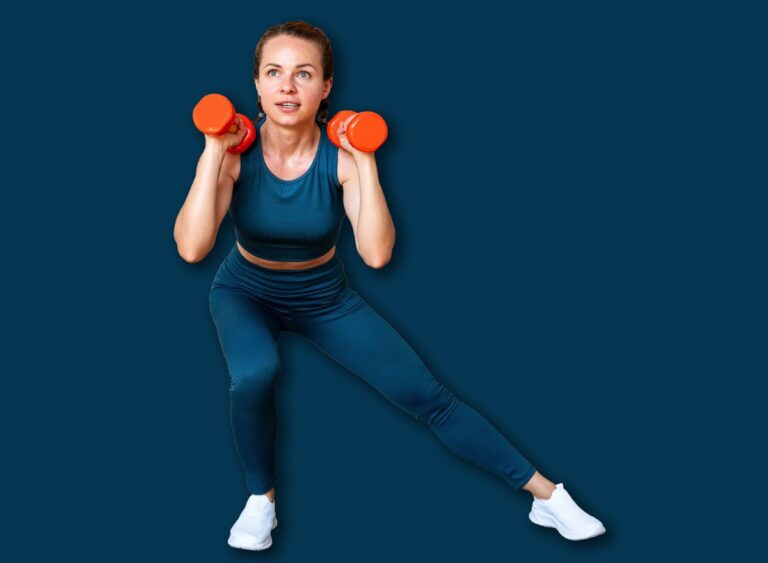
The lateral lunge shifts you sideways and asks your hips to accept load in a pattern most daily movements do not train. One leg bends while the other stays long, and you have to drive back to standing without your heel lifting or your torso collapsing. That demands both hip strength and mobility.
Why This Movement Matters
When you can move into a deep side lunge with a dumbbell and return to standing with your weight balanced, you are showing the hip range and leg drive that often fade without specific work. This pattern also reveals whether you are compensating with your back or relying only on momentum to stand up.
Mastery Standard
Complete 8 controlled reps per side using a dumbbell you can manage comfortably. Reach a solid depth without lifting your working heel or letting your torso collapse forward. Aim for 2 to 3 sets of 8 reps per side with 60 seconds rest between sets. Control both the lowering and the drive back up.
Variations and Form
Start with bodyweight if the dumbbell feels unstable, or use a goblet hold with weight at your chest. Goblet lateral lunges make the weight easier to control. Progress to a lateral lunge to balance, stepping back to center and lifting your back leg slightly. Let your hips travel back as you step so your working foot stays planted and your chest stays upright.
The Dumbbell Push Press: Linking Legs to Upper Body
The push press connects lower body power to upper body pressing. You dip under control, drive through the floor with your legs, and finish with the dumbbells locked overhead without losing balance. That smooth transition from legs to shoulders reveals speed and coordination that does not happen with a strict press from a standstill.
Why Leg Drive Matters
Your legs generate force much more efficiently than your shoulders ever will. A push press teaches your body to channel that leg power into overhead movement. If that sequence feels smooth after 55, you are showing leg strength, shoulder mobility, and motor control that says your body still has athleticism. This pattern appears in real life when you are reaching for a high shelf or lifting something overhead.
Standards and Progression
Complete 8 clean reps using a load that challenges you. Keep your feet planted throughout, and finish each rep standing tall, not leaning back. Work toward 3 sets of 6 to 8 reps with 60 to 90 seconds rest between sets. Start lighter than you think you need. The dip should be short, and your leg drive should help the press without turning the movement into a squat.
Variations
A single-arm push press forces each shoulder to stabilize on its own and reveals asymmetries. A dumbbell strict press removes the leg drive and tests pure shoulder strength. A landmine push press uses a barbell angled on a pivot, which creates a safer pressing angle for some shoulders.
The Suitcase Carry: Anti-Rotation and Core Stability
Walking with a dumbbell at your side looks simple. That simplicity is exactly why it works as a test. Weight pulls you to one side. Your job is to stay upright, keep your core engaged, and maintain a steady stride while carrying that load. If you can walk under a challenging dumbbell without leaning or shortening your steps, your trunk control and grip strength are both strong.
Why Carries Matter
Carrying things is something everyone does. Groceries, laundry, gardening soil: these tasks require your core to stay stable while your legs keep moving. A suitcase carry builds exactly that pattern. Your obliques and deep abdominal muscles prevent rotation while your grip holds the weight steady.
Mastery Standard
Carry a challenging dumbbell for 30 to 45 seconds per side while staying upright and keeping your stride consistent. Perform 2 to 3 carries per side with 45 to 60 seconds rest between carries. Keep the dumbbell close to your side and resist the urge to lean away from it. The moment you start tilting, the core stops working hard.
Building Carry Strength
If a suitcase carry feels difficult, start with a farmer carry, holding dumbbells at your sides in both hands. That symmetry makes balance easier and lets your nervous system learn the pattern. A marching suitcase carry adds stepping in place instead of walking. A front-rack carry positions the weight at shoulder height, which tests core stability differently.
What Mastering All Three Movements Reveals
Complete all three exercises with control and you are showing more than raw strength. You can move laterally with stability, press weight overhead with leg drive, and stay upright under load while walking. These capabilities separate someone who handles unexpected movement confidently from someone who has grown hesitant.
If one movement feels significantly harder than the others, that is useful data. You may have strong legs but lack hip mobility, or your shoulders may press weight easily while your grip struggles with carries. That imbalance shows you exactly where to focus your training next.
Starting and Progressing
You do not have to hit the mastery standard immediately. Use lighter dumbbells and give yourself time to learn each movement before adding load. Once the movement feels automatic, add either weight or reps, but not both at once.
Each exercise has variations that serve as entry points. The bodyweight lateral lunge builds the pattern. The strict dumbbell press isolates shoulder strength before you add leg drive. A farmer carry with two dumbbells gives you symmetry before stepping up to the suitcase version. Move through variations methodically, building coordination and motor control.
The goal is not to chase heavy weights. Mastery means you can control the movement, use a load that challenges you honestly, and keep your position steady as the set goes on. That combination tells you more than a single number ever could. Keep the standards honest. If your heel lifts on the lateral lunge, that rep does not count. If your torso tips back on the push press, the weight is too heavy. These refinements in execution separate real strength from just moving weight around.
Master these three movements, and you have clear evidence that your body can handle real-world demands. The path forward is not about heavier weights but about refining control and keeping the standards honest.
Frequently Asked Questions
What makes these three exercises better than machine workouts for testing strength after 55?
Standing exercises force you to manage your balance and position while creating force, not just move weight along a fixed path. Your stabilizer muscles have to work alongside your main movers, which is closer to how real-world movement actually demands your body work.
How do I know if I have reached the mastery standard for all three exercises?
For the lateral lunge: 8 controlled reps per side with solid depth and no heel lift. For the push press: 8 clean reps with challenging load, feet planted throughout. For the suitcase carry: 30-45 seconds per side while staying upright without leaning.
Should I start with the full weight and reps if these feel too difficult?
No. Use lighter dumbbells and movement variations to learn the pattern first. Bodyweight lateral lunges, goblet holds, farmer carries, and single-arm pressing are all legitimate progressions. Once the movement feels automatic, add load gradually.
