
Key takeaways
- Five chair exercises target hips from multiple angles and deliver better results than single gym machines for adults after 65.
- Seated variations safely build hip flexor, abductor, and glute strength while removing balance concerns.
- Progressive resistance through bands and proper form control maximize hip stability and daily functional ability.
Strong hips determine your ability to climb stairs, rise from a chair, and walk with confidence after 65. Yet many people in this age group assume expensive gym equipment or a membership is required to reverse hip weakness. The reality is simpler: chair-based exercises performed at home often produce better results than machines available at fitness facilities.
Why Hip Strength Deteriorates With Age
Hip muscles naturally thin as you age, a decline that accelerates in people with sedentary habits. Today’s lifestyle reinforces inactivity—you sit at breakfast tables, work at desks, spend hours in front of screens, and drive long distances. This prolonged sitting simultaneously reduces muscle mass and creates tightness around the joints. The longer you remain seated, the weaker your hip muscles become, and the harder everyday tasks feel.
When your hips weaken, simple activities become complicated. Climbing stairs requires more effort. Transitioning from sitting to standing takes longer and feels less stable. Balance deteriorates, making falls more likely. The hip is a complex joint that moves forward and backward, side to side, and rotationally. Its surrounding muscles manage leg extension, sideways movement, pelvis stability, and single-leg balance. Weakness in any of these areas compromises your ability to perform routine movements.
Why Chair Exercises Beat Gym Machines
Cost and Accessibility
A chair is available in nearly every home, costs nothing, and requires no space. You eliminate travel time, membership fees, and the learning curve of using unfamiliar machines. This accessibility matters because consistency—doing the exercises regularly—drives real strength gains.
Training Multiple Angles
Hip machines typically isolate a single movement pattern. Your hips, however, function in multiple directions simultaneously. Chair exercises address this reality by training hip flexion, abduction, extension, and stability in one routine. Because the exercises target the hip from different angles, they produce more comprehensive strength development than a single machine could provide.
Building Practical, Functional Strength
The goal of training after 65 isn’t to lift heavy weights—it’s to maintain the ability to perform daily tasks. Chair exercises mirror real-world movements: getting up from a seat, walking forward and sideways, stepping over obstacles. The strength you build transfers directly to genuine daily function, unlike some machine-based training that works muscles in patterns you’ll never use outside the gym.
Seated Knee Drives: Building Hip Flexor Power
Your hip flexors are responsible for lifting your legs as you walk. Weakness here makes climbing stairs more difficult and can produce a shuffling gait. Seated knee drives isolate these muscles safely without requiring balance.
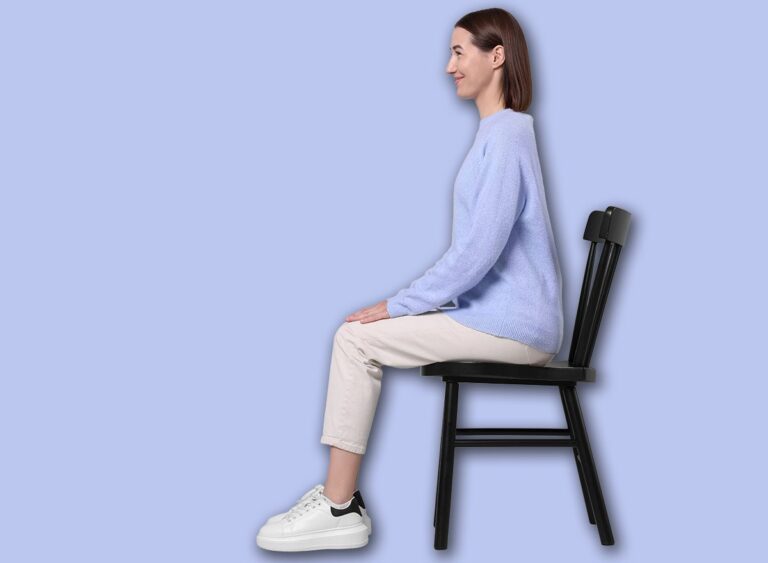
Sit upright in a sturdy chair with your feet flat on the floor. Lift one knee toward your chest, then lower it without letting your foot touch the ground. Complete all repetitions on that leg before switching sides. Keep your upper body still; the movement comes entirely from your hip, not from momentum generated by your torso. This focus on isolated movement ensures you’re strengthening the hip flexors rather than recruiting muscles from your back. The seated variation gives you stability, which means you can concentrate fully on the muscle you’re training rather than worrying about balance. You can also monitor each hip independently to identify and address any side-to-side imbalances.
Seated Hip Abductions: Stabilizing Your Pelvis
Hip abductors are the muscles on the outer surface of your hips. These muscles keep your pelvis steady as you walk. If they’re weak, your pelvis tilts, your balance suffers, and your risk of falling increases. When side-to-side control breaks down, a loss of balance becomes far more likely.
Sit upright with your back against the chair and your feet flat on the floor. Place a resistance band around your thighs just above your knees. Slowly spread your knees outward against the band’s resistance, then bring them back together. The key is controlling the return movement. Use a five-second count on the way back in to prevent the band from pulling your legs closed passively. You must control the motion with your abductor muscles throughout the entire return. You can also angle your knees slightly inward before opening them outward; this small adjustment intensifies the abductor activation and makes the exercise more challenging.
Knee Drives With Resistance: Advancing Your Workout
Once basic seated knee drives feel comfortable, adding resistance creates greater demand on the hip flexors. Wrap a resistance band around your thighs just above your knees. Sit with good posture and lift one knee upward against the band’s resistance, just as you did without the band. The added resistance forces each leg to work harder.
Because one leg moves independently while the other stays still, this version also teaches your pelvis to remain stable and level during movement—a skill that carries over directly into everyday walking and stepping over obstacles. Start with light resistance so you can maintain perfect posture throughout every repetition. Once you’re confident in your form, progress to bands with greater resistance.
Chair-Supported Hip Extensions: Strengthening Your Glutes
Your glutes are the largest and most powerful muscles around the hip. They propel your body forward with every step, launch you up stairs, and drive the motion when you stand from a seated position. Chair-supported hip extensions train these muscles while removing the balance challenge of standing on one leg.
Sit upright at the front edge of the chair and place your hands on the seat beside your hips. Press through your hands and lift one leg backward, extending it at the hip. You should feel the glute muscle contract strongly. Keep your torso upright; never arch your lower back to gain extra range. This caution protects your spine from unnecessary stress while ensuring the glute does the work rather than other muscles compensating. I often use this exercise with clients who need to rebuild strength from the beginning before progressing to more demanding standing exercises.
Sit-to-Stands: Functional Power for Daily Living
Sit-to-stands combine hip extension with full-body lower-body coordination. This movement mirrors one of the most important tasks you perform every day: standing up from a chair, couch, or car seat.
Sit upright with your feet flat on the floor, positioned roughly hip-width apart. Press through your heels and squeeze your glute muscles as you stand to full height, then lower yourself back down with control. Your glutes must generate force to move your body upward, while your quadriceps and core work to manage the entire movement and prevent you from collapsing back into the chair. As hip strength improves over weeks and months, daily activities like sitting down, standing up, climbing stairs, and walking longer distances will all feel noticeably easier.
Frequently Asked Questions
Do I need a gym membership or special equipment for these exercises?
No. All five exercises use only a chair, and you can add a resistance band once seated variations become comfortable. A chair is available in every home and requires no cost or space.
Which muscles do these exercises strengthen?
The five exercises target hip flexors (which lift your legs during walking), hip abductors (which stabilize your pelvis), and glutes (which propel your body forward during walking and climbing). Together, they address the multiple directions your hips move throughout the day.
How long before I notice easier climbing and standing?
As hip strength improves over weeks and months, stairs and longer walks will feel progressively easier. The sit-to-stand exercise directly mirrors standing up from a chair, so improvements in that movement translate immediately to daily life.
