
Key takeaways
- Standing exercises engage stabilizer muscles alongside your biceps and triceps, training functional strength that mirrors everyday arm movements like reaching and lowering objects.
- Barbell curls let you lift heavier total weight than dumbbells because both arms work together, while hammer curls build the brachialis muscle underneath the biceps to increase arm size.
- Triceps exercises with upper arms closer to your sides emphasize the inner heads for definition, while other angles target the outer head for maximum arm volume.
- A combination movement trains biceps and triceps in a single repetition, reducing total workout time while maintaining comprehensive upper arm stimulation.
Building defined upper arms after 60 requires targeting the biceps and triceps with movements that challenge muscle growth. Many people assume a trip to the gym is necessary—loading up on the shoulder press, lat pulldown, and tricep pushdown—but Domenic Angelino, MS, MPH, CSCS, CPT, Chief Exercise Scientist at FitCraft, offers a different perspective. With the right free weights at home, standing exercises deliver arm-toning results that rival or exceed what gym machines provide.
Why Standing Exercises Work Better Than Machines for Arm Development
The advantage of standing exercises goes beyond simply isolating the biceps and triceps. According to Angelino, standing movements engage stabilizer muscles throughout your body while you build the primary target. This dual benefit mimics how your arms function in everyday life, creating functional strength that translates to real-world tasks.
Stabilizer Muscles Keep You Steady
When you stand and perform an arm exercise, your core, shoulders, and smaller stabilizing muscles activate to keep your torso upright and controlled. Machines, by contrast, guide the movement along a fixed path and eliminate the need for these stabilizer muscles to work. Angelino explains that when you pick an object off a high shelf and lower it down, your primary movers are the arm and shoulder muscles, but your core and surrounding musculature keep your torso stable and supported throughout the motion. Standing exercises train both the prime movers and these support systems simultaneously, building comprehensive strength rather than isolated muscle groups.
Real-Life Demand Meets Exercise Demand
The movements your body performs outside the gym require stability and coordination across multiple muscle groups. Standing exercises recreate these patterns, preparing your arms and supporting structures for the demands you actually encounter. This functional carryover is something machines cannot replicate because they stabilize the movement for you, removing the need for your nervous system to coordinate balance and support.
Bicep Exercises: Building Peak and Width
The biceps respond well to two distinct standing movements that build muscle from different angles and engage different supporting structures.
The Barbell Curl for Maximum Load
A barbell curl allows you to lift heavier total weight than a dumbbell curl because both arms work together to move the load. With dumbbells, each arm must lift independently, limiting how much weight you can handle. This combined lifting capacity means more mechanical tension on the biceps, which drives muscle growth. The barbell curl also demands extensive work from stabilizer muscles, as your body must manage the symmetrical load across a single bar.
The Hammer Curl for Deeper Muscle Development
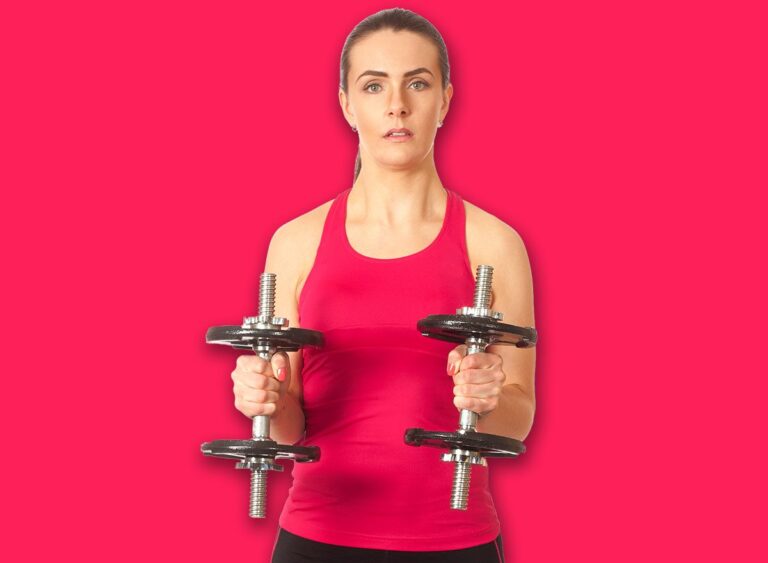
The hammer curl builds the brachialis, a deep muscle that sits underneath the biceps proper. When the brachialis enlarges, it pushes the biceps outward, increasing the overall size and peak of your upper arm. This exercise hits a different portion of the biceps and surrounding musculature than traditional curls, making it essential for comprehensive arm development. By rotating your grip so your hands face each other—the hammer position—you shift the load away from the biceps’ standard position and toward the brachialis and the outer head of the bicep.
Triceps Training: Positioning Changes Everything
The triceps comprise three distinct muscle heads, and how you position your upper arms during an exercise determines which heads receive the most stimulus.
Upper Arm Angle Shifts Which Heads Work Hardest
When you keep your upper arms closer to your sides during a triceps exercise, you emphasize the two inner triceps heads rather than the outer head. These inner heads may not visibly increase arm size as dramatically as the outer head, but they contribute significantly to the triceps’ distinctive three-dimensional shape. The trade-off is intentional: outer-head emphasis maximizes arm circumference, while inner-head work creates definition and shape at different angles.
Strategic Positioning for Your Goals
Understanding this biomechanical shift lets you choose triceps angles based on whether you prioritize maximum arm volume or aesthetic shaping. For overall arm toning after 60, including both angles in your routine ensures balanced development across all three heads.
Combination Movements: Biceps and Triceps in One Repetition
Some standing exercises train the entire upper arm in a single movement by engaging the biceps and triceps sequentially or simultaneously. Angelino describes an exercise set up to train both major components of your upper arm in one rep. This efficient approach means you can address both muscle groups without dedicating separate sets to each, reducing overall workout time while maintaining comprehensive stimulation. The movement transitions from biceps work to triceps work, or vice versa, in a controlled manner that leverages the momentum and position from the first phase into the second phase.
When Gym Machines Still Have a Role
Machines are not obsolete—they serve a specific purpose in a well-rounded routine. Machine-based workouts excel at isolating a single muscle group when that isolation is your goal, which can be useful for addressing a muscular imbalance or targeting a specific area you want to develop further. If one arm is noticeably smaller than the other, or if you have a particular weakness you need to address, machines provide a way to lock in the movement and force that muscle group to do the work without compensation from stabilizers. However, for general arm development and functional strength after 60, standing exercises with free weights provide more complete stimulation.
Getting Started With Your Upper Arm Routine
You don’t need an expensive gym membership to trim your upper arms. A set of dumbbells or a barbell, a small space, and these five standing exercises—barbell curls, dumbbell hammer curls, triceps exercises with varied arm positioning, combination movements, and any additional standing arm variations you can perform with free weights—create a program that builds lean muscle effectively. Start with weights you can control for 8 to 12 repetitions per set, focusing on smooth, deliberate movement rather than speed. As you grow stronger, increase the weight or add an extra set. Consistency matters more than intensity at the outset; training twice per week with proper form beats sporadic heavy sessions.
Frequently Asked Questions
Why are standing exercises better than gym machines for arm toning after 60?
Standing exercises force your stabilizer muscles throughout your body to work alongside your biceps and triceps, building functional strength that applies to real-life movements. Machines guide the movement on a fixed path and eliminate the need for stabilizers, so they train only the isolated muscle group rather than comprehensive strength and coordination.
What is the hammer curl and why does it increase arm size?
The hammer curl is a standing biceps exercise performed with your hands facing each other (hammer position). It builds the brachialis muscle, which sits underneath the biceps. When the brachialis grows, it pushes the biceps outward, increasing overall arm size and peak.
How does upper arm positioning change the results of a triceps exercise?
Keeping your upper arms closer to your sides during a triceps exercise prioritizes the two inner triceps heads, which contribute to shape and definition. Other arm angles target the outer head, which is more effective at increasing overall arm volume. Including both angles in your routine ensures balanced development across all three triceps heads.
