
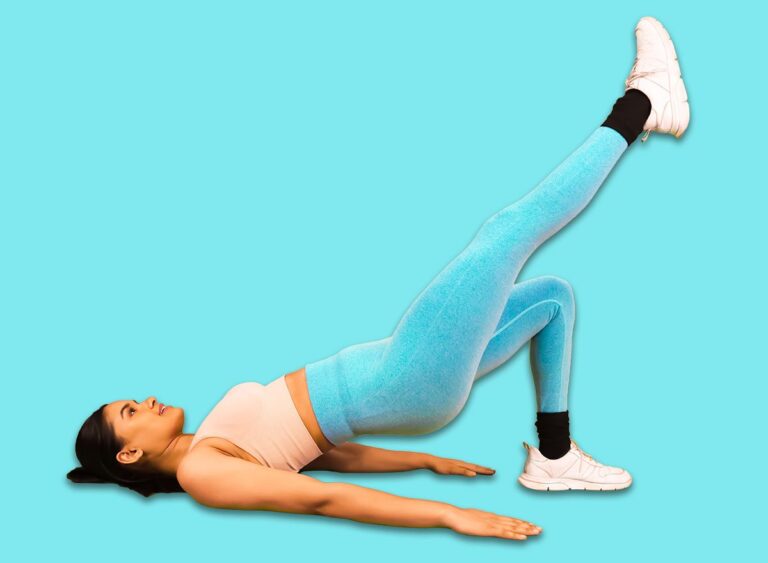
Key takeaways
- A controlled 30-second single-leg bridge hold per side is strong hip endurance after 60, though research hasn't established exact percentile rankings for your age group.
- Form matters more than duration—stop when your hips drop or drift out of level, not when you hit a time goal.
- Hip strength reduces fall risk according to a 2024 study, making this test a practical way to measure a protective factor for independence.
- Retest every few weeks to track progress; no equipment or special space is needed.
Your ability to stabilize your body on one leg for even a short duration reveals a lot about your hips. This matters because your glutes and pelvic muscles power nearly every movement that keeps you independent—getting up from a chair, walking down a curb, catching yourself when you trip. After 60, hip strength becomes a gateway to staying mobile and avoiding falls. A single assessment, the single-leg bridge hold, can show you exactly where you stand.
Why Hip Strength Matters More as You Age
The posterior chain—glutes, hamstrings, and the smaller muscles that stabilize your pelvis—works silently in the background of daily life. Climbing stairs, standing up from seated, even shifting your weight while standing still all depend on these muscles staying strong and responsive. Once you pass 60, maintaining hip strength becomes a protective measure against the events that derail independence.
A 2024 study published in PLOS One tracked community-dwelling older adults over the course of a year and found a clear link: people with greater hip abductor strength—the muscles on the outer hip—had substantially lower odds of falling. Researchers identified hip strength as a protective factor, meaning strong hip muscles actively reduce your fall risk rather than just passively supporting you.
The Single-Leg Bridge as a Hip Test
The single-leg bridge isolates one side of your posterior chain at a time, forcing your glutes, hamstrings, and pelvic stabilizers to work together under sustained tension. Unlike many assessments, it requires nothing: no equipment, no weights, no machines, and barely any floor space. You can test yourself at home and do it again in a few weeks to track whether your hip endurance is improving.
What Muscles Does It Actually Test?
When you hold a single-leg bridge, you’re asking your glutes to lift and hold your pelvis level, your hamstrings to support the motion, and your core to keep you from rotating or drifting sideways. These muscles are the exact ones involved in stepping, walking, and maintaining your balance on uneven ground. Because hip strength correlates directly with functional independence in adults over 60, this test gives you a practical read on whether those muscles can do their job.
Why No Equipment Means You Can Track Progress Easily
Without needing a gym, a trainer, or specialized tools, you can retest yourself every few weeks in your bedroom or living room. Consistency matters more than a single perfect test; seeing your hold time creep up from 15 seconds to 20 to 25 to 30 is real evidence that your hips are getting stronger.
The 30-Second Benchmark After 60
According to James Brady, a certified personal trainer at OriGym, a controlled single-leg bridge hold of around 30 seconds on each side represents strong hip and posterior chain endurance after 60. That’s a real achievement worth noting. But here’s the important clarification: while 30 seconds per side is genuinely strong, research has not yet established age-specific percentile rankings for people over 60, so you cannot definitively say a 30-second hold puts you stronger than 90 percent of your peers. Treat it as a personal benchmark of good muscular endurance rather than a precise ranking against everyone your age.
Form Over Duration Is the Rule
Brady emphasizes that maintaining control throughout the hold matters far more than hitting a target time. The hold should end when you can no longer keep good form, not when you simply reach a number of seconds. If your hips start to drop or drift out of level, that’s your signal to stop and record the time you achieved. Chasing a time goal while your form falls apart defeats the purpose and risks injury.
What If You Can’t Hit 30 Seconds?
If 30 seconds feels distant, view whatever time you can hold as your starting point. Plan to retest every few weeks, work on the bridge and other hip-strengthening moves in between, and your hold time will increase as your hip strength improves. Progress happens with consistency, not overnight.
How to Perform the Single-Leg Bridge Correctly
Form is everything with this test. Lie on your back with knees bent and feet flat on the floor, about hip-width apart and positioned close to your buttocks. Press one foot into the floor and lift your hips to create a straight line from knees to shoulders. Keep the non-working leg either bent with foot off the floor or extended straight up—choose whichever feels most stable. Maintain level hips without letting the standing-leg side drop or the other side hike up. Hold for time, breathe steadily, and stop when your hips begin to drift out of alignment.
What the Research Says About Hip Strength and Falls
The PLOS One study didn’t measure bridge holds specifically, but it did establish that hip abductor strength—exactly what the single-leg bridge develops—reduces fall risk in older adults. Researchers followed community-dwelling people and documented actual falls versus hip strength measurements, then calculated the odds. Stronger hip muscles predicted fewer falls. This isn’t correlation guesswork; it’s a measured protective effect. Being able to control your body on one leg for an extended time signals that your hips are strong enough to catch you when you stumble.
Building Your Hip Testing Routine
Start by recording your baseline hold time on each side—even if it’s only 10 seconds. Test yourself in the same conditions each time: same time of day if possible, same location, same surface. Every 2 to 3 weeks, retest and log the result. Between tests, include hip-strengthening work: single-leg bridges, clamshells, lateral walks, or step-ups. As your hold time climbs, you’ll have concrete evidence that your hip stability is improving and your fall risk is dropping.
When to Stop and Seek Help
Pain is always a stop signal—a bridge should feel like work in your glutes and hip, never sharp or shooting pain in your knees, lower back, or groin. If you feel pain, stop immediately and consult a physical therapist. Likewise, if you test yourself and find your hold times are getting shorter week to week rather than longer, or if you feel unstable on one leg in daily life, talk to a movement specialist before pushing harder.
Frequently Asked Questions
Does holding a 30-second single-leg bridge mean I'm stronger than 90% of people over 60?
A 30-second controlled hold per side is a genuinely strong result and a useful personal benchmark, but research has not established age-specific percentile rankings for people over 60. Treat it as a sign of good muscular endurance rather than a precise ranking against your peers.
What should I do if I can't hold the bridge for 30 seconds?
Whatever time you can hold is your starting point. Plan to retest every few weeks and include other hip-strengthening exercises between tests. Your hold time will increase as your hip strength improves with practice.
When should I stop the single-leg bridge hold?
Stop when you can no longer maintain good form, which means the moment your hips start to drop or drift out of level. Maintaining control throughout the hold matters more than hitting a target time.
