
Key takeaways
- Melissa Leach, a certified yoga instructor and strength coach with Yoga-Go, emphasizes that balance training should be a priority for women over 70 to prevent falls and maintain independence.
- Balance training differs from cardio and strength work by challenging stability directly through three techniques: narrowing your base of support, shifting weight to one leg, and moving in multiple directions.
- Effective balance work activates four systems—proprioception, the vestibular system, leg and core strength, and reaction time—areas that traditional workouts leave untouched.
- Begin with simple practices like standing on one leg while brushing your teeth, then progress to more challenging variations as confidence builds.
Falls rank among the leading causes of injury and hospitalization for women over 70, yet many fitness routines overlook the specific work needed to prevent them. Melissa Leach, a certified yoga instructor and strength and conditioning coach with Yoga-Go, emphasizes that balance training should be a top priority in any workout designed for aging bodies. Incorporating targeted balance work into your routine can have profound effects on quality of life and independence.
Why Balance Fails With Age
As we age, the systems that keep us steady deteriorate without intentional work. Our proprioception, the body’s ability to sense where it is in space, becomes less acute. The vestibular system, which helps us orient ourselves and move smoothly, loses efficiency. Meanwhile, strength in the legs and core naturally declines unless challenged regularly. Reaction time slows, making it harder to catch ourselves if we stumble. Together, these changes create a compounding risk of falls.
Research supports what Leach observes in her practice: staying strong, flexible, and mobile significantly reduces mortality risk as we age. A single fall can cascade into serious injury, loss of independence, and reduced quality of life. This makes balance training not a luxury but a necessity for women over 70 who want to maintain their autonomy and safety.
How Balance Training Differs From Cardio and Strength Work
Narrowing Your Base of Support
Traditional cardio and strength training work the heart and muscles but leave stability untouched. Balance exercises attack the problem directly by challenging the foundation beneath you. One key technique is narrowing your base of support—moving from a wide, stable stance to one that demands more focus and activation from muscles you may have neglected.
Shifting Weight to One Leg
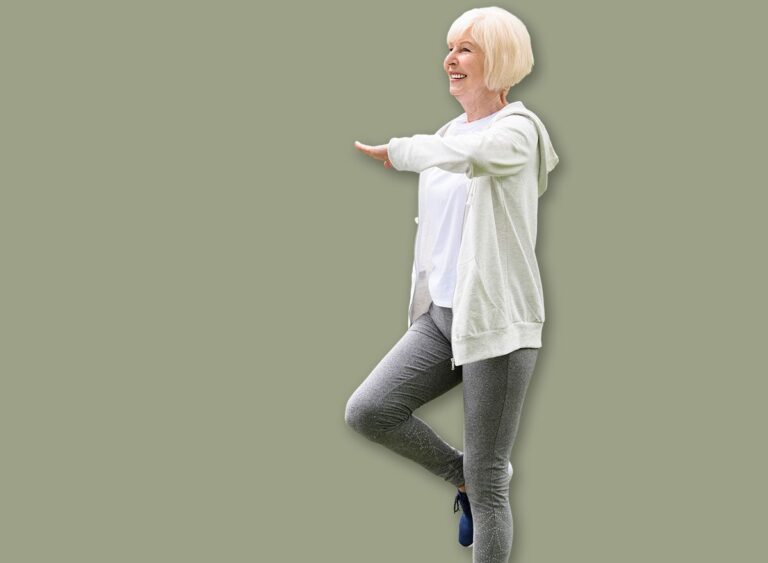
Single-leg work forces your body to work harder. When both feet are on the ground, many stabilizer muscles stay passive. Standing on one leg activates the entire kinetic chain and forces your nervous system to engage proprioceptive feedback in real time, forcing your brain to stay constantly engaged.
Moving in Different Directions
Most daily movement happens in a straight line. Balance training introduces shifts forward, backward, and side to side, preparing your body for the unpredictable challenges of real life—stepping off a curb at an angle, reaching for something while standing, walking on uneven ground, or catching yourself if you trip.
The Four Systems at Work
Leach identifies the four pillars that balance depends on. Proprioception keeps your brain updated on body position without looking. The vestibular system, housed in your inner ear, controls orientation and equilibrium. Leg and core strength provides the power to respond when balance is challenged. Reaction time determines how quickly your muscles fire to prevent a fall. Effective balance training touches all four at once, which is why these exercises deliver results that isolated strength work cannot.
Building a Sustainable Routine
The best balance work for women over 70 is the work that gets done consistently. Leach’s approach emphasizes exercises that can fit into daily life rather than elaborate routines that get abandoned. Whether practiced as a standalone session or woven into your existing workouts, balance training pays immediate and long-term dividends in both safety and confidence.
Starting with basic work, like standing on one leg while brushing your teeth or walking heel-to-toe across your kitchen, builds a foundation. As confidence grows, more challenging variations create deeper neural adaptations. The goal is not to become an acrobat but to maintain the stability and coordination that independent living requires.
The Safety Case for Balance
The logic is simple: stronger, more stable bodies fall less often and recover better when they do. For women over 70, this isn’t theoretical but a matter of health and independence. Balance training is preventive medicine in movement form, reducing risk of injury without requiring expensive equipment or complicated programming. A qualified instructor like Leach can ensure your routine matches your current abilities and progresses safely over time.
Source: Eat This Not That
Frequently Asked Questions
What makes balance training different from cardio or strength training?
Balance training directly challenges the systems that keep you stable: proprioception, the vestibular system, leg and core strength, and reaction time. Cardio and strength training work the heart and muscles but leave stability untouched. Balance work uses techniques like narrowing your base of support, shifting weight to one leg, and moving in different directions.
Who is Melissa Leach and why does she recommend balance work for women over 70?
Melissa Leach is a certified yoga instructor and strength and conditioning coach with Yoga-Go. She emphasizes balance training because staying strong, flexible, and mobile significantly reduces mortality risk as we age and prevents falls, which are a leading cause of injury and hospitalization for older women.
How do I start a balance routine if I'm new to this type of training?
Start with basic practices that fit into daily life, such as standing on one leg while brushing your teeth or walking heel-to-toe across your kitchen. As confidence grows, progress to more challenging variations. The goal is not complex exercises but maintaining the stability and coordination that independent living requires.
