

Key takeaways
- The supported single-leg stand, performed for 10–30 seconds per leg, is a foundational balance exercise that trains the ankle, knee, hip and core together.
- Lee Cain recommends this exercise specifically for adults over 60 because muscle mass naturally declines with age, and strength training directly counteracts this change.
- Most daily movements—stepping out of a car, climbing stairs, stepping over obstacles—require brief single-leg balance, making this skill essential for independence and safety.
- Practice with a sturdy support nearby, avoid the exercise when fatigued, and consult a healthcare provider if you have a history of falls or recent injuries.
Cheerleaders spend months perfecting routines that demand exceptional balance, strength and control. What’s less obvious is that many of the training principles behind those high-kicking performances translate directly to exercises that can benefit anyone over 60—without requiring professional-level athleticism or years of dance training.
Learning From Cheerleader Training
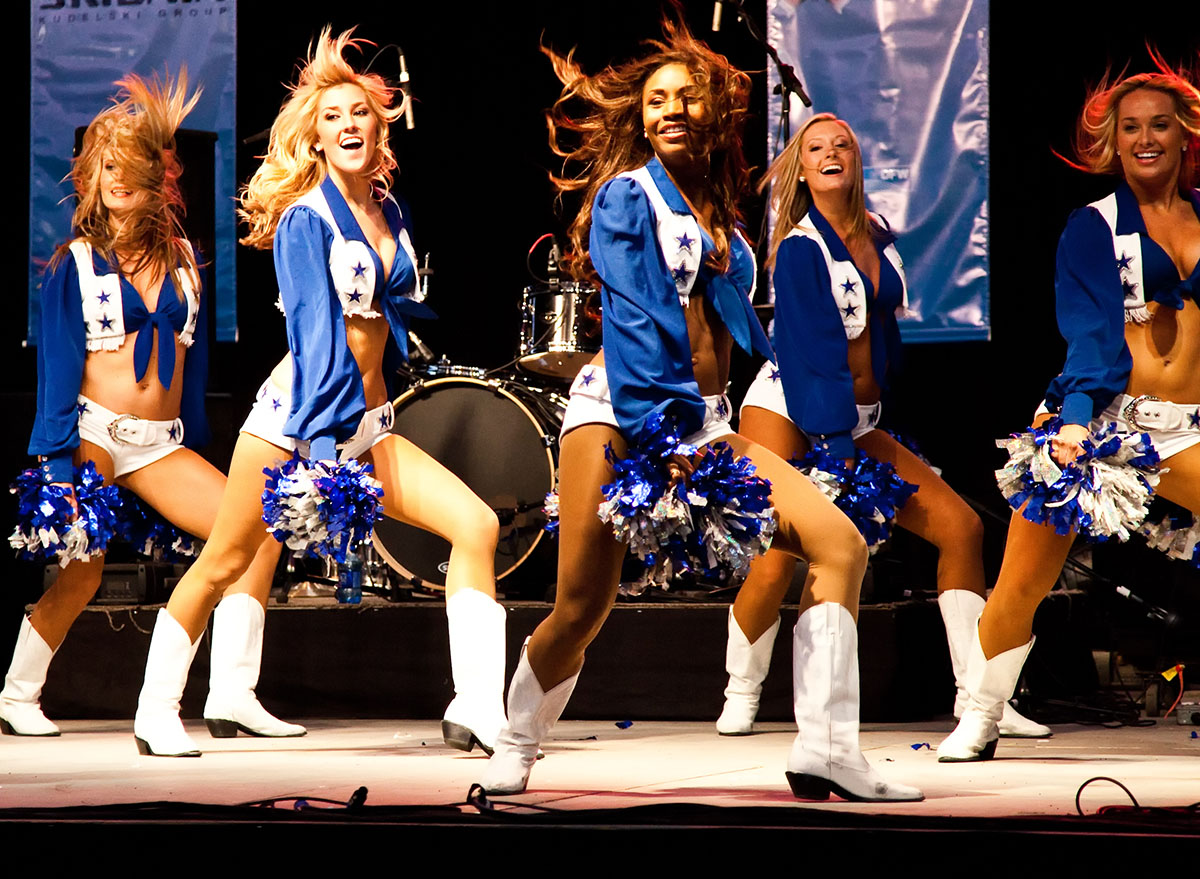
Dallas Cowboys Cheerleader Jada McLean recently partnered with Strava to share details of her training regimen with fans. Beyond her scheduled dance practice and performances, McLean incorporates cross-training throughout the week, blending weight lifting, Pilates and running to build a well-rounded fitness foundation. This comprehensive approach reveals what Lee Cain, a personal trainer and Certified Strength and Conditioning Specialist who serves as Managing Director at HFE, says is essential for anyone attempting cheerleader-inspired movements: a combination of strength, mobility, balance, coordination, cardiovascular fitness and body control.
The Components of Cheerleader Fitness
According to Cain, “It takes a lot more than just the ability to kick your leg high to be a part of a Dallas Cowboys Cheerleaders routine.” The actual demands extend far beyond flexibility. Many people assume that cheerleaders need extreme range of motion, but Cain emphasizes a different priority. Control through your available range of motion matters more than pushing your limits. Squats, lunges, Romanian deadlifts and controlled leg raises all build useful strength, while single-leg exercises specifically develop the balance and stability that anchors everything else.
Why Single-Leg Work Matters Most
Professional cheerleaders develop mastery over single-leg balance through deliberate practice. The good news: older adults can develop similar competency without adopting a professional’s training volume. This particular skill becomes increasingly important with age, as maintaining balance directly supports independence and reduces injury risk in everyday life.
The Supported Single-Leg Stand
How to Perform the Exercise
Cain recommends starting with a supported single-leg stand as the foundational balance exercise for adults 60 and over. The movement itself is straightforward: stand next to a sturdy chair or countertop for support, then lift one foot slightly off the ground. Balance on your standing leg for 10 to 30 seconds before switching sides. Complete two to three repetitions on each leg. Throughout the hold, make small, controlled adjustments to maintain upright posture—avoid locking your knee or letting your body sway excessively.
What’s Actually Happening During This Exercise
The supported single-leg stand engages multiple systems simultaneously. Your ankle, knee, hips and core activate together to hold your position, while your nervous system constantly assesses where your body sits in space and adjusts to keep you balanced. Cain explains: “You’re getting the ankle, knee, hips and core to work in unison, while the nervous system is constantly working out where your body is and how to keep you balanced.” As your confidence builds, you can begin removing the support hand gradually or add subtle controlled leg movements—like a small knee lift or gentle hip shift—to increase the challenge.
Safety Considerations for Older Adults
Preparing Your Environment
The exercise environment matters. Practice in a location with solid flooring and clear surroundings. Remove potential trip hazards including cables, rugs and other items that could catch your foot. Good lighting helps you see clearly, and having the support surface within easy reach reduces anxiety and allows genuine focus on the movement rather than fear of falling.
Recognizing When to Seek Professional Guidance
Cain strongly recommends speaking with a healthcare professional or physiotherapist before starting this exercise if you have a history of falls, experience regular dizziness or loss of balance, or are recovering from an injury or surgery. The exercise should challenge your balance without creating unnecessary risk. You should always retain the ability to place your foot down or reach for support if your balance falters mid-exercise.
Avoiding Common Mistakes
Avoid practicing when fatigued, as tiredness makes balance significantly more difficult and increases fall risk. Choose times during the day when you’re alert and well-rested. Even small differences in energy level affect proprioception—your awareness of body position—so timing matters.
Why Single-Leg Balance Becomes More Critical After 60
Natural Muscle Decline and Strength Training
Cain notes that “After 60, it’s especially important to maintain strength because muscle mass and strength naturally decline with age if we don’t train them.” This isn’t inevitable weakness—it’s a predictable physiological change that responds to targeted exercise. You don’t need to pursue bodybuilding; the realistic goal is developing enough strength to meet the demands of daily life with confidence. Single-leg training directly addresses this need by building the muscular control required for real-world movement patterns.
Translating Balance Into Functional Movement
During your typical day, most movements require you to balance on one leg—even if you don’t notice. Exiting a car requires shifting weight onto one leg as the other steps out. Climbing stairs involves a brief single-leg phase on each step. Stepping over a curb or an object on the ground demands the same principle. These everyday actions depend on your ability to generate and control force through one leg while keeping your body stable. Cain explains: “Balance isn’t something we only need when we’re standing still. We rely on it whenever we’re walking, stepping, turning or shifting our weight.” This is why strengthening single-leg balance through deliberate practice has direct real-world consequences for your independence.
Building Your Balance Practice
The broader lesson Cain emphasizes centers on movement quality rather than performance goals. “You don’t need to learn a cheerleading routine or do high kicks,” he says. “You can simply practice slowly raising one knee, stopping and bringing it down again with no momentum. That trains balance, coordination and control together.” This approach removes the intimidation factor and focuses on what actually matters: the ability to move with awareness and precision.
Since various systems—strength, coordination, mobility and proprioception—all support single-leg balance, Cain identifies strength and coordination as especially important. Strength helps control your position; coordination ensures different body parts work harmoniously at the right moment. Mobility and proprioception round out the picture by supporting smooth movement and body awareness.
The ultimate goal shifts with age. “After 60, the goal isn’t to move like a 20-year-old cheerleader, but to keep the physical ability to move with confidence and independence for as long as possible,” Cain concludes. Single-leg balance training delivers exactly this outcome: not athletic performance, but functional capability and resilience in the movements that define daily life.
Frequently Asked Questions
How long should I hold the single-leg stand when starting?
Start by balancing on one leg for 10 to 30 seconds, then repeat on the other side. Aim for two to three repetitions on each leg.
Is it safe to do this exercise if I've had falls before?
If you have a history of falls, experience regular dizziness or loss of balance, or are recovering from an injury or surgery, speak to a healthcare professional or physiotherapist before starting this exercise.
What equipment do I need to perform the supported single-leg stand?
You need a sturdy chair or countertop for support. Practice in a clear area with solid flooring, remove trip hazards like rugs or cables, and avoid the exercise when tired.
