
Key takeaways
- Five one-dumbbell exercises—goblet squat, staggered RDL, half-kneeling overhead press, single-arm row, and suitcase carry—build full-body strength for adults over 60.
- One dumbbell requires balance and stabilization throughout each rep, engaging stabilizer muscles that machines skip and building functional strength for daily life.
- Perform these exercises 2 to 4 times per week, progressing by adding reps, slowing your tempo, or increasing weight as your form improves.
When you pick up a single weight, you’re not confined to a preset path the way a machine forces you. Your body has to stabilize itself, negotiate the weight’s position in space, and maintain control throughout each repetition. That demand is precisely what makes one-dumbbell training effective for older adults rebuilding muscle. The muscle engagement runs deeper than a machine workout offers—your stabilizers work as hard as your prime movers do. Machines eliminate the need for this coordination; dumbbells demand it, which is why the training effect proves so substantial for anyone looking to restore strength and function.
Why Single-Dumbbell Training Works for Rebuilding Muscle
A fixed-path machine guides the weight along a predetermined route. Your body simply produces force along that line. A dumbbell, by contrast, asks you to create the path, manage the weight’s position, and stay balanced through every rep. That extra control work is the reason coaching clients in the 60-plus age group often makes progress faster with a single dumbbell than they do with stacks of machines. The stabilization demands build not just the primary muscles, but also the deep stabilizers that make daily movement safer and more confident.
Building Lower-Body Strength
Your legs carry you through daily life. They load groceries, walk stairs, climb into cars, and support your body weight when you stand from a chair or bend to pick something up from the floor. After 60, keeping your legs strong matters more than maintaining any other single quality. Weak legs force you to rely on your hands, your back, and compensation patterns that age poorly. Two of the best single-dumbbell moves target exactly what you need: the patterns and muscles that show up in real life.
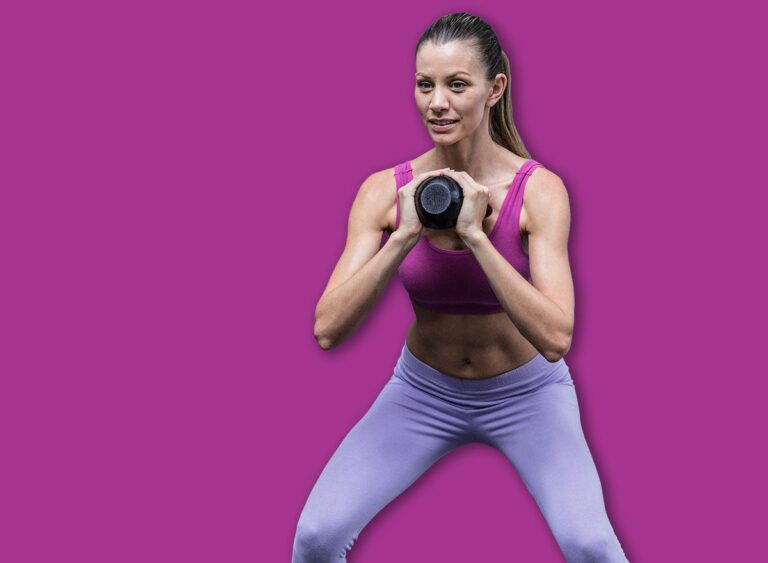
Goblet Squat
Start by holding a single dumbbell at chest height, cupped in both hands. Lower yourself into a squat as your thighs drive toward parallel with the floor. The weight position—front-loaded against your torso—creates a natural counterbalance that helps you stay upright through the entire descent. Many adults over 60 find this alignment easier to maintain than a barbell squat would be. The front-loaded position pulls your weight forward slightly, which often makes it easier to achieve good depth while keeping your torso tall. Your quadriceps, glutes, and hamstrings perform the primary work, while your core and upper back isometrically brace the weight in place and keep you stable.
- Sets and reps: 2 to 3 sets of 8 to 12 repetitions
- Form tip: Keep the dumbbell pressed close to your chest through every phase of the movement
- Easier options: bodyweight squat to learn the pattern, goblet squat to a box for a stopping point, slow-tempo goblet squat using a lighter weight
Staggered Romanian Deadlift
Stand with feet staggered—one foot stepped back, one stepped forward. Hold a single dumbbell in front of your front leg. Hinge at the hips by pushing your rear end back, feeling a stretch run down the back of your front thigh. The staggered stance keeps both feet on the ground while still allowing one leg to carry more of the load. This setup makes the movement feel steady enough to control, yet still challenging for the glutes and hamstrings. Unlike a traditional deadlift, the staggered position trains stability as much as it trains strength, which translates directly to safer movement when you’re stepping over obstacles or reaching to one side.
- Sets and reps: 2 to 3 sets of 8 to 10 reps per side
- Form tip: Keep the dumbbell close to your front leg as you hinge forward and stand back up
- Easier options: bodyweight staggered RDL without weight, reduced range of motion using a shorter hinge, chair or wall for hand support
Upper-Body Pressing and Pulling
Your shoulders and back reveal training imbalances quickly. Many people spend far more time pressing—whether doing pushups, throwing, or overhead work—than pulling. That asymmetry often leaves shoulders tighter and less stable than they should be. In return, the upper back weakens, and pulling movements feel difficult or unstable. One dumbbell fixes this with two crucial movements: one that strengthens the shoulder directly, and one that addresses the pulling pattern most people neglect.
Half-Kneeling Overhead Press
Kneel on one knee and plant your opposite foot flat on the floor. Hold a dumbbell at shoulder height on one side of your body. Press it straight overhead. The half-kneeling position anchors your lower body, making it obvious when your lower back tries to arch in order to help with the press. That immediate feedback trains you to press from the shoulder, not from spinal extension. This positioning is especially valuable for older adults, since it prevents the compensatory arching that can irritate the lower back over time. Your shoulder drives the weight up, and you lower it back to shoulder height with control.
- Sets and reps: 2 to 3 sets of 8 to 10 reps per arm
- Form tip: Keep your ribs stacked above your hips—do not let them flair out or lean sideways as you press overhead
- Easier options: seated one-arm shoulder press for more stability, standing two-arm press using two dumbbells, lighter dumbbell to practice the movement
Single-Arm Row
Support yourself with one hand on your thigh while standing in a hinge position. Hold a dumbbell in your opposite hand. Pull your elbow back and draw the weight toward your rib cage, finishing with the dumbbell touching your chest. At the top of the rep, your shoulder blade retracts backward—your arm follows the movement your scapula creates. This is different from simply pulling your arm back; the shoulder blade initiates the movement, and the arm completes it. Your lats, rear delts, and biceps all contribute to the lift, making this one of the most complete upper-body pulling movements available.
- Sets and reps: 2 to 3 sets of 8 to 12 reps per arm
- Form tip: Pull your elbow back and touch the dumbbell to your chest at the top of each rep
- Easier options: chair-supported single-arm row using a chair for stability, lighter dumbbell to build strength progressively, paused single-arm row holding the top position for a breath
Core Stability and Function
Core training for people over 60 should transfer directly to real life. You want core work that makes carrying, bending, and walking feel more stable and more controlled. The suitcase carry does exactly that. Hold a single dumbbell at your side. Walk forward while resisting the weight’s pull. Your midsection, shoulders, obliques, hips, and grip all work together to resist the dumbbell trying to tilt you sideways. It builds integrated stability that shows up immediately when you move groceries, carry a bag in one hand, or simply walk with a heavier load on your dominant side. Unlike core exercises that isolate the abdominals, the suitcase carry builds strength you can connect right away to real-world function.
- Sets and duration: 2 to 3 carries of 20 to 45 seconds per side
- Form tip: Walk tall and keep the dumbbell hanging straight down at your side
- Easier options: shorter carries of 15 to 20 seconds, lighter dumbbell weight, march-in-place suitcase carry instead of walking
Putting It Into Practice
One dumbbell goes further than most people expect when you pair good exercise choice with sensible progression. Use these five movements 2 to 4 times each week. You can run all five exercises as a complete session lasting 20 to 30 minutes, or you can slot one or two into a routine you already follow. Begin with a weight you can handle for the prescribed reps while keeping your form tight. Build from there by adding one or two reps per set, slowing down your lowering phase to increase time under tension, or increasing the weight once your form stays solid throughout the entire set. This approach—small, consistent improvements over weeks and months—builds the strength that rebuilds muscle and function after 60.
Frequently Asked Questions
Why is one-dumbbell training better than machines for adults over 60?
One dumbbell requires you to control the weight's path and maintain balance throughout the movement. Machines lock you into a fixed path. That extra stabilization work engages more muscle groups, including deep stabilizers, and builds functional strength that carries over to real-world daily activities like walking, lifting, and carrying.
How often should I do these one-dumbbell exercises?
Perform the five exercises 2 to 4 days per week. You can run all five as a single complete session or add one or two to your existing routine. The choice depends on your schedule and current training frequency.
What should I do if an exercise feels too hard?
Each movement includes easier variations. For the goblet squat, start bodyweight or use a box. For rows, use a chair for support. For carries, reduce your distance or time. Use a lighter dumbbell and build progressively as your strength improves.
