
Key takeaways
- Three fundamental strength tests—squats, push-ups, and glute bridges—reveal how quickly your functional capacity is declining after 60.
- Each exercise targets a different aspect of strength needed for daily independence: lower body for sitting and stairs, upper body for pushing and recovery, and hips for walking and rising.
- Multiple easier variations make all three movements accessible regardless of your current level, so you can start where you are and progress steadily.
- Difficulty with any test points exactly where your training needs focus, and consistent repetition rebuilds strength regardless of age.
After reaching 60, strength isn’t primarily about aesthetics—it’s about preserving the ability to manage daily tasks without assistance or worry. Getting out of a chair, bending to retrieve something from the floor, carrying groceries, and navigating stairs all depend on whether your lower body, upper body, and hips have retained their foundational strength. When this strength declines, everyday activities become more difficult, and your injury risk rises. Testing your current strength level provides a concrete baseline and reveals exactly where you should focus your training efforts. The encouraging reality: strength that has declined can be recovered through consistent, properly scaled training.
Why Strength Testing Matters at This Stage of Life
Simple strength assessments don’t require expensive equipment or a gym membership, yet they communicate substantial information about your body’s capacity. The most valuable tests examine three distinct abilities: how effectively you manage your own body weight, how strong you are when pushing something away from you, and whether your hips can produce enough force to move you upward. Each skill addresses a different aspect of strength that shows up in your actual life. A smooth, controlled repetition demonstrates that your muscles, joints, and nervous system are working together effectively. A difficult or awkward repetition pinpoints exactly what needs work, turning the test into a training blueprint.
The Bodyweight Squat: Testing Lower Body Strength
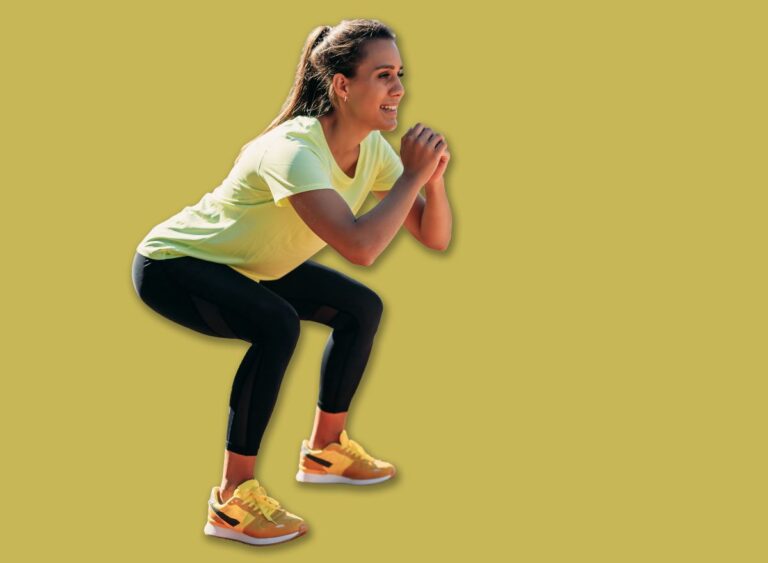
Your ability to sit down and stand up, bend to pick something off a low shelf, and climb a flight of stairs hinges on the same fundamental lower-body strength. A bodyweight squat shows how well your hips, knees, and ankles coordinate while supporting your entire body weight. When a squat feels strong and stable, your lower body has maintained the necessary control and mobility for independent daily living.
Proper Squat Movement and Depth
You don’t need to squat deeper than is comfortable for your individual knees and ankles. The priority is making each repetition smooth and deliberate from standing position down to the bottom and back up, with no jerky pauses or momentum-dependent movements. Keep your chest upright and your knees tracking directly over your toes. If you notice your knees caving inward or your torso collapsing forward, that’s a sign to use an easier variation until strength and control improve.
Squatting Volume and Variations
Target 2 to 3 sets of 8 to 12 repetitions. This range builds strength while providing enough reps to notice your form throughout the set. If bodyweight alone feels inaccessible right now, you have three entry points: a chair squat (lightly touch your hips to a chair at the bottom position, then stand fully), a box squat (fully sit to a sturdy chair or box before standing), or a slow-tempo bodyweight squat (take 3 full seconds descending and 1 second returning to standing, which removes bouncing and forces your muscles to control the entire motion).
The Push-Up: Upper Body Pressing Strength
Most people don’t realize how frequently their upper body needs to push against resistance. You press when you recover from a fall by pushing your hands into the floor, stabilize yourself against a counter or wall, open a heavy door, or catch yourself when stumbling. Push-ups train your chest, shoulders, arms, and core simultaneously, making them an exceptional measure of coordinated upper-body strength. Your push-up ability signals whether these muscle groups function as a unified system under load.
Push-Up Form and Body Alignment
Maintain a straight line from your head through your heels—visualize a rigid plank. Your elbows should stay close alongside your ribs as you lower your body, and your spine should remain neutral throughout. If you cannot maintain this alignment, switching to an easier version produces better results than forcing incorrect form, which can create compensations and injury risk.
Push-Up Targets and Progression Pathways
Perform 2 to 3 sets of 5 to 10 repetitions. Three modifications make push-ups accessible at different strength levels. Wall push-ups (palms pressed against a wall, body at an angle) engage the same muscles while dramatically reducing the load. An incline push-up (hands placed on a counter, sturdy table, or bench) offers a middle ground—more challenging than a wall, less demanding than the floor. Knee push-ups (knees on the floor instead of toes) maintain core engagement and upper-body demand while reducing total load. Any of these versions builds genuine pressing strength.
The Glute Bridge: Hip Power for Movement and Safety
The glutes drive an enormous portion of what you do after 60—walking without fatigue, standing with good posture, climbing stairs without relying on railings, and rising from a low position without hand support. A glute bridge reveals whether you can lift your hips effectively without compensating through your lower back, and it simultaneously builds the precise strength pattern these daily movements require. The straightforward nature of the exercise makes form assessment clear and immediate.
Executing the Bridge with Proper Muscle Activation
Push firmly through your feet into the ground, and strongly squeeze your glutes at the peak of the lift to confirm they’re actually firing. Lower yourself with complete control so each repetition feels intentional and owned, not rushed or passive. A specific form cue: squeeze your core just before driving your hips upward, which stabilizes your spine and reduces unnecessary stress on your lower back. This prevents your lower back from over-working and ensures the glutes bear the load they’re designed to handle.
Bridge Volume and Variation Options
Target 2 to 3 sets of 10 to 15 repetitions. If the full glute bridge challenges your form or stability, a smaller-range glute bridge (lifting to only halfway height) lets your hips and core build capacity without maximum demand. A paused glute bridge (holding the top position for 2 to 3 seconds per repetition) increases time under tension without requiring more reps, effectively intensifying the stimulus. A single-leg assisted glute bridge (one foot pressing into the floor, the other held in the air with minimal support from your hand) addresses strength imbalances and challenges your stability simultaneously.
Adapting and Advancing Your Training
Finding one of these exercises significantly harder than expected is not a discouragement—it’s useful information. Strength that has declined does return when you apply consistent, intelligent practice, select appropriate variations, and allow adequate recovery between demanding sessions. Begin with whichever variation allows you to maintain precise form, perform it regularly, and introduce small increases in difficulty only once the repetitions feel noticeably stronger. Incremental progress builds both strength and confidence, and steady repetition is the actual mechanism by which strength returns in this phase of life. The pattern matters far more than jumping to the hardest version immediately.
Frequently Asked Questions
What do these three strength tests actually measure?
The squat tests lower-body control for standing, sitting, and climbing stairs. Push-ups measure upper-body pressing strength needed for falls and pushing. Glute bridges reveal hip power for walking, stairs, and rising from low positions—all essential for daily independence after 60.
Can I do easier versions of these exercises if the full movement is too hard?
Yes. Squats can become chair squats, box squats, or slow-tempo versions. Push-ups can be wall, incline, or knee versions. Glute bridges can use a smaller range, pauses, or single-leg assistance. Start with whichever variation allows you to maintain clean form, then progress as you get stronger.
How often should I perform these strength tests?
The recommended sets and reps are 2 to 3 sets of 8 to 12 repetitions for squats, 5 to 10 for push-ups, and 10 to 15 for glute bridges. Perform these as regular training volume multiple times per week with rest days between to build consistent strength rather than testing once and stopping.
