
Key takeaways
- Five bodyweight movements—dead bug, reverse crunch, flutter kicks, bear hold, and hollow hold—train core control through motion rather than static holds.
- These exercises build trunk stability while your limbs move, which translates to better support and stronger movement in daily activities.
- Perform three to five days per week starting with two rounds of all five exercises, adding time or reps once movements feel controlled.
Extended plank holds have dominated core training advice for years, but they come with a real problem: your shoulders and arms tire long before your abdominal muscles feel substantially challenged. After 55, this issue becomes even more pronounced. Bodyweight core work offers a different path—one that actually lets you perceive what your midsection is doing while your limbs move through space.
A stronger core after 55 isn’t primarily about how long you can stay still. It’s about teaching your abdominal muscles to maintain tension and control while your arms or legs shift position. That skill translates directly to movements you use every day: reaching for objects, walking, turning, bending. When your trunk stays stable while other parts of your body work, your back experiences better support and your movements feel more powerful.
Moving Beyond the Traditional Plank
The shift from static holds to movement-based core work changes what your abs actually learn. A plank teaches endurance in a fixed position. The exercises below teach your midsection to stay engaged and controlled while circumstances around it change. That’s a fundamentally different adaptation—and it’s more useful for everyday function.
These five movements work well for people training remotely because they require no equipment and can be scaled up or down based on how your body responds. They’re straightforward enough to repeat without confusion, yet challenging enough that you’ll notice results within a few weeks of consistent practice.
Five Movements to Build Trunk Strength
Starting From Your Back: Dead Bug and Reverse Crunch
The alternating dead bug tops the list for adults over 55 because it builds control without compromising your lower back. You lie on your back and coordinate your limbs so that when your right arm extends, your left leg straightens, then you switch sides. The real work happens in your abs, which must hold your lower back pressed to the floor while this limb movement occurs. This teaches the exact skill you need in daily life—stability while moving. The movement scales beautifully: if your lower back starts to arch, simply reduce how far you reach.
Target: 2 to 3 sets of 6 to 10 repetitions per side. Variations include bent-knee dead bugs (easier), heel-tap dead bugs, and slower tempos to increase time under tension.
The reverse crunch zones in on your lower abdominals and keeps the movement immediately understandable. Rather than swinging your legs up, you use your core to roll your hips slightly off the floor. This small range means the movement stays manageable even if your hip flexors are tight, but the contraction still builds strength. Many people pair dead bugs with reverse crunches because one emphasizes control and the other emphasizes contraction strength.
Target: 2 to 3 sets of 8 to 12 repetitions. Bent-knee variations, paused holds at the top, and smaller ranges all serve as progressions or regressions depending on your current ability.
From a Hands-and-Knees Position: Bear Hold with Shoulder Taps
Moving off your back and onto your hands and knees changes the challenge your core faces. In a bear hold with shoulder taps, you position yourself on your hands and knees with your hips level, then tap one hand to the opposite shoulder while keeping your torso square. This requires your abs to stabilize your trunk while one arm leaves contact with the ground. The movement builds shoulder control and coordination alongside core strength—all three working together in a single position.
Target: 2 to 3 sets of 6 to 10 taps per side. You can progress by slowing the taps, keeping hips even more still, or eventually moving to a full bear hold without the taps.
Lying Down for Endurance and Tension: Flutter Kicks and Hollow Hold
Flutter kicks address the endurance component of core strength. While lying on your back with your legs extended, you perform small, controlled kicks. Your abdominals must stay engaged throughout—there’s no rest point like there is with repetition-based work. This builds the stamina your core needs for sustained stability. Keep the kicks small enough that your lower back maintains contact with the floor; the goal is challenging your midsection, not creating back strain.
Target: 2 to 3 sets of 20 to 30 seconds. As you get stronger, add a few seconds to each set or move to slightly higher kicks, always keeping lower back stability as the limiting factor.
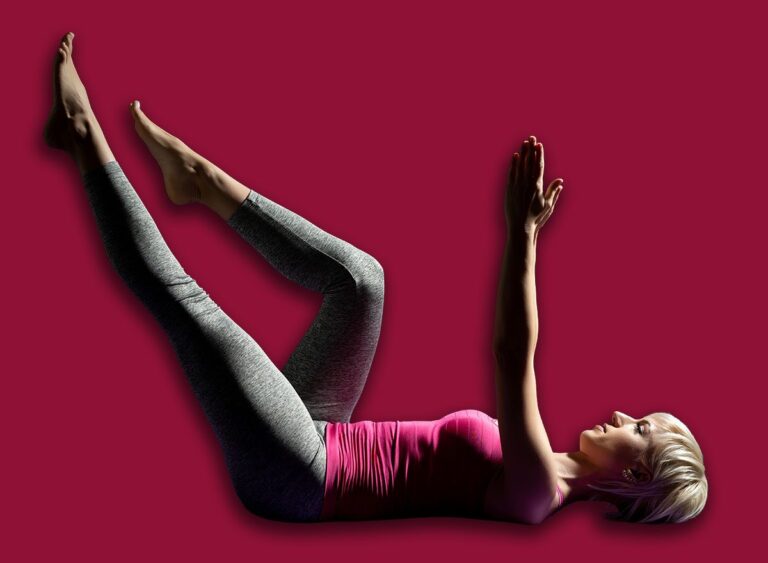
The hollow hold serves as a strong finishing movement because it teaches full-body tension through your abdominals. You lie on your back and hold your ribs and pelvis in a braced position while extending your arms and legs away from your center line. This creates tremendous tension throughout your core, even though you’re not moving. Scale it carefully: if your lower back leaves the floor, bend your knees until you can hold the position with a neutral spine. This might mean significant knee bend at first, and that’s fine—it allows you to build toward the full position.
Target: 2 to 3 holds lasting 10 to 25 seconds. Progress by extending time, or try variations like one-leg holds or gentle rocking once you’ve built a solid baseline.
Your Weekly Training Structure
These exercises deliver results when practiced three to five days per week. Start with two complete rounds of all five movements, resting as needed between exercises. This keeps the session manageable and repeatable—consistency matters more than volume, particularly when building strength after 55.
Your first week might look like Monday and Wednesday and Friday, hitting each movement once in two-round sessions. As these rounds start to feel controlled and deliberate, you can add a third round or extend the time-based holds by a few seconds. The progression principle is straightforward: once something feels steady, make it slightly harder.
Building Strength Through Steady Practice
Core strength improves reliably when practice remains consistent, even if sessions stay relatively short. Focus on control and breathing throughout each movement rather than rushing to finish. Your form should be steady enough that you could repeat the routine again the following day if needed. That sustainability is what drives results.
These five movements give your abdominals different types of work without requiring you to figure out complex progressions or collect equipment. The dead bug and reverse crunch teach you stability and contraction. The bear hold builds shoulder and trunk coordination. The flutter kicks and hollow hold teach endurance and full-body tension. Together, they create a complete stimulus for core strength that feels simpler and more achievable than grinding out longer planks.
Frequently Asked Questions
Why do these exercises work better than planks after 55?
They teach your core to maintain control while your arms or legs move, building stability for daily activities. Planks only challenge your midsection while everything stays still, which doesn't translate as well to real-world movement.
How often should I perform these exercises?
Practice three to five days per week, starting with two complete rounds of all five movements, and rest as needed between exercises.
Which exercise is best for beginners to core training?
The dead bug is an excellent starting point because it builds control without straining your lower back, and you can shorten your reach until your core strength develops.
