
Key takeaways
- Less than 15 percent of adults over 60 strength train twice weekly, yet it's essential to prevent muscle loss and maintain independence.
- A six-minute routine from FitCraft's Domenic Angelino combines dynamic stretches for mobility with squats, overhead press, and biceps work.
- Tight hamstrings and rounded shoulders common in older adults increase injury risk; dynamic stretches at the start address these patterns before lifting.
Most adults over 60 never establish a strength training habit. Research shows that fewer than 15 percent of people in this age group perform resistance work twice a week, despite the fact that maintaining muscle becomes increasingly critical as we grow older. Without intentional effort, we lose lean muscle mass naturally—a process that accelerates with each passing year. This loss makes everyday tasks harder and increases injury risk. Yet many older adults hesitate to start because they believe strength training requires time they don’t have or equipment they can’t access.
Domenic Angelino, MS, MPH, CSCS, CPT, Chief Exercise Scientist at FitCraft, developed a six-minute morning routine specifically designed for people over 60. The routine combines dynamic preparation with targeted resistance exercises that address the exact muscle groups most people neglect in daily life.
Why Your Warm-Up Comes First
Beginning your workout with dynamic stretching accomplishes far more than simply raising your body temperature. It improves your range of motion for the strength work ahead, giving you a safer session and better exercise quality. Your body can’t perform at its best if your joints lack mobility or your muscles resist full movement. This preparation phase becomes more critical as you age, when stiffness accumulates from years of repetitive postures and limited movement patterns.
Hamstring Flexibility Prevents Injury
Standing toe touches work your hamstring flexibility—an area where most people show significant limitation by age 60. Angelino emphasizes why this matters: tight hamstrings increase injury risk during both exercise and daily activities. When your hamstrings lack flexibility, your lower back compensates, pulling you forward and creating tension. The looser your hamstrings, the better your overall movement quality and the safer you train.
Opening Your Shoulders for Overhead Work
A dynamic stretch targets your shoulder mobility, specifically preparing your body for overhead pressing—one of the routine’s core lifts. Most people’s shoulders stiffen from too much forward-focused activity and too little overhead movement. This mobility work is preventive; it helps you move safely through the full range of motion the overhead press requires, protecting your rotator cuff and shoulder joint from strain.
Addressing Rounded Shoulders
A third dynamic stretch targets rounded shoulder posture, something that becomes widespread by your sixties. This compensation pattern develops from years of sitting, typing, and forward-focused activities. Addressing it early in your routine helps restore the open shoulder position your body needs for optimal strength training and daily function. This postural correction also improves breathing and reduces upper back tension.
Building Strength: The Core Exercises
After your dynamic preparation, the routine shifts to resistance work. Each exercise targets a different energy system and muscle group, creating a complete strength stimulus in minimal time.
Squats Train Your Most Important Muscles
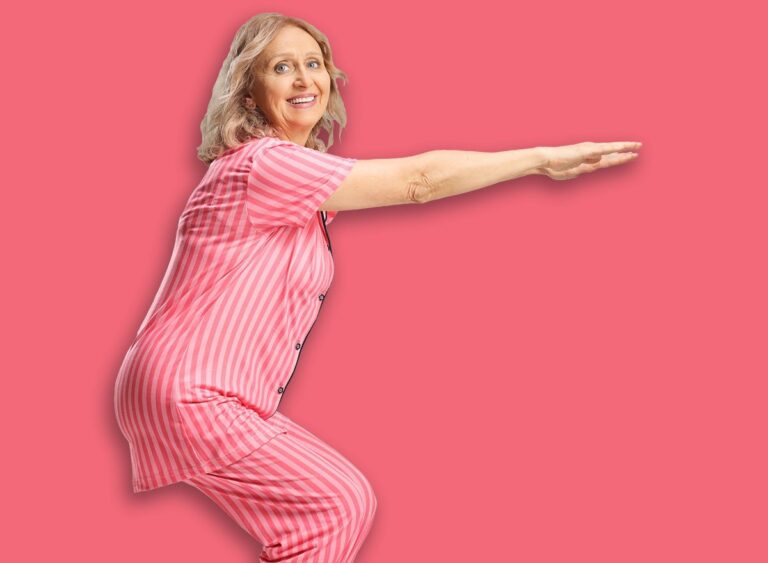
Squats efficiently train all your major lower body muscles—quadriceps, hamstrings, glutes, and stabilizers—at once. Angelino positions this as a cornerstone exercise because it gives you flexibility: once your lower body strength improves, you can progress the movement or adapt it to suit your changing needs and goals. Starting with squats means your most important lower body muscles get trained every session, building the foundation for everything else. Stronger legs make walking, climbing stairs, and rising from a chair dramatically easier.
Overhead Press Targets Neglected Shoulder Muscles
The overhead press directly trains the muscles you use to lift your arms overhead. Here’s the critical point: these muscles rarely get enough natural use in daily life to maintain their strength on their own. Desk work, sitting, and forward-facing activities don’t challenge these muscles. This exercise targets exactly what would otherwise weaken with age—the ability to reach and lift overhead safely. Without deliberate training, reaching for the top shelf or lifting a suitcase becomes risky.
Biceps Curls Complete Your Upper Body
Finishing with a biceps exercise provides balanced arm training. Unlike the other movements in this routine, the biceps curl isolates a single muscle group at a single joint. This matters because your biceps don’t get worked by the other exercises—the squat doesn’t involve them, the overhead press emphasizes shoulders and triceps, and the dynamic stretches prepare but don’t strengthen. Adding biceps work at the end ensures your upper arms get full attention and complete arm development.
Why Six Minutes Is Enough
Six minutes is short enough to fit into any morning without disrupting your schedule. Yet Angelino’s point about adaptation applies to the entire routine: once you build a foundation of strength, you have flexibility to adjust movements based on your body’s feedback, schedule changes, or evolving goals. The routine isn’t rigid—it’s structured to work now and adapt as you progress. The timeframe doesn’t mean rushing or cutting corners. It means choosing exercises with maximum return: compound movements that work multiple muscle groups simultaneously, dynamic preparation that prevents injury, and targeted isolation work that addresses the neglected areas most people overlook.
Filling the Consistency Gap
Strength training after 60 doesn’t require hours in a gym or expensive equipment. Most older adults who do resistance work twice a week already exceed what the majority of their peers accomplish. The fact that fewer than 15 percent of people over 60 strength train at all means starting this routine puts you ahead of most people your age. Removing barriers—time pressure, gym access, intimidation—makes consistency possible. A six-minute routine you actually do beats a perfect hour-long routine you skip.
Frequently Asked Questions
How long does the routine take?
The routine takes six minutes total—short enough to fit into any morning without disrupting your schedule or requiring special equipment.
Why start with dynamic stretches instead of jumping into lifting?
Dynamic stretching improves your range of motion and prepares your joints for the strength work ahead, making the session safer and more effective.
Which exercises are included in the routine?
The routine includes standing toe touches for hamstring flexibility, dynamic shoulder mobility stretches, squats, overhead press, and biceps curls—six movements that work all major muscle groups.
