
Key takeaways
- Single-leg hold, heel-to-toe walk, lateral step-over, and suitcase carry march target different balance demands that walking alone misses.
- Each exercise includes specific set and rep ranges (2–3 sets, 15–30 seconds to 8–12 steps) and progression variations for building capacity safely.
- Balance training activates your nervous system through repetition and small corrections, making short frequent sessions more effective than longer workouts.
- Support from a wall or counter keeps you safe while challenging your balance; progressing by reducing contact builds confidence without risk.
Balance issues after age 60 often announce themselves quietly—a slower step off a curb, a moment of hesitation during a quick turn, or caution when reaching for something above shoulder height. These aren’t signs of decline so much as signals that your balance system could use focused training. Walking keeps you moving and builds stamina, but it doesn’t target the specific balance demands your body faces throughout the day. Four standing exercises can build the stability walking alone provides, and they require nothing more than a wall, counter, or chair for light support.
Why Balance Training Matters More Than Just Walking
Daily movement isn’t enough to maintain steady balance. Walking trains cardiovascular fitness and leg endurance, but it uses predictable, forward motion. Real-world balance challenges come from stepping over obstacles, shifting weight to one side, holding steady while reaching, and recovering quickly when your position changes unexpectedly.
Balance training teaches your nervous system to make micro-adjustments. It strengthens the coordination between your feet, ankles, hips, and core—the chain of muscles that keep you upright. Your nervous system learns best through repetition, small corrections, and focused practice in controlled environments. Short sessions work better than long ones because your body integrates changes more effectively when practice is frequent and intentional.
Adding four exercises to your routine takes only a few minutes most days. Each one targets a different direction or demand: stillness on one leg, controlled forward stepping, sideways movement, and balance under light uneven weight. Practiced together, they cover the range of positions you need to move confidently through your home and into the world.
Single-Leg Balance Hold: Building Stillness
Every step you take includes a moment balanced on one leg. The single-leg balance hold isolates that moment and gives it focused repetition.
How to Perform It
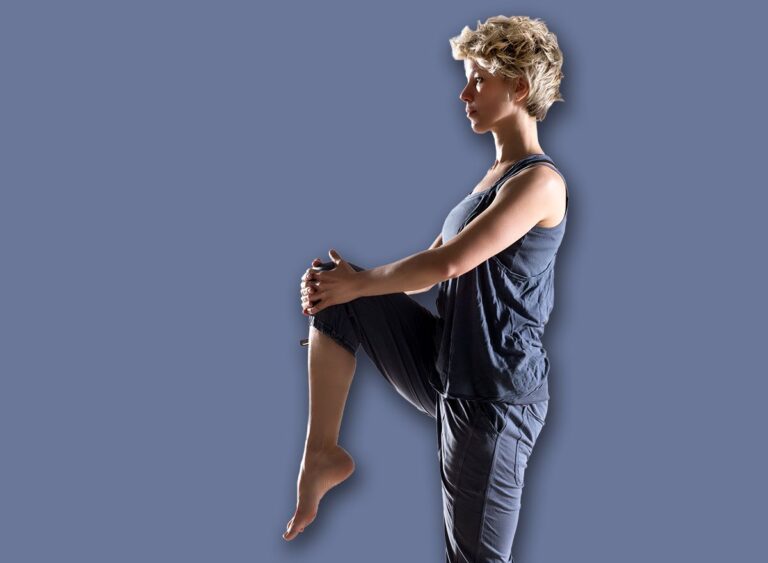
Stand near a counter or wall. Place your fingertips lightly on the surface in front of you—just enough to catch yourself if needed, not enough to support your weight. Lift one leg slightly, bending the knee, and hold steady for 15 to 30 seconds. Rest briefly, then repeat on the other side. Perform 2 to 3 holds per leg.
Building Your Capacity
Start with light fingertip contact. As your confidence builds, reduce the pressure from your fingers. Eventually, aim to balance with hands hovering nearby but not touching. The progression isn’t about speed; it’s about the nervous system learning to recruit the right muscles at the right time.
Variations and Form
The fingertip-supported version is the safest starting point. A single-leg hold with knee lift adds difficulty—keep the lifted knee bent and hold steady. If you want to challenge your visual balance, try looking side to side during the hold, which trains your balance without relying on a fixed focal point. Keep your standing foot planted throughout, and avoid leaning or shifting your weight toward the support.
Heel-to-Toe Walk: Balance in Motion
The heel-to-toe walk brings balance training into movement. Instead of walking normally, you place the heel of one foot directly in front of the toes of the other, creating a narrower base of support. This exercise trains foot placement, posture, and the confidence that comes from knowing exactly where each foot lands. It’s especially useful if you’ve noticed feeling less steady in tight spaces or on uneven ground.
Perform 2 to 3 rounds of 8 to 12 steps forward. Move slowly enough that each foot lands where you intend it to land. You might use a wall or counter for light fingertip support, or perform the exercise in open space once you’re comfortable. Widen the line between your feet if the exercise feels too challenging at first. A fingertip-supported version gives you safety while you build the skill. A pause version—stopping for a breath between each step—slows the movement and gives your balance system extra time to adjust.
Lateral Step-Over: Training Side-to-Side Control
Most daily balance work happens moving forward. Side-to-side movement engages different muscles and demands that your hips and ankles control weight shifts in an unfamiliar direction. Set up a low obstacle—a rolled towel, yoga block, or similar object. Stand to one side of it, feet hip-width apart. Step sideways over the object with one leg, clear it with your trailing leg, and regain control before the next rep. Perform 2 to 3 sets of 6 to 10 reps in each direction.
Start with an object low enough that you can clear it without rushing. A rushed step means your balance system doesn’t have time to adjust. As your control improves, you can progress to a slightly higher obstacle or remove the object altogether and perform the stepping motion without it. A supported version—holding a counter or wall for light contact—makes the exercise more accessible.
Suitcase Carry March: Balance Under Uneven Load
Carrying groceries, laundry, or a bag creates uneven weight on one side of your body. Your core and obliques have to work harder to keep you tall and prevent leaning. The suitcase carry march combines that load with a slow marching pattern that challenges single-leg control.
Hold a weight—a dumbbell, water bottle, or bag of groceries—at your side in one hand. March in place slowly for 20 to 30 seconds, lifting your knees to a comfortable height. Your core, obliques, grip, shoulders, glutes, and hips all engage to maintain posture and stability. Perform 2 to 3 sets per side, resting between. Keep your torso tall and avoid leaning toward the weight. That lean is a common compensation—it feels easier but trains the wrong pattern. A lighter weight practiced with good form beats a heavier weight that forces poor posture. If marching feels challenging, start with a suitcase hold—standing still while holding the weight for 20 to 30 seconds per side—before adding the marching motion.
Integrating Balance Work Into Your Week
Walking should remain part of your routine for stamina and daily movement. Balance training complements it by addressing the specific stability demands walking misses. Practice these four exercises on most days of the week, in sessions that take only 5 to 10 minutes.
Keep a wall, counter, or sturdy chair nearby during every session. That safety net lets you challenge yourself without feeling tense or anxious about falling. Your nervous system learns best when you practice on the edge of what feels manageable—not so easy that your body doesn’t need to adjust, not so hard that you’re gripping the support to stay upright. Progress happens through consistency and small improvements. You might start holding the single-leg balance for 15 seconds and build to 30. You might begin the lateral step-over with a high object and gradually lower it. Track which variations feel comfortable, and return to those regularly. Small changes to your balance capacity compound into noticeable differences in how you move through the world.
Frequently Asked Questions
How often should I do these balance exercises?
Practice these exercises on most days of the week in sessions taking 5 to 10 minutes. Your nervous system learns best through frequent, consistent practice.
Can I do these exercises without a wall or counter nearby?
A sturdy chair, railing, or other stable surface works. Light fingertip contact is safest when starting; as your confidence improves, you can reduce reliance on it.
What's the difference between balance training and walking for balance?
Walking builds cardiovascular fitness and leg endurance using predictable forward motion, while balance training targets specific demands—weight shifts, single-leg control, side-to-side movement, and recovery from position changes.
