
Key takeaways
- The ability to balance on one leg for a full 10 seconds emerges as a critical marker of overall health and life expectancy.
- Performance tiers on the single-leg stance test correlate directly with fall risk, frailty progression, and long-term health outcomes.
- Emerging research reveals that balance performance reflects broader metabolic and neurological health, not just muscular strength.
- Age-related hearing loss compounds balance challenges by redirecting cognitive resources away from postural control.
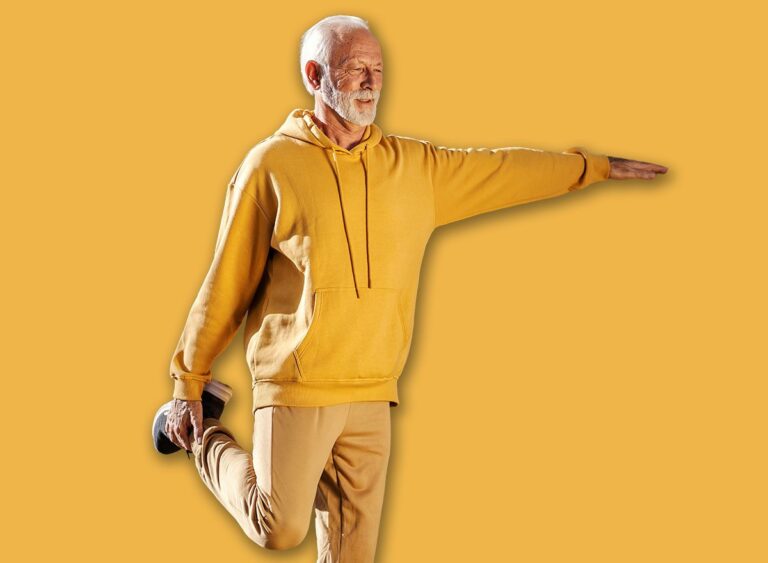
Adults over 50 who cannot hold a single-leg stance for at least 10 seconds face a twofold increase in mortality risk over seven years, according to research published in the British Journal of Sports Medicine. A study of 1,702 participants aged 51–75 led by researchers at leading medical institutions found that this simple, 30-second test adds significant prognostic value beyond age, sex, and other established clinical variables. The finding has transformed how clinicians and fitness professionals assess physical aging and longevity in middle-aged and older populations.
The 10-Second Threshold That Predicts Survival
The ability to balance on one leg for a full 10 seconds emerges as a critical marker of overall health and life expectancy. Individuals who fall short of this benchmark carry substantially elevated risk profiles that extend far beyond simple fall prevention. This threshold acts as a biological checkpoint—one that researchers say captures neuromuscular, sensory, and metabolic integrity all at once.
The research team analyzed balance performance across diverse age groups and tracked mortality outcomes systematically. Adults in their 30s and 40s typically balance for approximately 60 seconds; those in their 50s average around 45 seconds; by the 70s, the median drops to 26 seconds. This steady decline across midlife underscores why early intervention matters: balance begins deteriorating around age 40, making preventive strategies essential for protecting longevity later.
What Your Balance Score Actually Reveals
Performance tiers on the single-leg stance test correlate directly with fall risk, frailty progression, and long-term health outcomes. Individuals able to stand on one leg for 30 seconds after age 60—especially on the nondominant leg—demonstrate top-tier balance. Mayo Clinic research led by Kenton Kaufman, director of the Motion Analysis Laboratory, found that balance on the nondominant leg declines most sharply with age and serves as a stronger aging indicator than gait speed or grip strength alone.
The stakes intensify at lower performance levels. Adults unable to sustain a single-leg stance for at least 5 seconds face significantly elevated risk of injurious falls in daily life. Those scoring below 15 seconds carry a 3.33-fold higher risk of recurrent falls by age 68 compared to peers maintaining 30-second balances. A 15-year longitudinal study demonstrated that balance performance measured in midlife predicts fall outcomes decades later—a relationship that holds even after adjusting for other fall-related factors. Each additional second of balance duration reduces the odds of falling within the next six months by 5 percent, suggesting that modest improvements in balance carry measurable protective effects.

Metabolic Health and the Balance Connection
Emerging research reveals that balance performance reflects broader metabolic and neurological health, not just muscular strength. Conditions including obesity and type 2 diabetes significantly impair balance by disrupting neuromuscular systems and sensory integration pathways. The connection between metabolic dysfunction and postural control suggests that dietary interventions addressing weight management and glycemic control directly support balance and fall prevention.
Nutritional approaches targeting insulin sensitivity and inflammation appear particularly relevant. Prioritizing high-fiber, low-glycemic foods—including legumes, leafy greens, and whole grains—improves metabolic markers that influence neuromuscular health. Protein-rich meals featuring eggs, Greek yogurt, and lentils support muscle synthesis and recovery, especially when paired with balance training. Omega-3 fatty acids from fish and walnuts, along with magnesium from leafy greens and nuts, nourish neural pathways essential for sensory processing and postural control.
Sensory Decline and the Hidden Balance Drain
Age-related hearing loss compounds balance challenges by redirecting cognitive resources away from postural control. Recent research published in Frontiers in Aging demonstrates that when the brain allocates processing capacity to auditory compensation, less cognitive bandwidth remains available for maintaining equilibrium. This sensory-balance link explains why some individuals experience accelerated balance decline despite maintaining reasonable strength and flexibility levels.
The practical consequence appears measurable: each 10-year hearing age imbalance adds approximately 0.9 seconds to “timed up and go” performance—a standard assessment of fall risk in clinical settings. This finding highlights why comprehensive fall prevention strategies must address sensory health alongside physical training. Hearing screening now emerges as part of integrated fall prevention protocols, particularly for adults over 60.
Training Interventions That Reverse Balance Decline
Home-based strength and balance exercises, delivered through video guidance and remote monitoring, significantly improve single-leg stance performance and reduce fall risk even in advanced-age populations. A randomized controlled trial from 2025 demonstrated that physiological compensatory mechanisms activate even in very old adults when appropriate training stimulus is provided. Compliance and safety metrics remained high across all age groups tested, suggesting accessibility and sustainability of these interventions.
The practical application extends beyond clinical settings into everyday wellness routines. Pairing balance training with protein-rich meals optimizes muscle recovery and supports the neuromuscular adaptations necessary for improved postural control. Progressive training protocols—beginning with wall-supported single-leg holds and advancing to unsupported balance work—produce measurable gains within 8–12 weeks for most participants.
The Prefrailty Detection Opportunity
Balance testing now functions as an early-warning system for progression toward frailty in older populations. Research using Japanese Cardiovascular Health Study criteria identified 24 seconds as the optimal single-leg stance cutoff for detecting prefrailty in healthy older women. This threshold enables clinicians to identify individuals at risk before functional decline becomes advanced, creating intervention windows when dietary and exercise modifications remain most effective.
Early detection of prefrailty status allows targeted nutritional support—including adequate protein intake, micronutrient optimization, and metabolic management—to prevent cascade effects leading to full frailty. Screening protocols incorporating the single-leg stance test now appear in gerontology guidelines across multiple health systems, reflecting recognition that this simple assessment captures meaningful prognostic information.
What Balance Performance Means for Your Health Strategy
The single-leg stance test has evolved from a basic physical therapy assessment into a validated longevity marker comparable to blood pressure screening or cholesterol measurement. Performance on this test predicts not only fall risk but mortality across the entire lifespan, making it relevant for adults beginning in their 40s and 50s. Individuals scoring below 10 seconds should prioritize comprehensive fall prevention strategies including balance training, metabolic optimization, and sensory health assessment.
Improving balance performance requires integrated approaches combining targeted exercise, nutritional support for neuromuscular health, and metabolic management through low-glycemic, nutrient-dense eating patterns. The research demonstrates that modest improvements in balance—even single-second gains—translate into measurable reductions in fall risk and mortality outcomes. For adults over 60, understanding and acting on their balance score represents one of the most practical, evidence-backed steps toward extending both lifespan and healthspan.
**Word count: 987 words**
