
Key takeaways
- Five targeted exercises supply clear progressions for adults returning to training after extended breaks.
- Wall sits and kickstand hinges build lower body foundation while floor presses restore upper body pressing strength.
- Face pulls and heel taps address the upper back and core, areas often neglected during extended layoffs.
- Gradual progression through increased hold duration, added weight, and slower tempos outperforms aggressive attempts to compensate for missed years.
Getting back into training after years away presents a real physical challenge, according to fitness guidance from Eat This Not That. Dumbbells that once felt manageable now seem heavier. Your cardiovascular base has declined. The good news: your neuromuscular system still remembers how to adapt to stress. Once you reintroduce consistent resistance training, your body has a foundation to build from again.
Why Gym Classes Miss the Mark
Group fitness classes offer real value, particularly for people who thrive on community and structure. The limitation shows up immediately for someone restarting after a break: a single workout can’t serve a room full of people with different strength levels and recovery needs. The resistance, pacing, and progression that work for someone mid-routine won’t match someone rebuilding from scratch. The person restarting after years away needs control over their load and the ability to scale each movement independently.
What Your Muscles Actually Need
After a long break, your starting point doesn’t demand flashy exercises. Coaches working with returning adults focus on movements they can execute cleanly, recover from, and gradually load as their body readjusts to training. This approach builds tissue resilience faster than trying to cram years of missed training into a few brutal weeks. Each of the five movements below follows this philosophy: simple enough to perform well, progressive enough to challenge your body as strength returns.
Lower Body Foundation: Wall Sits and Kickstand Hinge
Wall Sits: A Simple Starting Point
The wall sit is straightforward and reveals very quickly whether your thighs have been working. Holding a single position places sustained tension on the quads without requiring you to master a complicated movement pattern. Your body weight against the wall tells your legs within seconds if you’ve taken time off. Start with 20 to 40 second holds for 2 to 3 sets, resting 45 seconds between rounds. As your legs adapt, extend the hold duration. The variations let you increase difficulty without changing the exercise: a higher wall sit (deeper knee bend), a longer hold at the starting depth, or a weighted wall sit with a dumbbell across your lap. Keep your knees and hips comfortable while holding. Stop if you feel pain rather than muscle fatigue.
Kickstand Hinge: Unilateral Load Without Balance
The kickstand hinge distributes work differently by putting more responsibility on each leg individually without asking you to balance on one foot. Your front leg carries most of the load while your back foot provides stability and support. This setup lets you focus clearly on the glutes and hamstrings. Start with your bodyweight for 2 to 3 sets of 8 to 10 repetitions per side, resting 45 to 60 seconds. Once the unweighted version stops presenting a challenge, hold a dumbbell at your side to increase the demand on your working leg. A variation using your back leg for light balance support, called a supported kickstand RDL, helps if you need extra stability while your proprioception rebuilds. Let your back foot contribute to balance without taking over the movement entirely.
Upper Body and Core Essentials
Floor Press: Controlled Strength Building
The floor press returns pressing strength without heavy equipment demands. With dumbbells in each hand, you lie on your back and lower the weights until your upper arms gently contact the floor. That floor contact point serves as a consistent bottom position for every repetition, while your chest and triceps handle the load throughout. This built-in limit means your joints get a stable endpoint and you can’t sink into an unstable bottom position. Perform 2 to 3 sets of 8 to 12 repetitions, resting 45 to 60 seconds between sets. Increase the dumbbell weight once your current load stops feeling challenging. If you need to reduce difficulty, drop to a lighter set of dumbbells. An alternating floor press, where you press one arm at a time while the other rests, gives you an option for progressing without jumping weight classes.
Face Pulls: Addressing the Upper Back
Upper back strength typically receives minimal attention during extended breaks from training. Face pulls reintroduce resistance to the rear shoulders and upper back in a movement that’s difficult to perform incorrectly. Attach a band to an anchor point at roughly eye level and pull the band back toward your face, spreading the band apart as you pull so your hands end up wider than your head. Your rear delts and upper back do the pulling work. Perform 2 to 3 sets of 10 to 15 repetitions, resting 30 to 45 seconds. Choose a band tension you can control smoothly all the way through the movement rather than picking a heavier band you can’t manage. Slow your repetitions down once the standard pace feels easy, or switch to a lighter band if you need to dial back the intensity. Pull toward eye level without shrugging your shoulders.
Heel Taps: Core Control Work
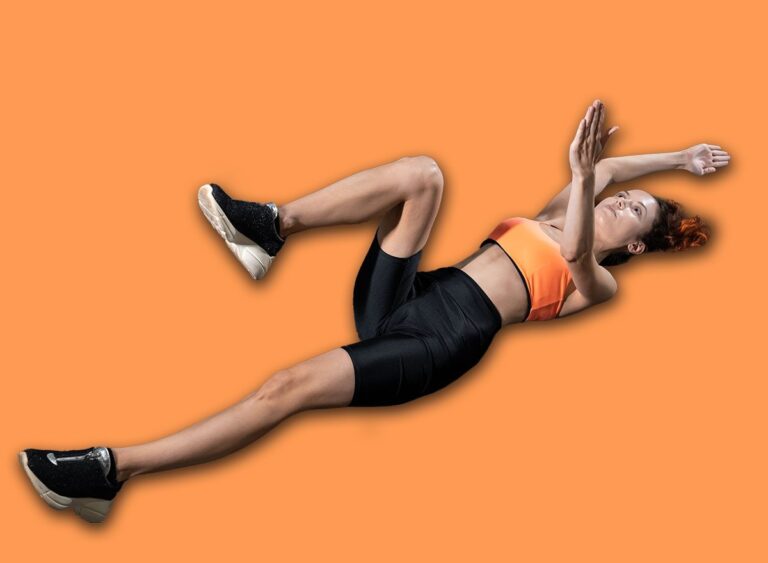
Core stability work completes the returning adult’s program. Heel taps rebuild midsection control by requiring your abs to stabilize your torso while one leg moves away from your body. Lie on your back with your knees bent and feet flat. Lift one heel slightly off the floor while keeping your lower back gently pressed toward the floor, then alternate legs. The movement looks small but demands constant core engagement. Perform 2 to 3 sets of 8 to 12 repetitions per side, resting 30 seconds between sets. Slow down your leg speed once you’re ready for a harder stimulus. The full dead bug, a progression where both limbs move simultaneously, offers more challenge once heel taps stop demanding effort.
Building Your Comeback Strategy
The temptation to make up years of missed training in a compressed timeframe leads to burnout and injury. A program you can repeat and gradually make harder takes you far further than an ambitious sprint that leaves you unable to train the next week. This five-exercise foundation gives you clear progressions: longer holds, additional weight, slower tempos, and exercise variations that increase difficulty without changing movements entirely. Consistency over intensity wins when you’re restarting.
Source: Eat This Not That
Frequently Asked Questions
How many sets and reps should I do for wall sits?
Start with 2 to 3 holds of 20 to 40 seconds, resting 45 seconds between rounds. Increase the hold duration as your legs adapt.
What is the kickstand hinge and what muscles does it target?
The kickstand hinge puts more responsibility on each leg without requiring you to balance on one foot. Your front leg carries most of the load while your back foot provides support, targeting the glutes and hamstrings.
Why are these five exercises better than group fitness classes after a long break?
Group fitness classes use the same workout for everyone in the room, which makes it harder to match resistance and progression to one person. These five exercises let you scale each movement independently and increase difficulty at your own pace.
