
Key takeaways
- Return to training with five scalable exercises: wall sits, floor press, kickstand RDL, face pulls, and heel taps, each with specific set and rep recommendations.
- Group fitness classes cannot match individual resistance and progression needs for returning lifters; personalized scaling works better than one-size-fits-all programming.
- Build back gradually by extending hold times, increasing load, changing tempos, or using different band tensions, progressing week to week instead of trying to compress years of recovery into days.
Returning to consistent training after years away presents a genuine physical challenge. Weights that felt manageable years ago now demand new respect. Conditioning that may have seemed solid has deteriorated. Yet this restarting point differs fundamentally from beginning as a complete novice; your body retains neural pathways and structural adaptations, meaning strength returns faster than it departs.
The opening phase of your return needs clarity more than complexity. A coach working with older adults who have stepped away from training for extended periods, according to Eat This Not That, prioritizes exercises performed with solid form, adequate recovery, and room to gradually increase load as the body readjusts to resistance. These early weeks don’t require flashy movements or high volume.
Why Standard Gym Classes May Fall Short
Group fitness classes offer genuine value for many people, especially those who thrive on community motivation and structure. The limitation emerges when you’re rebuilding from a long absence: a single workout designed for a room full of people cannot efficiently match the resistance and progression needed by each individual member.
After an extended layoff, your muscles need clear, scalable challenges that grow with your improving capacity. A programmer who understands your specific starting point can adjust weight, range of motion, or volume to track your recovery accurately. This level of individualization is inherently difficult in a class setting where 15 or 20 people are all performing the same rep scheme regardless of training history.
Lower Body Rebuilding: Wall Sits and the Kickstand RDL
Wall Sits for Quad Endurance
The quads respond quickly to training stimulus, whether you’re new to exercise or returning to it. Wall sits provide that stimulus without requiring you to master a complex movement pattern. You position yourself against a wall, lower into a partial squat position, and hold the tension. Start with holds between 20 and 40 seconds, completing 2 to 3 total, and rest for 45 seconds between them. As your legs adapt over weeks, extend the hold duration.
The progression pathway includes higher wall sits (reducing the depth of your squat), longer holds that push your time capacity, and weighted wall sits where you add load. Form matters most here: select a depth where your knees and hips remain comfortable throughout the hold.
Kickstand RDL for Single-Leg Loading
The kickstand RDL distributes the workload across two legs in a way that differs from true single-leg work. Your front leg carries the primary load, targeting the glutes and hamstrings, while your back foot provides balance support without taking over the lift. This setup lets you focus on the working leg without the balance demand of training on one leg alone.
Perform 2 to 3 sets of 8 to 10 repetitions per side, resting 45 to 60 seconds between sets. The bodyweight version builds your foundation; once it feels easier, add a dumbbell to increase resistance. Variations include a lighter dumbbell load, additional support from holding something stable, or the same movement pattern as a full dead bug where the back leg carries more involvement.
Floor Press: Rebuilding Upper Body Pressing Strength
The floor press resurrects upper body pressing power using minimal equipment. You lie on your back, dumbbells in hand, and press upward until your upper arms gently contact the floor. This position becomes your bottom point every single rep. Your chest and triceps handle most of the load while that floor contact point ensures consistency. When current dumbbells stop creating challenge, simply increase the weight.
Execute 2 to 3 sets of 8 to 12 repetitions, resting 45 to 60 seconds between sets. Single-arm variations force one side to work independently. An alternating pattern with one arm pressing while the other sits at the floor adds stability demand. Lighter loads let you perfect movement quality before progressing.
Addressing Neglected Areas: Upper Back and Core
Face Pulls for Posterior Chain Strength
Most long training breaks mean the upper back receives minimal attention during those absent years. Face pulls restore resistance to the posterior chain and bring focused work back to your rear shoulders. Thread a resistance band around a sturdy anchor at eye height, grab both ends, and pull the band toward eye level while keeping your shoulders down and avoiding a shrug.
Complete 2 to 3 sets of 10 to 15 repetitions, resting 30 to 45 seconds between sets. Choose band tension you can control throughout the full movement rather than selecting a resistance that forces compromised form. Your options include performing the same movement seated, using a lighter band to dial back resistance, or adding pauses at the end of each rep to increase time under tension.
Heel Taps for Core Stability
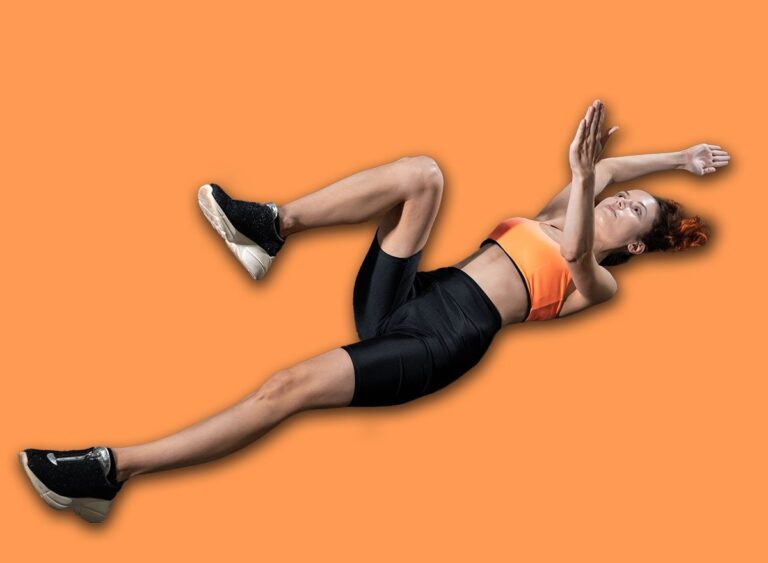
Midsection control matters for returning lifters. Heel taps engage the core stabilizers without requiring lengthy plank holds. Lie on your back, knees bent and feet flat, then alternately tap one heel away from your body while keeping your lower back pressed gently into the floor. One leg moves while the core holds the torso steady.
Perform 2 to 3 sets of 8 to 12 repetitions per side, resting 30 seconds between sets. Shorten the range of motion if you need an easier variation. Progress by slowing the heel tap tempo or advancing to a full dead bug pattern where both legs extend and return.
Building Back: Progress Over Pace
Compensating for 10 years of missed training across a few intensive weeks guarantees failure. Your body recovers best when given something it can repeat, gradually making harder, and adapt to over time. This measured approach takes you farther than attempting to compress years of deferred training into an exhausting sprint.
Each of these five exercises contains built-in scaling options. Wall sits extend in duration. Floor presses increase in load. Kickstand RDLs accept additional weight. Face pulls can use different band tensions. Heel taps can slow down. This progression pathway means you’ll have somewhere to go each week as your body grows accustomed to training again.
Source: Eat This Not That
Frequently Asked Questions
What sets and reps should I use for wall sits when starting out?
Begin with 2 to 3 holds of 20 to 40 seconds each, resting 45 seconds between holds. As your legs adapt, extend the hold duration rather than immediately adding weight.
Why is the kickstand RDL better than single-leg deadlifts for returning lifters?
The kickstand RDL distributes load across two legs while the back foot provides balance support. This setup lets your front leg do the heavy lifting without demanding the full balance challenge of true single-leg training.
How should I progress these five exercises if I've been away from training for years?
Each exercise has built-in scaling options: wall sits extend in duration, floor presses increase in load, kickstand RDLs accept added weight, face pulls change band tension, and heel taps can slow down. Progress week to week rather than trying to make up years of training quickly.
