
Key takeaways
- Treadmills cannot spot-reduce fat around your waist because steady cardio fails to engage your obliques, no matter how many miles you run.
- Five specific bodyweight exercises—rotational movements, squats, oblique isolation, mountain climbers, and side planks—directly build the muscles that create waist definition.
- After 55, maintaining core strength is essential because muscle naturally declines with age, making targeted work significantly more valuable than general cardio.
- These exercises work by simultaneously raising your heart rate and building oblique strength, creating an effect that treadmill running cannot achieve.
Why Treadmills Won’t Trim Love Handles
Treadmills are excellent for cardiovascular health, endurance, and calorie burning in general. They cannot, however, reduce fat in one specific area of your body. No amount of walking or running tells your body to burn fat only around your waist or hips. This is why people often spend considerable time jogging on the treadmill without seeing their love handles diminish. The problem isn’t effort; spot reduction through cardio alone doesn’t work.
What Happens After 55
The human body changes significantly after age 55. Muscle mass naturally declines, a process that makes it progressively harder to maintain existing muscle. This shift has direct implications for anyone trying to trim their midsection, since fat loss combined with targeted strength work is far more effective than cardio alone. Building strength in specific muscles becomes increasingly important precisely because your body holds onto muscle with greater difficulty as you age.
Core and Oblique Strength: The Real Solution
Understanding Oblique Muscles
The obliques are the muscles that line the sides of your abdomen, directly where love handles form. Treadmills fail to engage these muscles effectively, which explains why steady cardio misses the mark entirely. According to personal trainer James Bickerstaff, CPT at OriGym, “Targeting your obliques can create a firmer midsection, and improve your overall core strength.” Building strength in the obliques firms and defines your waistline as your overall body composition shifts through increased activity and proper exercise.
Why Core Strength Matters Beyond Appearance
Research shows that core strength becomes essential after 55, not just for how your midsection looks but for how it functions. A strong core supports posture, stability, and controlled movement in daily activities. This functional benefit compounds with the aesthetic one, making core work particularly valuable for adults in this age group.
The Five Exercises
Rotational and Dynamic Movements
The first category of exercise uses high-intensity rotational movements that challenge your obliques while raising your heart rate. Bickerstaff explains, “These are a great low-impact exercise for challenging your obliques and core. The rotational movements also strengthen muscles around your waist, while the alternating motion raises your heart rate.” This dual effect (direct oblique engagement plus cardiovascular demand) makes rotational work far more effective than steady-state cardio for reducing love handles.
Full-Body Efficiency with Squats
Squats engage the large muscles of your legs and glutes, making them deceptively powerful for overall fat reduction. Bickerstaff notes, “Squats recruit large muscles in the legs and glutes, making them an efficient full-body exercise. Also, they help maintain lower-body strength as we age.” Larger muscles demand more energy, so engaging your lower body forces your whole system to work harder. This increased overall energy expenditure, spread across your daily activity, is what actually reduces stubborn fat around the waistline.
Cardio Alternatives: Mountain Climbers
Mountain climbers pull your obliques and abdominals into the movement pattern rather than bypassing them entirely like treadmills do. Bickerstaff explains, “Mountain climbers engage the abdominals, shoulders, and legs while quickly raising the heart rate.” The rapid movement pattern demands sustained muscular effort from your core while delivering cardiovascular intensity, all without dedicating a long session to steady cardio.
Isometric Strength: Side Planks and Targeted Work
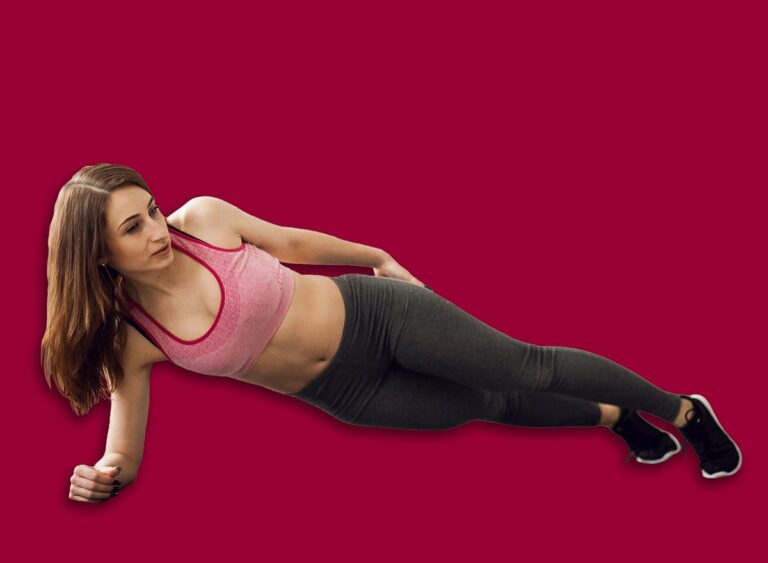
Side planks place your obliques under continuous tension as they stabilize your body throughout the hold. Bickerstaff states, “Side planks build strength around the waist because the obliques have to work continuously. They also improve deeper core stability, which can support better posture and make everyday movements feel more controlled.” Beyond the visible muscles, side planks build deeper stabilizers that support posture and reduce unnecessary strain during ordinary activities.
Direct isolation exercises that target obliques without involving the lower body round out the approach, providing focused engagement of the exact muscles that create waist definition.
Making It a Daily Practice
The greatest advantage of these five movements is their accessibility. You need no gym membership, no equipment, and no specific location—just your body weight and a small space. They can be performed daily at any time, creating consistency without barriers. The combination addresses love handles through multiple angles: rotational work, full-body engagement, direct isolation, and isometric holds. Because each movement also raises your heart rate and builds muscle, they work together to reduce fat while strengthening the specific muscles that create a defined waistline. After 55, this comprehensive approach is what actually succeeds where treadmill running alone falls short.
Source: Eat This Not That
Frequently Asked Questions
Why don't treadmills trim love handles effectively?
Treadmills cannot spot-reduce fat in one specific area. They fail to engage your obliques, the muscles running along the sides of your abdomen where love handles form. General cardio raises your heart rate but completely misses the muscle groups that create waist definition.
Why is core strength especially important after 55?
After 55, muscle mass naturally declines, making it progressively harder to maintain existing muscles. Research shows that core strength becomes essential during this period because targeted oblique and core exercises are increasingly valuable as your body loses muscle naturally. A strong core also supports better posture and stability in everyday movement.
What makes these five exercises more effective than treadmill running?
According to personal trainer James Bickerstaff at OriGym, these exercises engage your obliques and core while simultaneously raising your heart rate. Rotational movements, squats, mountain climbers, direct oblique isolation, and side planks all build the specific muscles that create waist definition while delivering cardiovascular intensity in a way steady treadmill running cannot.
