
Key takeaways
- Band curls, chair dips, and incline push-ups build the biceps and triceps that create arm firmness.
- Shoulder and back exercises improve posture and definition, making your entire arm look stronger.
- Training three to four days per week with light weights, adequate protein, and recovery builds visible arm shape in weeks.
- Home equipment—a resistance band, dumbbells, and a sturdy chair—provides everything needed for a complete upper-body program.
Home arm training for adults over 60 doesn’t require expensive equipment or hours at the gym. The goal is straightforward: build muscle underneath to create firmness, support it with consistent movement, and give your body the recovery and protein it needs to adapt. A resistance band, a pair of dumbbells, and a sturdy chair open up a complete upper-body session without the friction of gym circuits or waiting on machines.
Arm shape depends on training the biceps, triceps, shoulders, and upper back in a balanced way. The six movements below address each area and work well for regular practice when you’re over 60. The key is keeping weights manageable so you can control every rep, move with intention, and maintain the routine over weeks—that’s what builds visible results.
Your Foundation Equipment and Training Frequency
You need very little to complete this program. A resistance band (adjustable for tension), a pair of dumbbells you can control, and a chair with a solid base are the essentials. The beauty of training at home is the consistency it enables. You can fit a session in without travel time or waiting for equipment, which matters when your goal is to show up three to four days per week.
Three to four training days is the rhythm that works. It spaces workouts so your muscles recover between sessions while keeping them engaged regularly. Light weights matter more than heavy ones at this stage—you’re building strength through control and steady effort, not testing your maximum. That approach reduces injury risk and lets you repeat the program for weeks, which is what actually changes how your arms look.
Starting with Biceps and Triceps: The Visible Muscles
Band Curls for Biceps Strength
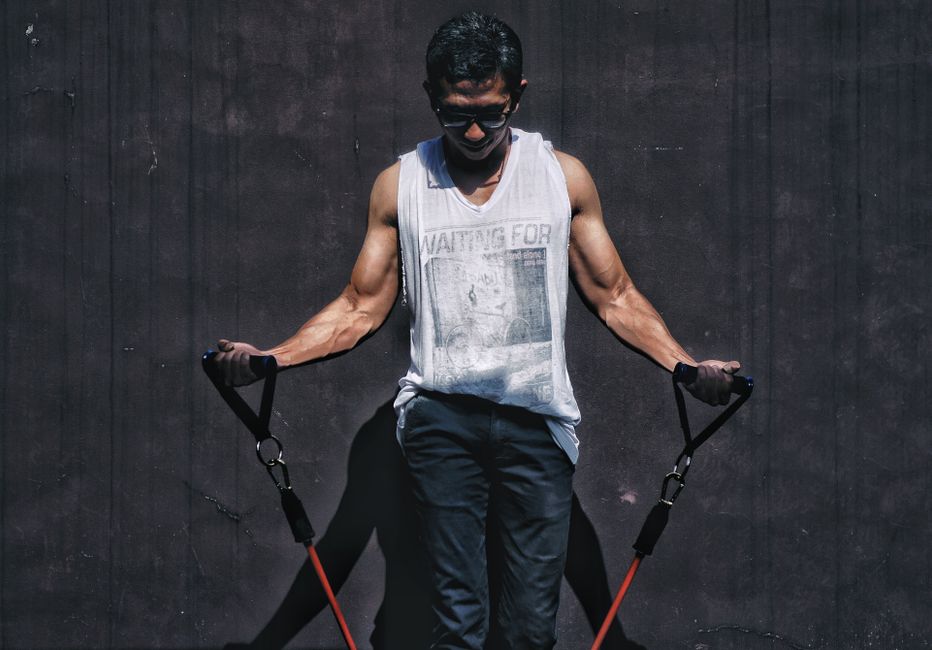
The biceps are the muscle most people notice when arms look firmer. A resistance band curl trains them without needing heavy dumbbells, and the smooth tension from the band works well for consistent training after 60. The band also lets you adjust how much resistance you’re working against, so you can dial in the right challenge for your current strength.
Perform 2 to 3 sets of 10 to 15 reps. You can sit down while doing seated band curls, or alternate arms with alternating band curls. A dumbbell curl is another option if you prefer the solid feel of weight in your hand. Strong biceps help you pull and carry things in daily life, and the visual payoff is what draws many people to arm training.
Chair Dips for the Back of the Arm
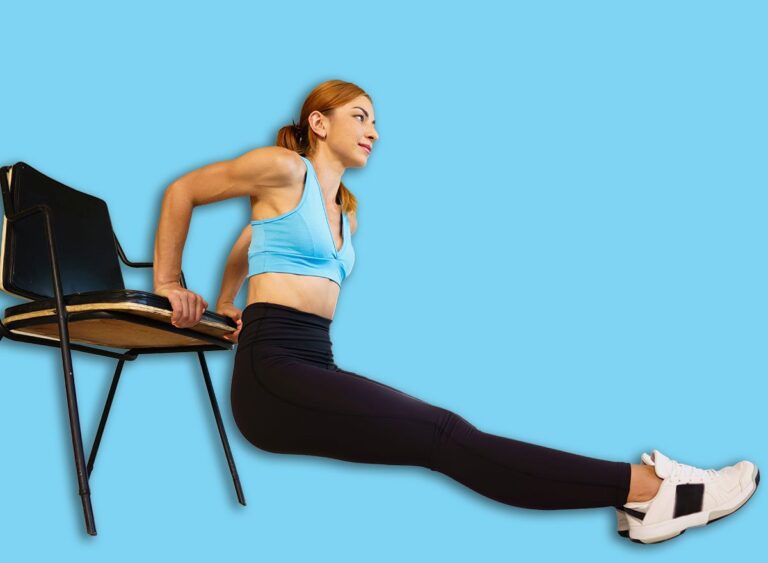
The triceps—the muscle on the back of your arm—makes up two-thirds of your arm mass. Chair dips target that area directly and build the pressing strength you use every time you push yourself up from a seat or support your body with your hands. This is why tricep training is non-negotiable for arm definition.
The form matters here. Keep your shoulders relaxed throughout and stop the dip before the front of your shoulder feels strained. You can reduce the range of motion to make it more comfortable, or bend your knees to lighten the load. Perform 2 to 3 sets of 6 to 10 reps. Close-grip incline push-ups are a variation if chair dips feel too intense at first.
Building Shoulder Definition and Upper-Body Balance
Incline Push-Ups for Triceps and Chest
The triceps work harder when you press your body weight away from a surface. Incline push-ups—done against a wall, counter, bench, or sturdy chair—give you that pressing stimulus while keeping the movement approachable compared to floor push-ups. Your chest, shoulders, and triceps all work together, which is why this exercise firms the arm from multiple angles.
You pick the incline that challenges you. A wall is easiest, a counter is moderate, and a lower bench or sturdy chair is harder. Do 2 to 3 sets of 8 to 12 reps. Slow push-ups—where you take two to three seconds to lower yourself—intensify the work without adding weight. Wall push-ups are the gentlest version if you’re building from very little upper-body strength.
Dumbbell Lateral Raises for Shoulder Shape
When your shoulders are stronger and more defined, your entire arm looks better. Dumbbell lateral raises isolate the shoulder muscle directly. Lift the dumbbells out to the side until your arms are parallel to the ground, then lower with control. Use light weights so the movement stays smooth instead of turning into a swing—this isn’t about how much weight you can lift, it’s about shaping the muscle.
Perform 2 to 3 sets of 10 to 12 reps. You can sit down to isolate the shoulders further, or raise one arm at a time. A resistance band lateral raise works if you don’t have dumbbells. Strong shoulders improve your reach and lift through the day, and they visually lift and define your upper arms.
Completing the Picture: Back Strength and Posture
Arm firmness improves when your back is strong. Good posture makes your arms look better naturally, and back training supports all the pressing work you do with the other exercises. Single-arm dumbbell rows train your upper back, biceps, shoulders, and grip all at once.
Pull your elbow back toward your ribs instead of lifting the weight straight up. This cue keeps the focus on your back rather than your shoulders. Do 2 to 3 sets of 8 to 12 reps per side. Band rows and supported dumbbell rows (resting one knee on a bench) are variations if you want to reduce the intensity. Lighter, higher-rep rows—say 3 sets of 12 to 15 reps—also work and take some strain off your joints.
Finishing Strong: The Standing Shoulder Press
The standing shoulder press ties together arm strength, shoulder power, and core stability. You press dumbbells overhead from shoulder height, which strengthens the shoulders and triceps while teaching your body to move with control under load. Your core keeps you steady, so this exercise builds functional strength across your entire upper body.
Keep your ribs down as you press so your lower back doesn’t arch. Perform 2 to 3 sets of 8 to 10 reps. You can sit down if standing feels unstable, or press one arm at a time. The alternating shoulder press—where you press one arm, lower it, then press the other—is a variation that works the core harder. This move finishes the routine by reinforcing everything the other exercises built.
Habits That Show the Results of Your Training
Arm definition comes from muscle, and muscle grows in response to training plus the conditions you create between sessions. Protein is essential—your muscles need it to repair and adapt after training. Enough total daily movement beyond your workout keeps your metabolism working and supports body composition. Recovery matters: sleep and rest days let your muscles actually rebuild stronger.
Keep the program the same for several weeks. Arm definition takes consistency more than novelty—the goal is to show up and repeat what works. When you add all three elements—controlled reps, regular protein intake, and steady daily movement—a home routine becomes very effective. You don’t need the gym or complex programming. You need intention, repetition, and time.
Frequently Asked Questions
How many sets and reps should I do for each exercise?
Most exercises call for 2 to 3 sets of 8 to 15 reps, depending on the movement. Chair dips use a lighter range of 2 to 3 sets of 6 to 10 reps to protect your shoulders.
What equipment do I need?
You need a resistance band, a pair of dumbbells you can control, and a sturdy chair. This minimal equipment is enough for a complete upper-body workout at home.
Why is back training important for arm firmness?
Strong back muscles improve posture, which makes your arms look better naturally. Back training also balances the pressing work from other exercises and improves your grip and overall arm strength.
