
Key takeaways
- A visible six-pack in 21 days requires more than core exercises alone—you need adequate muscle, low body fat, consistent nutrition, and daily movement for lasting results.
- Chair-based workouts keep abdominal training accessible and supported, making it easier to maintain proper form and control after age 60.
- Five core exercises—seated bicycle crunches, plank knee drives, straight-leg raises, cross-body marching, and shoulder taps—build strength through the upper, lower, and side midsection when performed 3–5 days per week.
- Walking daily and choosing foods that support fat loss over time multiply the effect of chair exercises far more than the movements alone can deliver.
Building visible abdominal muscles at any age takes more than ab exercises alone—it requires low body fat, consistent eating choices, regular movement, and adequate muscle throughout your core and lower body. Those factors compound over time. A 21-day window isn’t realistic for revealing a six-pack in most cases, especially after age 60, but three weeks gives you meaningful time to refine your habits, build your exercise routine, increase your daily movement, and develop better control over your abdominal muscles.
Realistic Expectations After 60
The appeal of a six-pack in 21 days lies in the deadline, but the real value of this timeframe exists elsewhere. Three weeks allows you to establish consistency, tighten your food choices, add more daily movement, and begin feeling your abs engage with improved awareness. You may not see dramatic changes in body composition by day 21, but you can build the foundation for a stronger, more defined midsection over the months ahead. Core strength improves faster than visible muscle definition does, which means you’ll notice your stomach feeling tighter and more supported well before the six-pack becomes visible.
Why a Chair Strengthens Your Routine
Seated and supported positions make abdominal training more accessible for adults over 60. From a chair, you can work your core against resistance while keeping your balance stable and your risk of injury low. If floor exercises bother your neck, back, or hips, chair positions offer the same muscle engagement without the strain. Your core still has to work hard—it’s supporting your body weight, managing the resistance of the movement, and controlling the motion from a supported position. This combination makes it easier to maintain proper form and sustain the effort required to build core strength.
Five Chair Exercises for Core Strength
Seated Bicycle Crunches
This movement recruits your upper abdominal muscles and obliques in the same motion. You rotate through your torso while lifting one knee, which trains the muscles that shape both the front and the sides of your waist. The seated position makes this exercise easier to manage compared to floor bicycle crunches, especially if you’ve had trouble with your neck, back, or hips during traditional versions. The key is to keep the rotation smooth and let your ab muscles drive the rep, rather than yanking from your neck or shoulders. Perform 2 to 3 sets of 8 to 12 reps per side. You can make the movement easier with a smaller range of motion, keep your hands across your chest instead of behind your head, or slow down the pace to feel the muscle working harder.
Plank Knee Drives
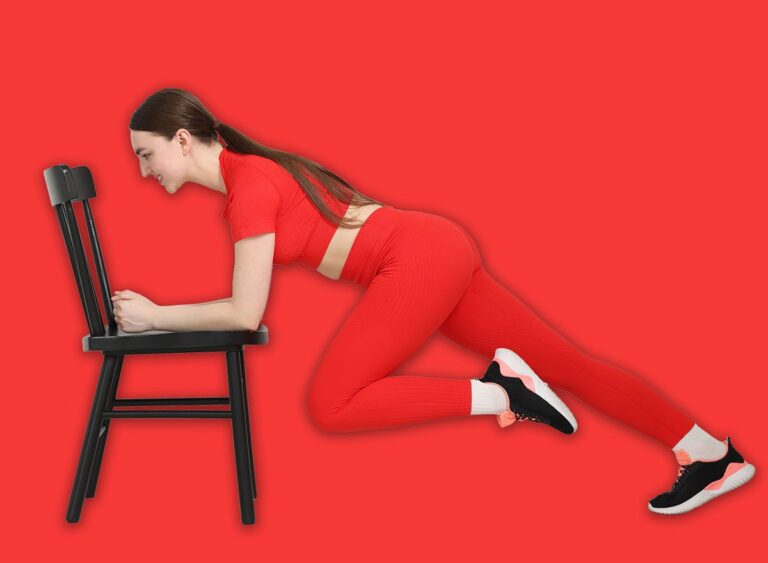
Unlike a simple seated crunch, this exercise demands that your core hold a plank position while you drive one knee toward your chest. Your hands rest on the chair seat to support your weight, and the challenge is keeping your body stable while generating force from your midsection. This targets the bracing strength that helps your stomach feel firmer and more supported throughout the day. It also brings more total effort into your workout, which helps the 21-day plan align with the kind of activity that supports fat loss. Perform 2 to 3 rounds of 20 to 30 seconds each. You can modify this by slowing down the knee drive, placing your hands higher on the chair seat, or driving your knee across your body instead of straight forward.
Straight-Leg Raises from the Chair
Lower abdominal work becomes more focused when your legs stay long and extended. In this exercise, you sit upright and lift one leg while keeping your torso steady—your core has to maintain stability while one leg raises and lowers with control. This builds strength through the lower midsection without requiring you to lie on the floor. Start with one leg at a time, and keep the lift small if your hip flexors fatigue quickly. Perform 2 to 3 sets of 8 to 10 reps per side. Variations include bending the knee to reduce difficulty, using a smaller range of motion, or alternating legs continuously instead of completing all reps on one side first.
Cross-Body Marching from the Chair
Getting visible abdominal definition requires more than isolated core work—it demands movement that burns significant energy throughout your workout. Hold the chair for balance, then drive one knee toward the opposite side of your body so your abs and obliques guide the motion. This works well in a 21-day routine because it feels simple enough to repeat multiple times while still raising your breathing and heart rate. Moving with a steady rhythm and keeping the knee drive controlled ensures you’re building strength rather than just going through the motions. Perform 3 to 5 rounds of 20 to 30 seconds. You can do this more slowly, use a smaller knee drive, or try the movement without holding the chair if you have good balance.
Shoulder Taps
This exercise builds core control for small side-to-side shifts in your body position. Every time one hand lifts off the chair, your abdominal muscles must resist the rotational force to keep your torso stable—that’s where the training happens. It serves as a strong finishing move for core goals because it trains your midsection to stay firm while your upper body moves independently. Move slowly and deliberately, placing each hand back down before lifting the next one. Perform 2 to 3 sets of 6 to 10 taps per side. Variations include placing your hands higher on the chair, slowing down further, or moving to a standard chair plank position without the tapping.
How to Use These Exercises
Use these five movements 3 to 5 days per week, spacing them throughout your training schedule to allow recovery. You don’t need to do all five in a single session—you can alternate between different exercises on different days, or perform them all together in one workout session. Start with the recommended sets and reps as a baseline, and increase difficulty through slower tempos, larger ranges of motion, or additional rounds as your strength improves. Rest about 45 to 60 seconds between sets if you’re doing them continuously.
Supporting Your 21-Day Goal
Chair exercises alone don’t produce a six-pack; they’re part of a larger system. Walk daily when possible to add low-impact movement to your routine and support fat loss. Choose foods that help lower body fat over time rather than cycling through restrictive diets. Eat protein with each meal to preserve muscle, include plenty of vegetables, and drink enough water throughout the day. These habits, combined with consistent chair work, create the conditions where ab definition becomes realistic over the weeks and months ahead. Think of the 21-day timeline as a strong beginning: better consistency, stronger reps, and core habits you can keep building on indefinitely.
Frequently Asked Questions
Can you get a visible six-pack in 21 days after age 60?
A visible six-pack in 21 days is difficult for most people, especially after age 60. Ab definition requires low body fat, adequate muscle, nutrition consistency, and time. However, 21 days is enough to build stronger core habits, tighten your food choices, move more daily, and develop better control of your abdominal muscles.
How many times per week should I do these chair exercises?
Perform these exercises 3 to 5 days per week. Combine them with daily walking and food choices that support fat loss for best results.
What makes chair exercises better than floor exercises for older adults?
Chair exercises keep your workout accessible and supported, which helps maintain control after age 60. They're especially useful if floor exercises bother your neck, back, or hips.
