
Key takeaways
- Dinosaur Bar-B-Que, Rudy's Bar-B-Q, Mission BBQ, City Barbeque, and Martin's Bar-B-Que Joint are five chains where diners consistently rank pulled pork and mac & cheese among the best available.
- Rudy's uses 100% oak-wood firing and Carolina-style vinegar-and-mustard seasoning, while Mission BBQ hand-pulls its pork and Martin's makes all sauces from scratch in-house.
- The best pulled pork and mac & cheese pairings succeed when sauce choice, meat texture, and side consistency complement rather than compete with each other.
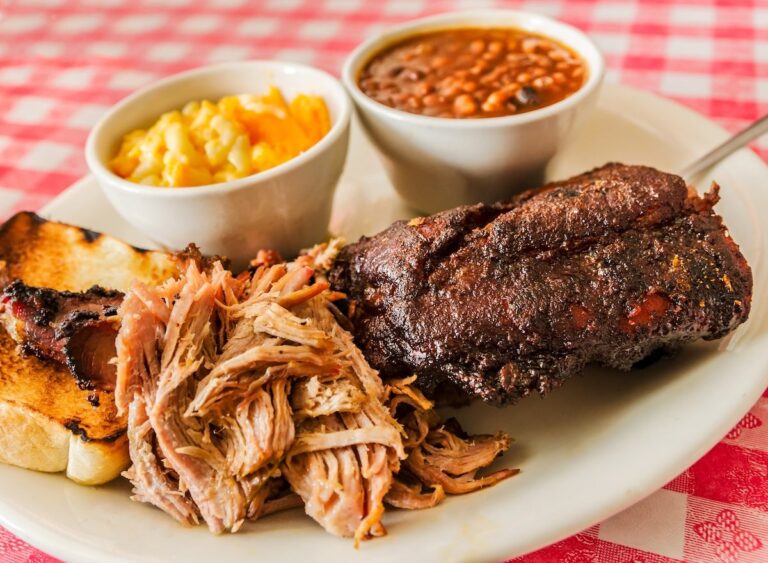
The combination of smoky, tender pulled pork with creamy, rich macaroni and cheese represents one of barbecue’s most satisfying pairings. When the meat’s savory juices and sauce blend into the cheese coating, each bite becomes deeper, more complex. The interplay between distinct components—one smoky and lean, the other rich and starchy—creates a plate where neither element overpowers the other. For diners seeking this specific combination, five chains have earned consistent recognition from customers for excellence in both the primary protein and its ideal complement.
What Makes Pulled Pork and Mac & Cheese a Winning Pairing
Complementary Flavors and Smoke Profiles
The appeal of pulled pork alongside macaroni and cheese lies in how their flavor profiles interact. Properly smoked pulled pork offers a tender structure that yields easily to a fork, while barbecue sauce—whether vinegar-based, mustard-forward, or thick and sweet—adds brightness or richness depending on the style. Creamy macaroni and cheese serves as a neutral canvas that absorbs surrounding flavors without overwhelming the meat’s smoke character. When portions share a plate, the sauce from the pork naturally migrates into the pasta, creating new flavor combinations with each bite. This interaction is intentional on many barbecue menus: sides are chosen specifically to enhance rather than compete with the main protein.
Texture and Temperature Contrast
The textural differences between hand-pulled meat and creamy pasta create eating variety across a single plate. Pulled pork’s strands offer resistance and chew, while macaroni and cheese’s coating provides a smooth, consistent mouthfeel. Temperature also matters: hot pulled pork entering the mouth while portions of macaroni remain warm or slightly cooled provides sensory contrast that keeps attention focused throughout the meal. This dynamic prevents fatigue that might come from eating a single texture repeatedly.
Dinosaur Bar-B-Que’s Perfectly Balanced Approach
Dinosaur Bar-B-Que has built its reputation on pulled pork that customers consistently praise for both cooking technique and seasoning balance. A Yelp reviewer captured what many diners report: “The pulled pork was cooked perfectly and seasoned perfectly. The mac-n-cheese was creamy and delicious.” The chain’s approach prioritizes balanced seasoning that doesn’t mask the meat’s natural smoke profile. Their macaroni and cheese arrives with a thick, coating consistency rather than soupy or dry extremes—the cheese clings to each piece of pasta, creating the creamy richness diners expect when pairing with pulled pork. This consistency allows the pork to remain the flavor focal point rather than competing with an overly assertive side.
Rudy’s Bar-B-Q’s Wood-Fired Methodology
Oak Smoking and Slower Burn Times
Rudy’s differentiates itself through deliberate choices in smoking methodology that extend far beyond basic meat selection. The chain’s website states: “Our pits are 100% wood fired with oak, a slower burning wood than the mesquite used by others. Along with time and oak, we cook with a dry spice that ensures each plate of Rudy’s Bar-B-Q is perfectly ready for you.” Oak’s slower burn produces a milder, sweeter smoke than mesquite, allowing extended cook times without the meat becoming overpowered by heavy smoke flavor. The dry spice rub approach means seasoning penetrates the meat during the cook rather than accumulating only on the surface.
Carolina-Style Preparation with Vinegar and Mustard
The Carolina-style preparation Rudy’s employs uses vinegar and mustard as primary seasonings rather than thick, sweet sauces typical of other regional styles. A customer’s Yelp review detailed the result: “I got a quarter pound of pulled pork which was super moist and done in a Carolina style with a bit of mustard and vinegar.” This lighter sauce approach allows macaroni and cheese—which already carries cream and cheese richness—to take a more prominent role on the plate without creating an overly heavy combination. The vinegar’s acidity also cuts through dairy fat, preventing the meal from becoming cloying across multiple bites.
Mission BBQ’s Hand-Pulled Technique
Mission BBQ emphasizes hand-pulled rather than shredded pork, a distinction that affects both texture and how the meat absorbs sauce during cooking and plating. The chain’s slow-cooking method produces pork with distinct, tender strands rather than uniform particles that might compress under the weight of macaroni and cheese on a shared plate. Paired with their creamy macaroni and cheese, this textural contrast keeps each bite interesting. A Yelp reviewer described the overall experience: “The food was outstanding and the sauces [were] a nice touch. Topped off the sampler with brisket, pulled pork, and sliced turkey with a banana cobbler. Highly recommend.” The mention of multiple proteins available on a single sampler and a banana cobbler dessert suggests Mission BBQ’s sides and accompaniments receive as much attention as the primary meat offerings.
City Barbeque’s Customizable Sauce Strategy
City Barbeque distinguishes itself by offering sauce choices alongside pulled pork orders, allowing individual diners to customize the level of acidity or sweetness to their preference. Their vinegar-forward option provides a bright counterpoint to creamy sides, while thicker sauces create richer flavor blending with the macaroni and cheese. According to a Yelp reviewer: “My pulled pork with the vinegar sauce was so good. I’d definitely give this place a visit if you’re looking for solid bbq in the area!” The chain’s macaroni and cheese stands out among their available sides—a distinction made explicit on their menu positioning—suggesting it receives treatment equal to their smoked proteins rather than being prepared as a secondary accompaniment. This positioning in the menu hierarchy often correlates with kitchen consistency and ingredient quality.
Martin’s Bar-B-Que Joint’s From-Scratch Production
Martin’s Bar-B-Que Joint builds its identity on in-house preparation of every component, including their barbecue sauces. This from-scratch approach means ingredient selection and timing remain under direct control rather than relying on pre-made bases or outsourced preparation. The attention to this detail extends across both the pulled pork and accompanying sides. A Yelp reviewer summarized the cumulative effect: “I love pulled pork and Martin’s has some of the best. I got the sandwich which was just delicious. All the sides were really good and the atmosphere was great.” The reviewer’s specific praise for “all the sides”—not simply highlighting the macaroni and cheese alone—indicates Martin’s maintains consistent quality and technique across their entire plate rather than concentrating effort on a single component.
Evaluating Your Pulled Pork and Mac & Cheese Experience
When visiting any of these five chains, ordering pulled pork alongside macaroni and cheese creates a complete meal where both components enhance each other. The sauce choice significantly affects the experience: vinegar and mustard-based preparations keep the plate lighter and prevent flavor monotony, while thicker, sweeter sauces create richer flavor interactions across the plate. Portion size also influences the outcome—a quarter pound of pulled pork, as served at Rudy’s, provides substantial flavor without overwhelming the macaroni. The amount of sauce applied to the meat determines how much liquid transfers to the macaroni during eating. Each of these five chains has mastered this pairing through different methods: Dinosaur Bar-B-Que through consistent execution and balanced seasoning, Rudy’s through deliberate oak-smoking and dry spice rubs, Mission BBQ through hand-pulled texture and diverse sampler options, City Barbeque through sauce flexibility, and Martin’s through from-scratch preparation and side-dish consistency.
Frequently Asked Questions
What makes Rudy's Bar-B-Q's pulled pork different from other chains?
Rudy's uses 100% wood-fired pits with oak—a slower burning wood than mesquite—combined with a dry spice rub. A quarter pound of their pulled pork is prepared Carolina-style with mustard and vinegar rather than thick sauce.
Which chain makes their sauces from scratch?
Martin's Bar-B-Que Joint makes everything from scratch, including all their barbecue sauces. According to a Yelp reviewer, this attention to detail shows across all their sides, not just the pulled pork.
Does Mission BBQ hand-pull or shred their pork?
Mission BBQ uses a hand-pulled technique, which produces distinct, tender strands that create better texture contrast when paired with creamy macaroni and cheese compared to shredded pork.
