
Key takeaways
- Five daily exercises under 10 minutes address the specific postural damage from years of sitting more efficiently than general yoga classes.
- Morning stiffness and easier transitions from chair to standing arrive within 1-2 weeks of daily practice.
- Deeper postural changes and steadier balance appear by 6-8 weeks, though some tissue damage from sitting cannot be fully reversed.
- Breaking movements throughout the day in short bursts produces better adherence than a single weekly session.
After 65, the accumulated impact of sedentary life shows up as a specific cluster of physical problems. A personal trainer with four decades of experience and 25 years directing TRAINFITNESS, the UK’s primary provider of in-person and online personal training instruction, has observed this pattern repeatedly: sitting for a decade locks the front of the hips, weakens the glutes, rounds the shoulders forward, and leaves the lower back to compensate for everything else.
The good news is that five targeted movements, each performed at home and taking under 10 minutes total, can reverse most of this damage. What makes them faster than yoga is not the movements themselves, but their specificity. Targeted work addresses the exact damage from sitting, while general fitness routines cover a broader range. There’s also the practical advantage that you can do these movements in your slippers without a commute.
The Physical Shape Sitting Creates
Sitting for hours daily does more than feel restrictive. It actually resets what the body considers its normal shape. The hip flexors, the muscles across the front of the hip, spend hours shortened as you sit. Over a decade, they adapt to that shortened length as the body’s default position. Standing tall, which requires those muscles to lengthen fully, starts to feel like effort. The hamstrings, the muscles along the back of the thigh, also shorten from the sitting position. Meanwhile, the glutes, which should power standing and walking movements, essentially disengage. The body stops recruiting them for daily activities.
What Happens at the Shoulders and Chest
Years spent hunched over a desk, steering wheel, or book create another set of changes. The chest muscles shorten from this forward position, while the shoulders roll inward. Once that postural pattern sets in, standing tall becomes physically difficult because the muscles themselves prevent upright posture. No amount of willpower changes this. The tissue has adapted to the slumped position.
The Lower Back Consequence
The lower back typically becomes the first area to hurt, and not because it’s weak in isolation. Instead, tight hips and disabled glutes force the lower back to do work those areas should handle. This appears first thing in the morning, after sitting in a car, or whenever the body transitions from stillness to activity.
How Balance and Confidence Connect to Posture
Stiff hips and weak glutes shorten the walking stride and make even small wobbles feel alarming. This creates a self-reinforcing loop: as movement becomes uncomfortable, people avoid it, which makes the stiffness and weakness worse. The cycle is harder to break than the original sitting because now fear is part of the equation. Most people blame turning 65 for these changes without realizing they are the direct result of a decade mostly in a chair.
Why These Exercises Outpace Yoga for Sitting Damage
The expert consulted by Eat This Not That does not discourage yoga. Many clients benefit from classes. But yoga is designed to be general. A typical class touches many areas of the body and builds broad flexibility and calm. When you are recovering from a decade of specific postural damage, you spend time on poses that don’t address your actual limitations. The intensity is also difficult to judge when starting from extreme stiffness. Yoga helps broadly; targeted work solves the narrow problem you came in with.
Frequency Beats Class Schedules
Getting to a yoga class requires travel, parking, a specific time slot, paying a fee, and walking into a room with strangers. Any one of those barriers can prevent attendance. Exercises you can perform in three minutes at your kitchen counter, in slippers, get done every day. A daily five-minute session outperforms a weekly hour-long class within a few weeks because consistency and frequency are where the speed comes from. Most people underestimate how much a ten-minute daily habit changes the body compared to a weekly activity.
The Five Core Movements
These exercises take approximately 10 minutes when done in sequence. The expert recommends doing them daily, and they require no equipment, no gym, and no special clothing. None of them overload the joints, so rest days are unnecessary.
Stretching the Hips and Hamstrings
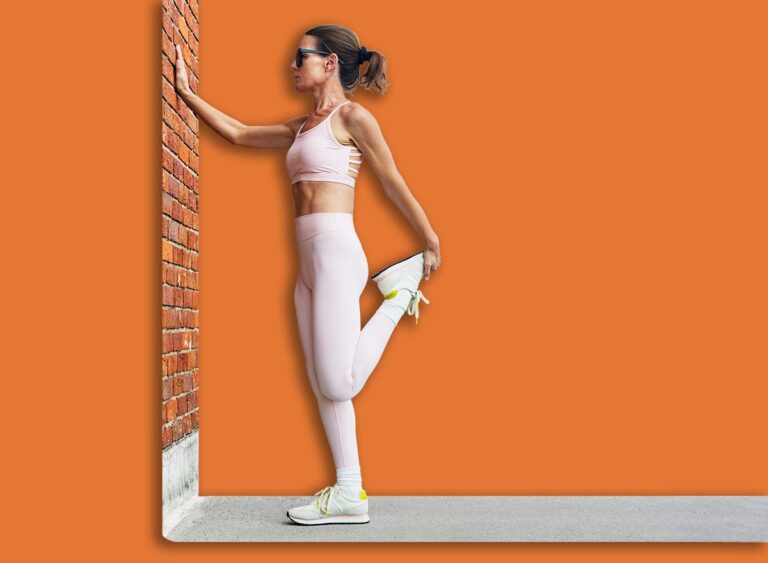
The hip flexor stretch lengthens the shortened muscles at the front of the hip. To perform it correctly, keep the knees close together and the tailbone slightly tucked under. This positioning ensures the stretch stays in the right location rather than spreading to the lower back. The hamstring stretch addresses the back of the thigh by hinging from the hips with a flat back. Keep the chest lifted and stop as soon as you feel the stretch. Do not force range you don’t yet have. Both stretches restore the length the body lost to sitting.
Activating the Glutes and Improving Circulation
Prone leg lifts wake up the glutes by lifting one leg at a time from a face-down position. Perform 10 lifts on each leg, resting as needed. The key is making the effort come from a squeeze in the buttock rather than from the lower back. If your back starts to do the work, lower the leg and reduce the height. This exercise directly reverses the glute shutdown that sitting creates. Marching on the spot accomplishes several things at once: it gets the blood moving after hours in a chair, mobilizes the hips through their full range, and trains balance. Complete 20 total marches, resting whenever needed. Stay tall, lift each knee with control, and prioritize quality of movement over the height you can achieve.
Opening the Chest and Shoulders
The chest opener addresses the shortened chest muscles and rounded shoulders. Ease into the position, keep the shoulder down, and allow the stretch to deepen over the full hold. This single movement lets the shoulders sit back where they belong and makes standing tall feel possible again.
How to Actually Build the Habit
The expert recommends breaking the five exercises across the day rather than doing them as one block. Short bursts spread through your morning, afternoon, and evening fit more easily into daily life and produce better adherence than one consolidated session. Alongside these movements, add another habit: stand up and move for a couple of minutes every 30 to 45 minutes of sitting. Use a kitchen timer or the advertisement breaks on television as reminders. This prevents the hips from tightening back up between sessions and keeps circulation moving through the legs.
If a daily pattern does not suit your life, a weekly structure also works. Perform the stretches most days and the prone leg lifts and marching three to five days per week. The important point is avoiding an all-or-nothing mindset. On a difficult week, three minutes is still worthwhile. The routine you maintain will always outperform the routine you abandon.
What Changes in the First Weeks and Beyond
The first one to two weeks of consistent daily practice bring mostly functional ease. Morning stiffness becomes manageable, getting out of a chair feels smoother, and the first steps of the day hurt less. These changes come from circulation improving and muscles waking back up. They arrive quickly when you are doing the movements most days.
By six to eight weeks, deeper changes appear. The hips and lower back feel looser, standing tall requires less effort because the muscles at the front and back are sharing the load again, and balance feels steadier on stairs and uneven ground. This is also when family members or friends may comment that you look taller, or you notice your posture improvement in photographs.
What Remains Beyond Reversal
A decade of sitting cannot be fully undone by these five exercises or any other method. Some of the tissue shortening and joint wear is permanent. But most of the stiffness and weakness that sitting creates does reverse with consistency. That part of the process is far more under your control than most people realize. These movements only continue working while you keep doing them, because sitting remains part of daily life. Do them most days and keep standing up regularly throughout the day, and you will hold the gains for years rather than weeks.
Source: Eat This Not That
Frequently Asked Questions
Can yoga accomplish the same results as these targeted exercises?
According to the expert consulted by Eat This Not That, yoga builds strength and flexibility broadly but addresses general fitness needs. These exercises target the specific damage from sitting—shortened hip flexors, weak glutes, and tightened chest muscles—more directly and work better at home without travel or scheduling barriers.
How long before I see improvements?
Morning stiffness and easier transitions from sitting to standing arrive within 1-2 weeks of daily practice. By 6-8 weeks, posture visibly improves in photographs and others may comment that you look taller. The deeper changes appear once muscles have adapted and are sharing physical loads correctly again.
Do I need to do all five exercises every single day?
The expert recommends daily practice for fastest results, but a weekly pattern works too: stretches most days and the leg lifts and marching 3-5 days per week. Consistency matters more than perfection. Even three minutes on a difficult week is worthwhile, because the routine you actually follow beats the one you abandon.
