
Key takeaways
- Perry's 16-ounce prime rib in Austin earns the 'KING' designation from diners who value caramelization, proper resting, and medium-temperature doneness.
- Lawry's The Prime Rib has maintained tableside carving since 1938, a ceremony that reassures diners about quality while transforming dinner into theater.
- Black Angus's dry rub seasoning and careful roasting produce prime rib so tender it remains succulent when refrigerated and reheated overnight.
- Texas Roadhouse prices prime rib at $30 with overnight slow-cooking that builds 'bark' incrementally, available any night—not just weekends—for consistency.
Prime rib represents the ultimate steakhouse indulgence—a cut that demands skill and patience from the kitchen, transforming simple beef into something transcendent. When diners seek this centerpiece dish, they’re looking for more than protein: they want the ritual, the quality, and that perfect pink center wrapped in a caramelized crust. Not all chain steakhouses execute prime rib equally, which is why we surveyed diners across the country to identify which establishments have truly mastered this complex preparation.
Perry’s Steakhouse & Grille: The Austin Standard
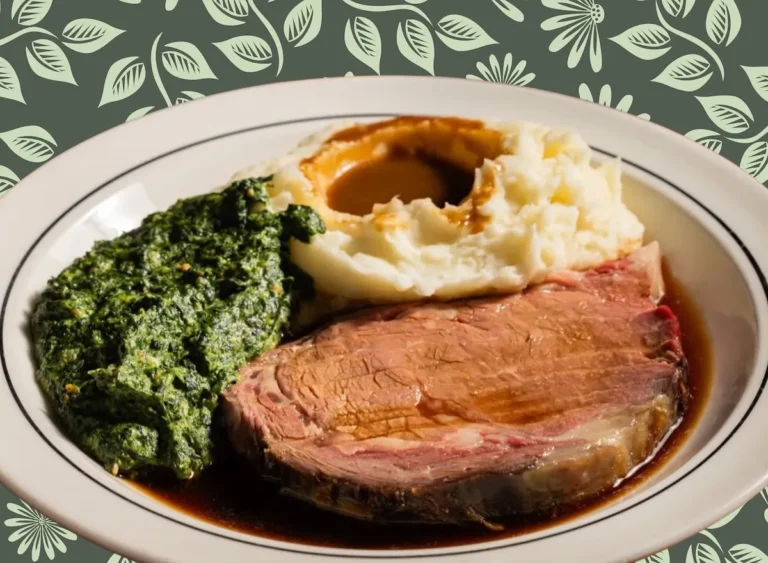
Perry’s Steakhouse & Grille in Austin has built a reputation for prime rib that locals rank among the finest in the city. The restaurant offers a dedicated Prime Rib Dinner on Thursdays, turning what could be a casual weeknight into an event. One longtime customer described their 16-ounce prime rib as “the ‘KING’ of steaks here in Austin,” emphasizing how the kitchen executes the fundamentals flawlessly. The diner recalled a recent visit where they ordered the medium-cooked cut, noting that the meat “was caramelized and cooked to a perfect medium” and “rested properly, it lost not a bit of moisture to the plate.” That attention to resting—allowing the juices to redistribute after cooking—separates competent steakhouses from exceptional ones. The fact that this diner was willing to “splurge” and travel specifically to Perry’s alongside a concert venue visit speaks to how the restaurant anchors the dining experience in downtown Austin.
How Perry’s Executes the Cut
The 16-ounce portion size gives diners enough meat to savor without overwhelming the plate. Medium temperature is the sweet spot for prime rib: hot enough to develop that caramelized exterior, but cool enough at the center to showcase the beef’s natural juiciness. When a steakhouse respects the resting phase, the muscle fibers relax and reabsorb their moisture, preventing the plate from pooling with lost liquid—a sign of either overcooking or skipping the rest entirely.
Lawry’s The Prime Rib: Historic Tableside Carving
Lawry’s The Prime Rib operates in a category of its own among American steakhouse chains, not because of gimmickry, but because of unwavering consistency over nearly nine decades. The restaurant has been serving prime rib since 1938, a span that encompasses massive shifts in dining trends, ingredient sourcing, and restaurant design. Yet Lawry’s has chosen preservation over reinvention. The tableside carving ritual, where servers wheel gleaming stainless steel carts to each table and slice prime rib directly in front of the diner, transforms dinner into theater. One longtime patron captured the appeal perfectly: “There is something genuinely moving about walking into a room that hasn’t tried to reinvent itself in that time and doesn’t need to. The dark wood, the curved booths, the servers in vintage-style uniforms, the gleaming stainless steel carts that roll to your table carrying slow-roasted prime rib. It is theater in the best and most unfussy way possible.”
Why The Ceremony Matters
The ceremony of tableside carving does more than entertain: it reassures the diner. Watching the server slice the beef at your table confirms its quality and doneness. You see the pink center, the caramelized edges, and the server’s skill as they cut against the grain. This transparency is something no closed kitchen can replicate. The vintage aesthetic—dark wood, curved booths, uniforms that wouldn’t look out of place in the 1950s—creates continuity across the decades. Diners return not despite the lack of modern updates, but because of it.
Black Angus: Dry-Rubbed Excellence and Lasting Tenderness
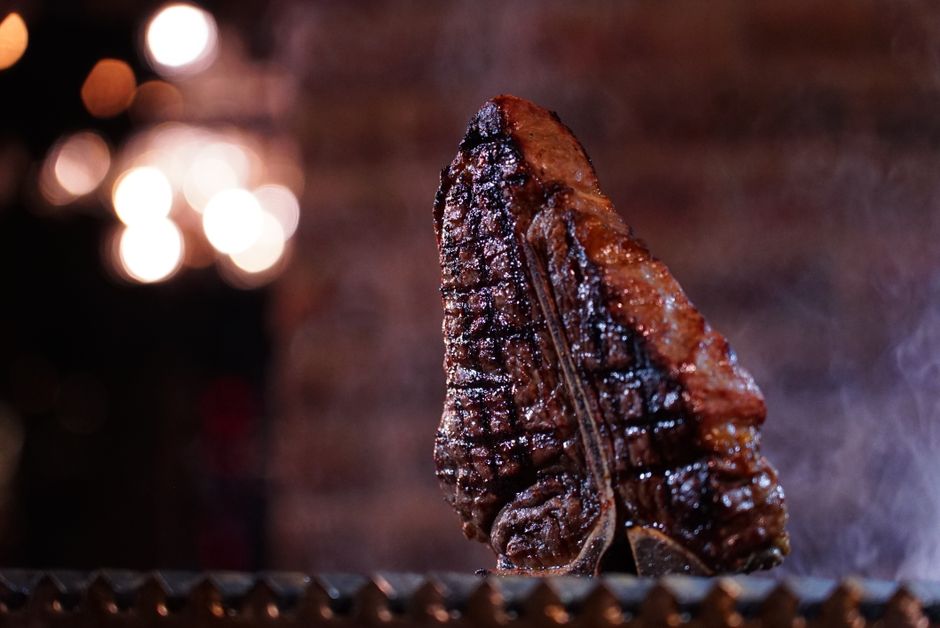
Black Angus differentiates its prime rib through a dry rub seasoning strategy and careful searing and roasting. One customer reported ordering prime rib alongside a companion, both ordering the same cut: “We both ordered prime rib and it was so tender. I had leftovers and the prime rib was still tender the next day.” This observation matters more than it initially appears. Most beef, when refrigerated overnight, tightens and can become chewy as residual heat escapes and muscle fibers contract. The fact that this diner’s leftover remained tender points to either superior meat quality, precise cooking temperature, or both. Black Angus appears to achieve what many steakhouses struggle with: a cut that survives reheating without sacrificing texture.
The Dry Rub Advantage
Dry rub seasoning—typically salt, pepper, and spices applied directly to the meat’s surface before cooking—creates a concentrated, savory crust. Unlike marinades or wet preparations, dry rub doesn’t penetrate the meat but rather clings to the surface, intensifying the crust’s flavor and texture during the searing phase. This approach highlights the beef itself rather than masking it, allowing the prime rib’s natural fattiness and umami to remain the star.
Texas Roadhouse: Value and Overnight Slow Cooking
Texas Roadhouse prices its prime rib dinner at $30, a figure that resonates differently depending on where you live and when you visit. One diner noted the value proposition directly: “Their Prime Rib dinner for $30 all of a sudden is a terrific value now that beef prices have skyrocketed almost everywhere else.” This comment anchors itself in real market conditions—beef prices have indeed risen sharply in recent years, making reasonably priced prime rib a rarity. The diner continued, describing the cut as “succulent, tender, slow cooked overnight with that perfect ‘bark’ on the edge of the beef.”
The “bark” refers to the dark, crusty exterior that forms during slow cooking, particularly when the beef is left uncovered or partially uncovered in the oven for extended periods. Texas Roadhouse’s overnight slow-cooking method builds this bark incrementally, layer by layer, creating flavor complexity that can’t be rushed. Unlike restaurants that sear prime rib hard and fast to create a crust, overnight slow cooking develops a more subtle, layered bark that protects the meat while it transforms.
Why Availability Matters
Texas Roadhouse offers prime rib any night of the week, not just on weekends or special occasions. This accessibility removes the scarcity marketing that other chains employ, instead betting on consistent quality and competitive pricing to drive orders. The same diner emphasized: “I’ve eaten prime rib in many restaurants across the USA…and the prime rib at Texas Roadhouse is consistently first rate. And you can get it any night – not just on a Saturday.” Consistency—the ability to walk in on a Tuesday and receive the same level of execution as Saturday—is a hallmark of mature, well-trained restaurant operations.
J. Alexander’s Kitchen & Bar: 16 Ounces and Legendary Sides
J. Alexander’s Kitchen & Bar offers a 16-ounce Slow-Roasted Prime Rib that has attracted loyal diners for decades. One customer reported: “I asked about the best prime rib dinner and thanks to everyone who recommended J Alexander restaurant!!! The prime rib was delicious!!” Another diner revealed the deeper loyalty: “That has been my go to place for prime rib for 20 years. The fries are also the best.” The 20-year tenure reveals that J. Alexander’s prime rib isn’t a novelty or marketing gimmick—it’s a destination dish worthy of repeated visits across two decades. The unsolicited praise of the fries indicates that the restaurant thinks holistically about the plate, not just the protein.
Why These Five Steakhouses Excel
Prime rib success at the chain level requires discipline in meat selection, precision in cooking temperature, and respect for the resting phase. Perry’s executes the 16-ounce cut with caramelization and proper rest. Lawry’s grounds its prime rib in a ritual that elevates every visit. Black Angus builds a product that survives overnight storage without sacrificing texture. Texas Roadhouse demonstrates that quality prime rib doesn’t require luxury pricing or scarcity marketing. J. Alexander’s has earned three decades of loyalty by treating prime rib as a signature dish rather than an occasional special. Diners seeking prime rib at a chain steakhouse will find success at any of these five, each offering a distinct approach to the same fundamental challenge: cooking a large cut of beef to tenderness, developing a proper crust, and serving it at the precise moment when it will shine.
Frequently Asked Questions
What is prime rib 'bark' and why does it matter?
Bark is the dark, crusty exterior that forms during slow cooking, particularly with overnight methods. It develops layer by layer, creating flavor complexity while protecting the meat inside and preventing moisture loss.
Why does resting prime rib after cooking matter?
Resting allows muscle fibers to relax and reabsorb moisture, preventing the plate from pooling with lost liquid and keeping the meat tender. Steakhouses that respect this phase deliver noticeably better results.
Which chain offers prime rib at the most accessible price point?
Texas Roadhouse serves a 16-ounce prime rib dinner for $30, with one diner noting the value given recent beef price increases across the market.
