
Key takeaways
- Seven major restaurant chains—White Castle (1921), Big Boy (1936), Friendly's (1935), In-N-Out (1949), Norms (1949), Waffle House (1955), and Cracker Barrel (1969)—have refused to modernize their menus or décor over the past 50+ years.
- Diners consistently praise these chains for authenticity and consistency, describing experiences of 'stepping back in time' and appreciating unchanged quality in everything from sliders to sundaes.
- Reliability has become a competitive advantage: unchanged pricing, portion sizes, and menus attract customers—especially older adults and regulars—who value predictability over trends.
- Cracker Barrel's brief attempt at modernization backfired with customers, proving that chains' true value lies in consistency with their original identity, not innovation.
The restaurant industry constantly chases the next trend—upscale casual, fast-casual, farm-to-table concepts. Yet a small group of established chains has rejected the urge to reinvent itself, instead holding firm to proven formulas that have delighted customers for half a century or longer. These restaurants represent a different philosophy: consistency, authenticity, and the belief that a great menu and genuine hospitality need no modernizing.
The Enduring Appeal of Vintage Dining Experiences
What draws people back to restaurants that seem frozen in time? Nostalgia plays a role, but diners identify something deeper: reliability and authenticity. In an era where many beloved chains have chased profitability through radical menu overhauls or rebranding, these seven restaurants have held their ground. They understand that their customers return not for novelty, but for the promise that the next visit will feel like the ones that came before.
Why Diners Crave Stability in a Changing Industry
Chain restaurants typically struggle with a choice: evolve to stay relevant or risk becoming outdated. These seven have bet on a third path—staying true to their core identity. Customers notice the difference. Diners consistently praise the comfortable familiarity: menus unchanged in decades, décor that transports them to another era, and service that prioritizes substance over flash.
The Distinction Between Nostalgia and False Retro
There is an important difference between genuine vintage establishments and restaurants playing at being retro. The chains discussed here are the real thing—they never left the past; they’ve simply refused to chase the present. This authenticity resonates powerfully with diners who have experienced countless restaurant closures, rebrands, and quality declines at their favorite spots.
Early Pioneers: White Castle, Big Boy, and Friendly’s
Three of America’s longest-standing chains established the template for consistent, no-frills dining and have never deviated from it.
White Castle, which began serving sliders in 1921, remains virtually unchanged. One diner noted the simplicity of the appeal: “It’s been awhile since I have had a slider. They didn’t disappoint. They taste the same as before.” The chain’s square sliders, its limited menu, and its casual service model have outlasted hundreds of competitors. The focus on a single, well-executed product—the slider itself—means there’s nothing to fix, nothing to improve, nothing to ruin.
Big Boy, founded by Bob Wian in 1936, has maintained its vintage charm with equal conviction. Visitors describe stepping into a time capsule. One fan elaborated: “This is the perfect place to step back in time and relive the charm of the classic era from the 1940s to the 1960s. From vintage-inspired menus to old-fashioned milkshakes, the atmosphere captures the nostalgic spirit beautifully.” The chain’s commitment to mid-century aesthetics—from décor to menu design—creates an experience that newer restaurants spend millions trying to replicate artificially.
Friendly’s, operating since 1935, follows the same principle with an emphasis on ice cream and diner staples. The chain retained “that delightful old-school logo full of vintage charm,” according to one returning customer who described the experience as “stepping back in time. The sundae did not disappoint. It was delicious.” For a customer base that may not have access to a Friendly’s location for years, the consistency becomes the entire point of the visit.

West Coast Icons: In-N-Out and Norms
California produced two enduring chains that became synonymous with regional identity and consistency.
In-N-Out, which opened its first location in 1949, has become shorthand for California burger excellence. The chain maintained its recognizable red-and-white color scheme across decades and never diverged from its core offering: simple, fresh burgers at reasonable prices. One customer captured the appeal: “The food was fresh, tasty, and exactly what you want from a classic California burger experience. The quality for the price is honestly incredible — one of the best value spots I’ve tried in LA.” This combination of quality and affordability, held constant across 75 years, remains rare in the restaurant industry.
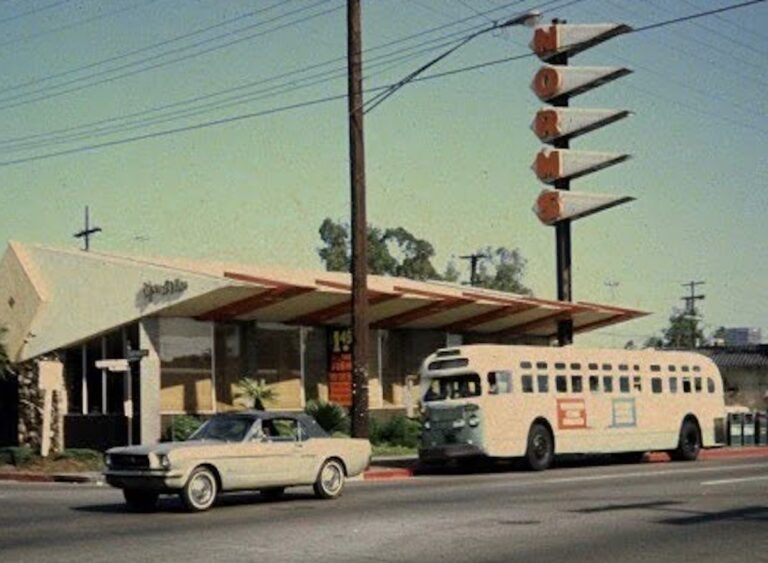
Norms, the Los Angeles diner founded in 1949, exemplifies the Googie architectural style that defined mid-century Southern California. The chain preserved what one fan called “an original ‘Googie’ coffee shop experience” with “Friendly service, great food, fun energy.” The neon signage, the open kitchen, the checkered floor—these elements that were modern in 1949 became historical artifacts precisely because Norms never updated them. That preservation is now the chain’s greatest asset.
The Southern Standard: Waffle House
Waffle House, established in 1955, occupies a unique position in American dining. The chain’s unpolished authenticity became its defining feature. One diner described the experience vividly: “This was a truly authentic gastronomic experience that looks exactly like what we’ve seen in classic American movies! From the very beginning, I really loved the fact that there were no tourists inside — only locals. It was fascinating to observe and gave me a sense of real, unpolished everyday American life. It felt like I was in a real roadside diner with a relaxed and very cozy atmosphere.”
The Waffle House experience isn’t designed for Instagram or marketing campaigns. The yellow awning, the visible kitchen, the utilitarian tables—everything about the format signals that the restaurant hasn’t bent to contemporary expectations of casual dining. This integrity has made it iconic.
The Holdout: Cracker Barrel’s Return to Form
Cracker Barrel, founded in 1969, had a different arc. The chain experimented briefly with modernity—a departure that diners noticed and disliked. Yet management reversed course, recommitting to the rustic country aesthetic that had built the brand. One customer described the result: “The menu has that classic home-style feel, nothing fancy but everything is warm and filling. The store part is kinda fun to walk through too, gives it a unique vibe you don’t really get at most restaurants.”
Cracker Barrel’s brief detour into contemporary design reinforced what its customers already knew: the chain’s true value lay in consistency, not innovation. By returning to its roots, Cracker Barrel proved that even late-stage course corrections can work if they honor the original identity.
What Consistency Delivers That Novelty Cannot
Reliability as a Competitive Advantage
These seven chains share a fundamental insight: a restaurant doesn’t need to change to remain relevant. Their pricing holds steady. Their portion sizes remain consistent. The same dishes appear on the menu year after year. This reliability appeals particularly to older adults and regular customers who value predictability.
The Enduring Trust Between Chain and Customer
In an industry obsessed with differentiation and trendiness, these restaurants represent an alternative: be really good at one thing, maintain that quality, and trust that reliability itself becomes a competitive advantage. Their diners return not for surprises, but for the certainty that the experience will be exactly as they remember it.
Frequently Asked Questions
Which of these restaurant chains has been operating the longest?
White Castle, founded in 1921, is the oldest chain mentioned, serving square sliders for over a century with the same recipe and unchanged appeal.
What do diners specifically say they appreciate about these unchanged chains?
Customers praise their authenticity and consistency—describing 'stepping back in time,' enjoying unchanged quality in burgers and sundaes, and valuing the unpolished, genuine atmosphere over trendy restaurant designs.
Why did Cracker Barrel's attempt to modernize fail with customers?
The chain's brief departure from its rustic country aesthetic was unpopular with diners, prompting management to return to its original 'classic home-style feel' that customers valued more than contemporary updates.
