

Key takeaways
- Four standing strength exercises—sit-to-stand squats, wall push-ups, doorway rows, and overhead presses—rebuild leg, upper body, and grip strength without impact or floor work.
- Most women notice improved steadiness within two weeks and can perform 30–50% more reps within eight to twelve weeks of consistent training.
- Two sessions per week of 15–20 minutes each, paired with four walks, creates the ideal program for strength gains and maintained independence after 60.
The ability to move independently into your 80s depends more on strength than almost any other single factor. As a personal trainer with forty years of experience and co-founder of TRAINFITNESS, I’ve seen how four strength movements—done consistently without jumps or floor work—can rebuild lost capability more effectively than most women realize.
The Four Strength Challenges Women Face After 60
Strength doesn’t decline uniformly. There are four distinct areas where women over sixty lose capability, each with its own solution.
Leg and Glute Loss Starts Earlier Than You Think
The decline of leg and glute strength begins in the 40s and accelerates dramatically around menopause. By sixty, most women have surrendered 15 to 20 percent of the muscle mass they held at forty. The practical consequence isn’t abstract—it’s the struggle to rise from a chair, the caution climbing stairs, or the newfound difficulty getting up off the floor. Each of these movements comes to require effort that used to be automatic.
Upper Body Weakness Goes Largely Untrained
Women were frequently discouraged from heavy lifting, so by sixty, the shoulders, chest, and back have rarely been meaningfully trained. This gap surfaces in everyday demands: carrying groceries, opening jars, lifting a grandchild. Tasks that once were automatic become challenging.
Grip Strength Is One of Your Strongest Health Predictors
Grip strength is among the most reliable indicators of overall health and longevity in this age group. Women over sixty have typically lost 30 percent or more of their grip strength compared to their 30s, and most have done nothing to slow that decline. Weak grip correlates with shorter life expectancy, higher fall risk, and reduced independence.
Bone Density Depends on Muscular Demand
Muscle and bone are linked intimately. Muscles that don’t pull hard on bones send no signal for bones to stay dense. The remedy is the same as for muscle loss: regular, meaningful resistance.
Why Standing Strength Work Beats Jumping and Floor Routines
Impact work does produce rapid strength gains, but the joint cost is substantial for women over sixty. Knees, hips, and ankles that haven’t absorbed impact in decades don’t respond well to sudden introduction. The injury risk is higher than most articles acknowledge.
The Joint Cost of Impact Work
Decades without repetitive impact means the soft tissues aren’t adapted to handle it. Introducing jumping into a routine for a 65-year-old carries real risk of aggravating knees, hips, or ankles that were stable precisely because they weren’t being jumped on. Recovery from a joint injury at this stage of life can derail months of progress.
The Problem With Floor-Based Strength Training
Floor work—push-ups, planks, and exercises performed lying down—requires getting to the floor and back up. For many women over sixty, that transition consumes more energy than the exercise itself. For those with knee, hip, or balance concerns, floor work becomes something to avoid entirely, and the psychological barrier to starting is often insurmountable.
Why Standing and Seated Movements Work Better
Standing and seated strength work addresses both problems. These movements can be performed in regular clothes, in any corner of your home, without equipment or a mat. They’re gentle on joints while building genuine strength, and they can be done with identical results at 68 or 78 as at 58. There’s also a psychological advantage: standing strength work looks like normal activity, not a formal workout. This removes barriers to consistency, and consistency beats intensity in this age group every time.
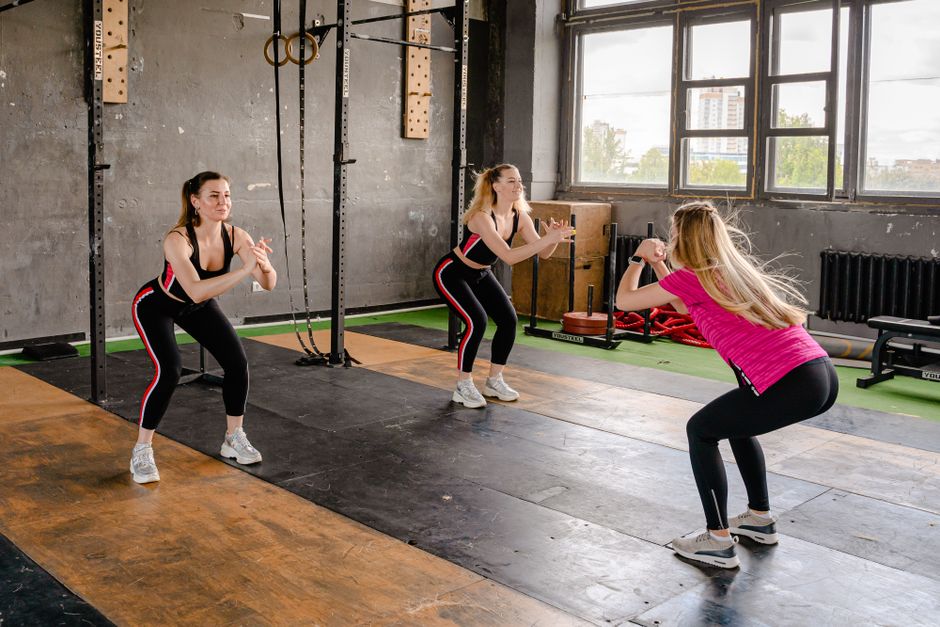
Four Effective Standing Moves
The Sit-to-Stand Squat: Building Leg and Glute Power
This movement directly trains the pattern of standing up, using the biggest muscles in the body. Start seated in a chair with feet flat. Stand fully, then return to sitting, but pause briefly at the bottom—just before making contact—before standing again. That pause at the bottom converts a functional movement into a genuine strength exercise. The weight resistance comes from your own body, making it perfectly scalable and safe. As you get stronger, hold the pause longer or add water bottles held at your sides for additional load.
Form tip: Keep your weight in your heels and your chest upright throughout.
The Slowed Wall Push-Up: Strengthening Chest and Upper Back
Face a wall about a foot away, hands flat at shoulder height and shoulder-width apart. Lower your body toward the wall over a full four seconds, then press back to the start. The slow lowering phase—called the eccentric movement—adds tremendous strength stimulus without any weight, which is the safest way to build upper body strength at this age. You’re training the chest, shoulders, arms, and the deep trunk muscles that maintain upright posture.
Form tip: If a four-second lower feels impossible, do three seconds rather than rushing the movement.
The Doorway Row: Reversing Forward Posture
Stand in a doorway, feet roughly hip-width apart, and grip the door frame at about eye height. Let your body lean forward slightly—you’re at an angle. Pull your body toward the frame, bringing your chest close to the door. The frame provides stable resistance without any equipment. This move builds the muscles between your shoulder blades, directly countering the forward hunch that most women over sixty have developed. It builds the pulling strength needed to open heavy doors or carry shopping bags.
Form tip: Keep your shoulders pulled down and back throughout the entire movement.
The Overhead Press: Targeting Weak Shoulders
This can be done standing or seated. Hold water bottles (or dumbbells if you have them) at shoulder height, then press them overhead until your arms are nearly straight. Lower back to shoulder height. The shoulders and upper back are typically the weakest components of the entire body in women over sixty, and this movement directly targets that weakness. Building overhead strength also prevents the shoulder rounding and forward-head posture that progress with age.
Form tip: Tighten your glutes during the press to stabilize your pelvis and protect your lower back.
How to Structure Your Weekly Training
Begin with two sessions per week, with two full days recovery between them—that’s when muscles rebuild. After four to six weeks, progress to three per week.
In each session, perform all four movements. Complete two sets of 10–12 repetitions per exercise, with 45–60 seconds rest between sets. The workout takes 15–20 minutes.
Add walking on other days for cardio. The ideal pattern is two strength sessions and four walks per week, totaling about three hours of exercise.
Progressive Overload: How to Keep Getting Stronger
Strength builds only if the challenge increases. After the first month, add a third set to each exercise. After two months, you have three options for progression: add weight (using heavier water bottles or dumbbells), increase the pause duration at the bottom of the sit-to-stand squat, or slow the wall push-up further. Rotate through these options to keep your muscles adapting.
Timeline: When You’ll Notice Real Strength Gains
Results don’t arrive all at once, but they arrive reliably. Within the first two weeks, most women notice they feel steadier standing up and sitting down—this is the neural component of strength waking up, where your brain relearns how to recruit muscles it hasn’t been using properly.
By four to six weeks, everyday tasks feel genuinely easier. Grocery bags don’t cut into your shoulders as much. Stairs no longer feel like a challenge. Getting out of a soft chair or a low car seat stops being an awkward negotiation with your own body.
By eight to twelve weeks, the strength change becomes measurable. Most women can perform 30 to 50 percent more repetitions on the same exercises than when they started. Upper body strength builds more slowly than the legs, but visible change in the arms and shoulders arrives within three months.
At the six-month mark, women who’ve followed the program are effectively ten years younger in strength terms. That translates directly into more energy, less fatigue, and years of independent living ahead.
Frequently Asked Questions
Why should women over 60 avoid jumping and floor exercises?
Joint injuries are more likely on untrained joints, and floor transitions consume energy that should go to strengthening. Standing and seated work builds strength safely without these barriers.
How often should I do these four strength exercises?
Start with two sessions per week, with at least two days recovery between sessions. After four to six weeks, progress to three sessions weekly. Each session includes two sets of 10–12 reps per exercise and takes 15–20 minutes total.
When will I see strength improvements from these exercises?
Most women feel steadier within two weeks. By 4–6 weeks, everyday tasks like climbing stairs feel easier. By 8–12 weeks, you'll perform 30–50% more reps than when you started. At six months, strength gains are equivalent to being about ten years younger.
