
Key takeaways
- Most adults over 60 spend years moving in only one plane—straight ahead—which narrows spinal mobility and causes pain that temporary treatment cannot fix.
- Dr. Anna Di recommends five bed exercises that introduce rotational movements and multidirectional hip work your body rarely performs during daily life.
- Your nervous system learns through repetition to accept these movement patterns as safe, gradually expanding the range your body naturally assumes throughout the day.
Spinal mobility is frequently overlooked in fitness routines for older adults, yet it directly impacts shoulder, neck, and back function as you age. According to IMPACT Physical Therapy, mobility in the thoracic spine—the middle portion of your vertebral column—proves crucial for these functions. If you’re over 60 and haven’t prioritized spinal mobility, your daily movement patterns may explain the stiffness and discomfort you’re experiencing.
Why Spinal Mobility Becomes Critical After 60
Your spine allows movement in multiple planes: forward and backward, side to side, and with rotational components. However, most adults over 60 spend the majority of their waking hours moving in a single direction—straight ahead. This forward-facing orientation means your arms and legs remain in front of your body, your head may gradually jut forward, and your back rounds as you sit or stand throughout the day.
The consequences compound during sleep. Many older adults spend seven to eight hours curled around a pillow with one knee bent, or lying in uneven positions that further reinforce this collapsed posture. Your spine receives no relief during rest; instead, it continues restricting itself in the same limited pattern. This explains why a single chiropractor visit produces only temporary relief—it doesn’t address the fundamental movement patterns your body defaults to every waking hour.
How Daily Posture Narrows Your Range of Motion
The human body adapts specifically to the movements it performs most frequently. This adaptation creates efficiency for repeated patterns while simultaneously reducing comfort in unfamiliar directions. Consider your typical day:
- Sitting hunched forward at a desk, steering wheel, or dining table
- Walking with arms at your sides and gaze fixed ahead
- Sleeping in a curled or asymmetrical position for eight consecutive hours
- Standing with rounded shoulders while cooking, reading, or watching television
Each of these positions trains your nervous system to accept one spinal configuration as “normal.” Over months and years, your spine doesn’t just become stiff in other directions—it begins to interpret those directions as uncomfortable or unsafe, actively resisting movement that deviates from your habitual pattern.
Dr. Anna Di, a Chiropractor, Corrective Exercise Specialist, and Owner of UNITY Chiropractic Wellness, emphasizes that the solution isn’t random stretching or hoping that occasional professional treatment will create lasting change. Instead, you must deliberately and repeatedly perform movements your body is currently avoiding.
The Expert Strategy for Mobility Work Over 60
Dr. Di’s approach to bed-based mobility exercises for people over 60 rests on a specific principle: effective exercises serve two simultaneous purposes. First, they mimic actual movements you need during daily life—reaching for a top shelf, turning to look behind you, bending to pick something up. Second, they introduce movements you’re probably not performing at all, particularly controlled rotation and multidirectional hip work.
Performing these movements in bed offers practical advantages beyond comfort. Your body is fully supported by a stable surface, allowing you to focus entirely on movement quality rather than balancing. You can perform them immediately upon waking, before accumulated spinal tension tightens your range of motion, or before sleep, when your body has hours to adapt to the expanded movement capacity you’ve reintroduced.
Dr. Di explains her intention clearly: “When I think about mobility exercises for people over 60, especially exercises they can do in bed, I want them to do two things. I want them to mimic some of the movements we actually need throughout the day, but I also want them to introduce movements that people are usually not doing enough of.”
Five Bed Exercises That Restore Spinal Mobility
Full-Torso Rotational Movement—Engaging Your Entire Spine
Rotation is the most severely neglected movement pattern in modern daily life. Most adults don’t rotate their torso; instead, they rotate their entire body by repositioning their feet or pivoting their chair. This means your thoracic spine, mid-back, and lower back rarely experience controlled rotational stress.
This exercise engages every spinal segment. Your head rotates, your arm opens backward while stretching your chest, your mid-back rotates through its full available range, and your lower back engages with the rotational component. Because rotation is uncommon in daily routines, reintroducing it—even gently—signals to your nervous system that this direction of movement is available and safe. Over days and weeks, this consistent stimulus restores the rotational range your spine has lost to years of forward-facing posture.
Hip Mobility and Pelvic Integration
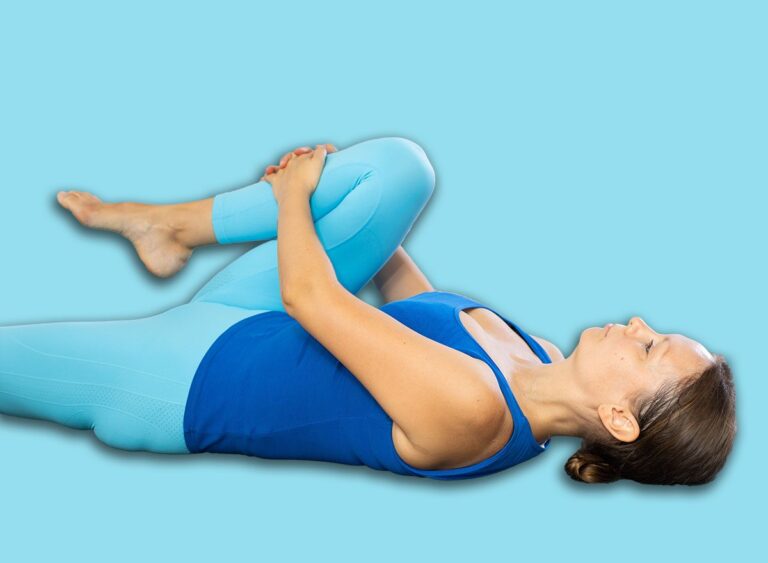
The hip joint connects your spine directly to your lower body. Restricted hip mobility forces your lower back to compensate, accelerating structural wear and creating chronic pain. Two distinct exercises address this critical area.
A gentler rotational variation places your arms out to the sides while moving your knees from side to side. This movement opens your chest while creating gentle twisting stress through your lower back and pelvis—a lower-intensity entry point for people who haven’t performed mobility work recently. According to Dr. Di, “This is a simpler way to introduce rotation, especially for someone who does not have very much mobility yet. Having the arms out also helps open up the chest, while the knees moving from side to side creates gentle movement through the lower back and pelvis.”
A second hip exercise moves beyond the standard forward-and-back hip motion. By introducing outward movement of the hip joint, you take that joint through a wider range—one it rarely experiences during normal daily activities. Dr. Di notes: “Instead of only moving the hip forward and backward, you are also getting some outward movement. That can help open up the hips and move the joint through a wider range. I sometimes describe it as helping to lubricate the hip joint because you are actually taking it through movements that it may not otherwise get very often during a normal day.”
Pelvic Stability and Lower Abdominal Reconnection
Hours spent in forward-facing posture—slumped at desks, standing rounded, sleeping curled—trains your lower abdominal muscles to remain essentially disengaged. This weakness allows your lower back to absorb excessive load, contributing to pain and restricted movement.
A controlled pelvic tilt exercise reawakens these stabilizer muscles. By deliberately learning to control your pelvis and lower back position, you reconnect with muscles that have been dormant. This engagement provides essential stability for every other movement your spine performs, creating a solid foundation for the rotational and hip mobility work described above. Dr. Di explains: “A lot of people spend hours slouched forward, whether they are sitting, standing, walking, or even sleeping curled up. So I like this because it helps people reconnect with their lower abdominal muscles and learn how to control the position of the pelvis and lower back.”
Building a Consistent Bed Mobility Practice
These five exercises require no equipment, no special clothing, and can be completed in approximately five minutes. Timing significantly impacts results: performing them immediately upon waking—before your habitual posture tightens—is ideal. Alternatively, performing them before sleep allows your body hours to process and integrate the expanded movement patterns you’ve introduced.
Consistency produces results faster than intensity. Performing all five movements every single day will restore spinal mobility significantly more quickly than sporadic visits to a professional. Your nervous system learns through repetition that these movement patterns are safe and available, gradually expanding the range your body naturally assumes throughout the day. Over weeks of consistent practice, movements that currently feel restricted begin to feel natural again.
Frequently Asked Questions
Why does spinal mobility matter if I don't have back pain?
According to IMPACT Physical Therapy, mobility in the thoracic spine is crucial for successful shoulder, neck, and back function. Limited spinal mobility restricts movement quality in daily activities like reaching, turning, and bending, even before pain develops.
When is the best time to perform these bed exercises?
Dr. Anna Di recommends performing them first thing in the morning, before your habitual posture tightens, or before sleep so your body has hours to adapt to the expanded movement patterns you've introduced.
How quickly will I notice improvement in spinal mobility?
Performing all five movements every single day will restore spinal mobility faster than sporadic visits to a professional. Your nervous system learns through repetition that these movement patterns are safe, gradually expanding the range your body naturally assumes throughout the day.
