
Key takeaways
- Six home exercises restore joint ranges that daily life eliminates: lateral lunges, squats, standing rotations, cat-cow, downward dog to cobra, and World's Greatest Stretch.
- Lateral lunges open the hips side to side, performed for 2 to 3 sets of 6 to 10 reps per side with 30 to 45-second rest periods.
- The World's Greatest Stretch and downward dog to cobra combine multiple ranges in single movements, making them efficient choices when time is limited.
After 60, movements that once felt automatic start asking for planning. Squatting becomes tighter. Turning to look behind you feels constrained. Getting down toward the floor takes more consideration. These shifts happen because joints lose comfort when they stop exploring their full ranges of motion.
Daily life reinforces this pattern. You walk forward, reach ahead, sit facing a desk. Hips stop exploring side-to-side motion. Upper back loses rotation practice. Shoulders rarely move overhead. Over time, joints that don’t move through a range lose comfort in that range. The good news is straightforward: keeping your body moving through those ranges rebuilds them.
Gym machines have a role in strength building, but they guide you down a single path. Mobility work needs more freedom. Your hips require motion side to side, your upper back needs rotation, and your shoulders need to reach through different positions. Home exercises give joints the freedom to work through these movements together rather than in isolation.
According to a guide from Eat This Not That, six specific moves can restore your mobility faster than machines alone. The exercises take you through ranges that fixed equipment rarely challenges, and you can build them into a simple home routine without needing much space or equipment.
Home Training Beats Machine-Based Mobility Work
Machines guide you through one set path, which works fine for strength in a single direction. Mobility and flexibility need something different. They need the freedom to move your hips side to side, rotate your upper back, and reach your shoulders through multiple positions. Working at home gives you that freedom.
You also don’t need much time. A few exercises that take you through squatting, rotating, reaching, and flowing between positions covers a lot of ground. This is not a lengthy stretching session. It’s focused work that hits multiple ranges in a short window.
Lower-Body Mobility and Stability
Your legs and hips handle more of daily function than most people realize. Climbing stairs, picking objects up, getting in and out of cars all depend on your ankles, knees, and hips working through comfortable ranges. Two exercises cover this range effectively.
Lateral Lunges for Hip Mobility
Most daily movement happens straight ahead, which means the hips lose comfort moving side to side. Lateral lunges bring that direction back while building leg strength through the range. You’ll open the inner thigh on one side while the other leg does the work, making this a mobility drill that also builds strength.
Perform 2 to 3 sets of 6 to 10 reps per side, resting 30 to 45 seconds between sets. Variations include a supported lateral lunge (holding a chair or table), a shallow lateral lunge (working with a smaller range), or alternating sides without pausing. If you’re new to the movement, start with the supported version or reduced range.
Squats for Total Lower-Body Function
Squatting is one of the easiest ways to see how well your ankles, knees, and hips are working together. Practicing regularly maintains the range you use for chairs, stairs, and picking things up. You also gain lower-body strength while working on mobility, which makes squats especially useful after 60.
Use a chair as a target for depth if you want more confidence with how far down to go. Perform 2 to 3 sets of 8 to 12 reps, resting 30 to 45 seconds between sets. This movement gives you lower-body strength while maintaining the mobility you use daily.
Upper-Back Rotation and Spinal Health
Your spine needs motion in two directions: forward and back (flexion and extension), and rotation. Two moves address these ranges and fit easily into any home routine.
Standing Rotations for Turning Freedom
Turning gets overlooked until you notice you’re moving your whole body just to look over one shoulder. Standing rotations give your upper back regular practice moving through that range while your feet stay planted. They fit easily into a home mobility routine and feel especially good after long stretches of sitting.
Perform 2 to 3 sets of 6 to 10 reps per side, resting 20 to 30 seconds between sets. Variations include a smaller standing rotation if the full range feels too much, a wall-supported rotation using your hand against a wall for stability, or a seated rotation if standing balance is a concern.
Cat-Cow for Spinal Mobility
When your back feels stiff, cat-cow gives you a simple way to start moving it again. You alternate between rounding and gently extending the spine, which lets you explore motion without adding load. This one works well early in your routine or first thing in the morning when your back needs a few reps before larger movements feel comfortable.
Perform 2 to 3 sets of 6 to 10 slow reps, resting 20 to 30 seconds between sets. Move slowly enough to feel each part of the motion. Variations include a seated cat-cow (on a chair), a standing cat-cow (hands on a table), or a smaller-range cat-cow if the full movement feels too demanding. The muscles worked are your spinal erectors, abs, upper back, and shoulders.
Full-Body Integration Moves
Two exercises combine multiple ranges into single movements, making them valuable when time is limited.
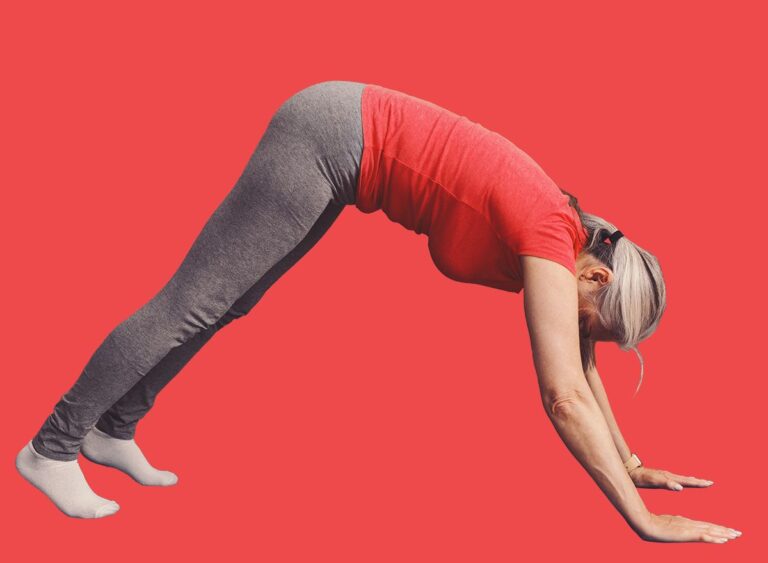
Downward Dog to Cobra
A lot happens during one slow transition from downward dog into cobra. Your shoulders move overhead, your spine shifts, and the backs of your legs get a gentle stretch before you open through the front of your body. This flow works well when you feel generally stiff because you can explore several areas without forcing any single stretch.
Perform 2 to 3 sets of 5 to 8 slow reps, resting 30 seconds between sets. Keep the movement comfortable and shorten the range wherever you need to. Move only through a range that feels comfortable in your back. The muscles worked include your shoulders, abs, upper back, hamstrings, and calves. Variations include an elevated downward dog to cobra (hands on a chair or bench), a smaller-range flow, or simply holding downward dog without the cobra transition.
The World’s Greatest Stretch
If you only have time for one mobility drill, the World’s Greatest Stretch earns its name. The lunge position opens the hips, then the rotation brings your upper back into the movement. It’s especially useful when you want to prepare your body for walking, strength training, or a more active day.
Perform 2 to 3 sets of 4 to 6 reps per side, resting 30 seconds between sets. Put your hands on an elevated surface if reaching the floor feels too aggressive. Variations include an elevated World’s Greatest Stretch (hands on a chair or bench), a shortened lunge position, or a lunge with rotation if you want to keep the movement smaller. The muscles worked are your glutes, hip flexors, hamstrings, upper back, and shoulders.
Programming Your Mobility Work
Mobility usually improves when you give your body regular chances to move through the ranges you want to keep. Two or three focused sessions each week can go a long way. On other days, shorter mobility breaks help you stay loose between workouts. This doesn’t mean lengthy sessions. Even 10 minutes of focused movement three times a week builds mobility faster than sporadic stretching.
Source: Eat This Not That
Frequently Asked Questions
What should I do if reaching the floor feels too difficult during these exercises?
Put your hands on an elevated surface like a chair, bench, or table. Variations like elevated downward dog to cobra and elevated World's Greatest Stretch allow you to work at a comfortable depth.
How often should I practice these mobility exercises?
Two or three focused sessions each week can go a long way, with shorter mobility breaks on other days helping you stay loose between workouts.
Which single exercise provides the most comprehensive mobility work?
The World's Greatest Stretch earns its name because the lunge position opens the hips, then the rotation brings your upper back into the movement, preparing your body for walking, strength training, or a more active day.
